Hokitika Gorge Walk
Two big suspension bridges, West Coast rainforest and water that barely looks real.
Bridge day really starts when you step onto the track.
Hokitika Gorge had been one of the places we were most looking forward to on our West Coast trip.
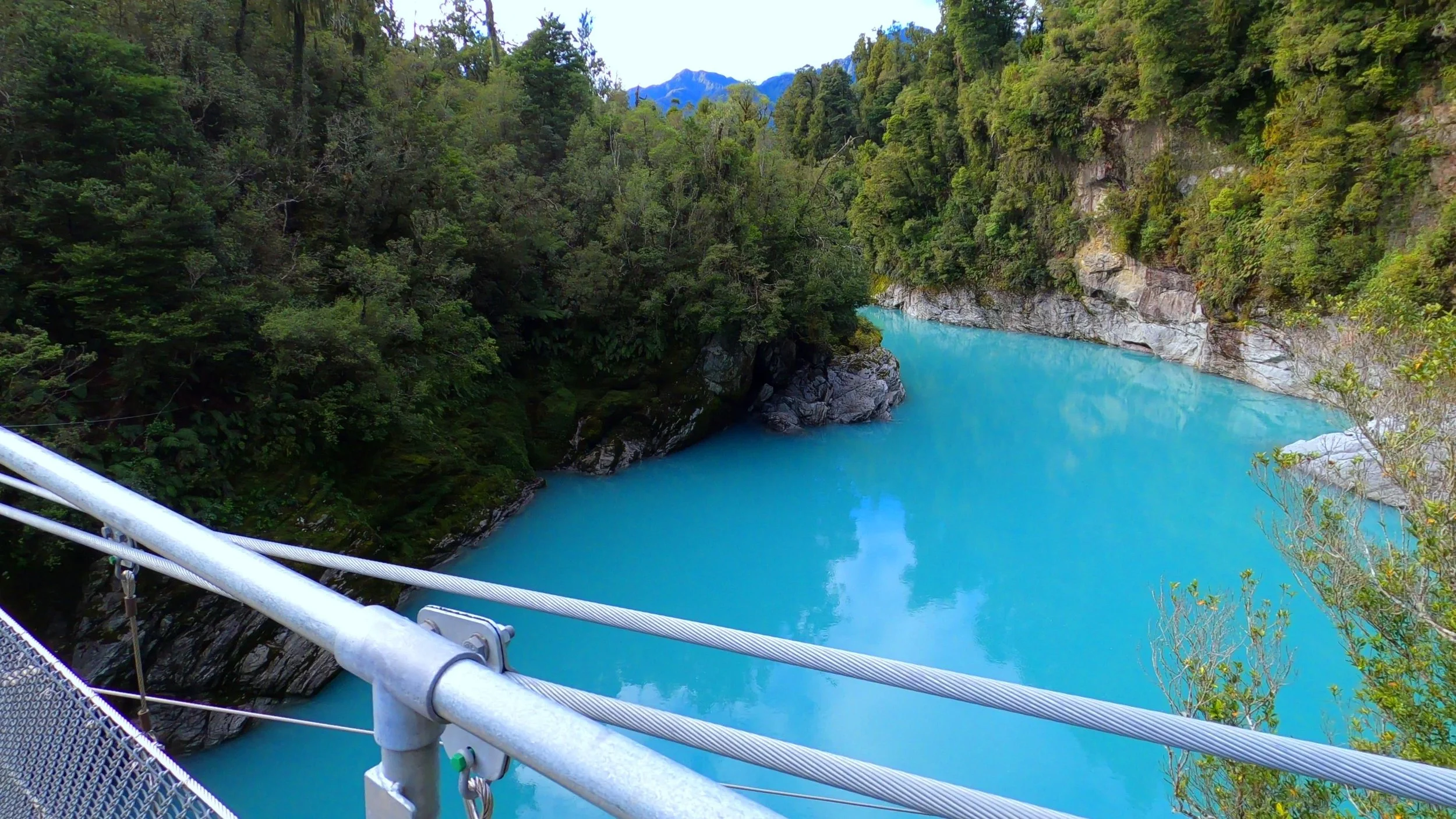
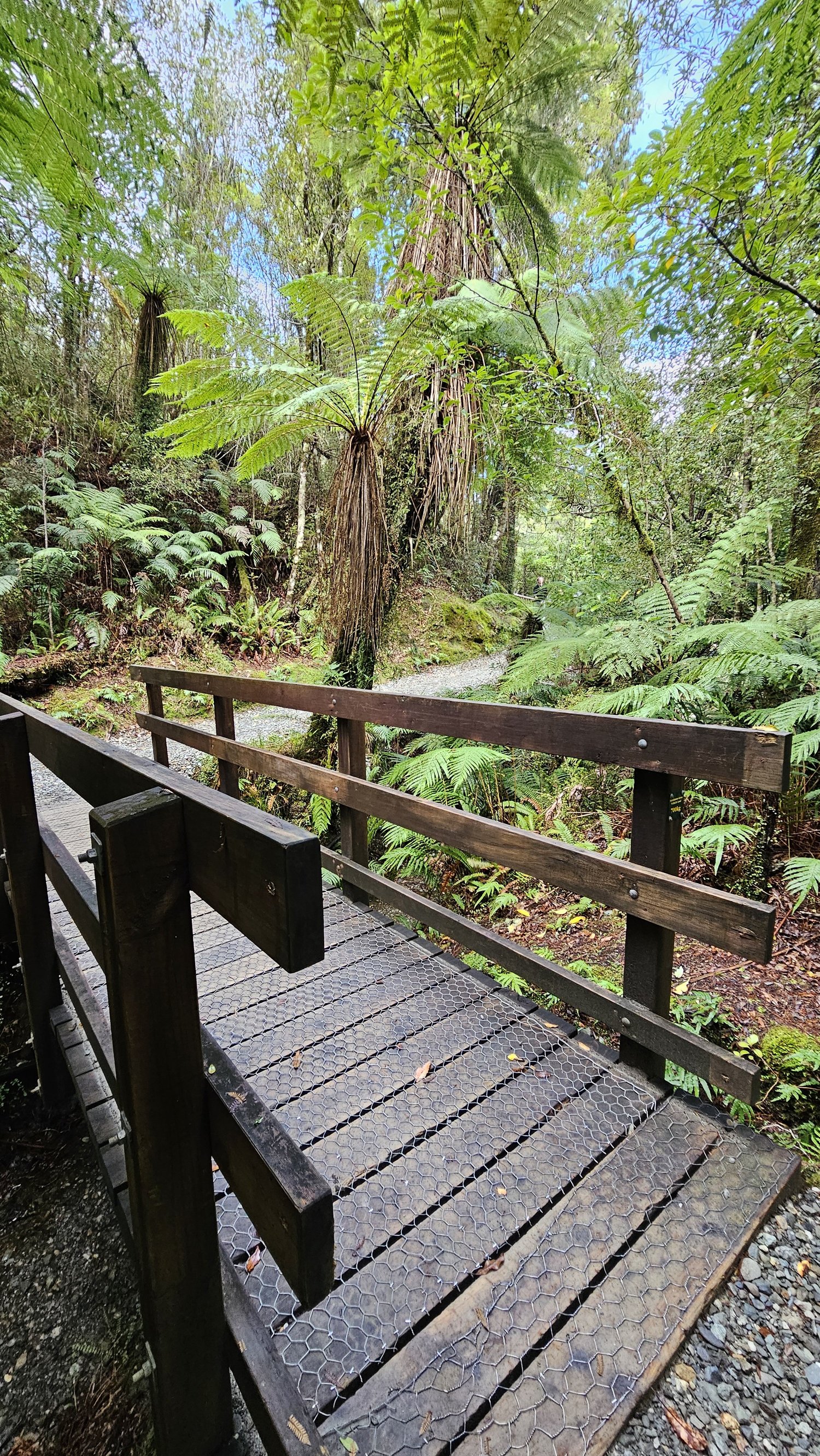
The walk delivered almost immediately. Forest, boardwalks, little creek crossings and flashes of bright blue water keep appearing between the trees.
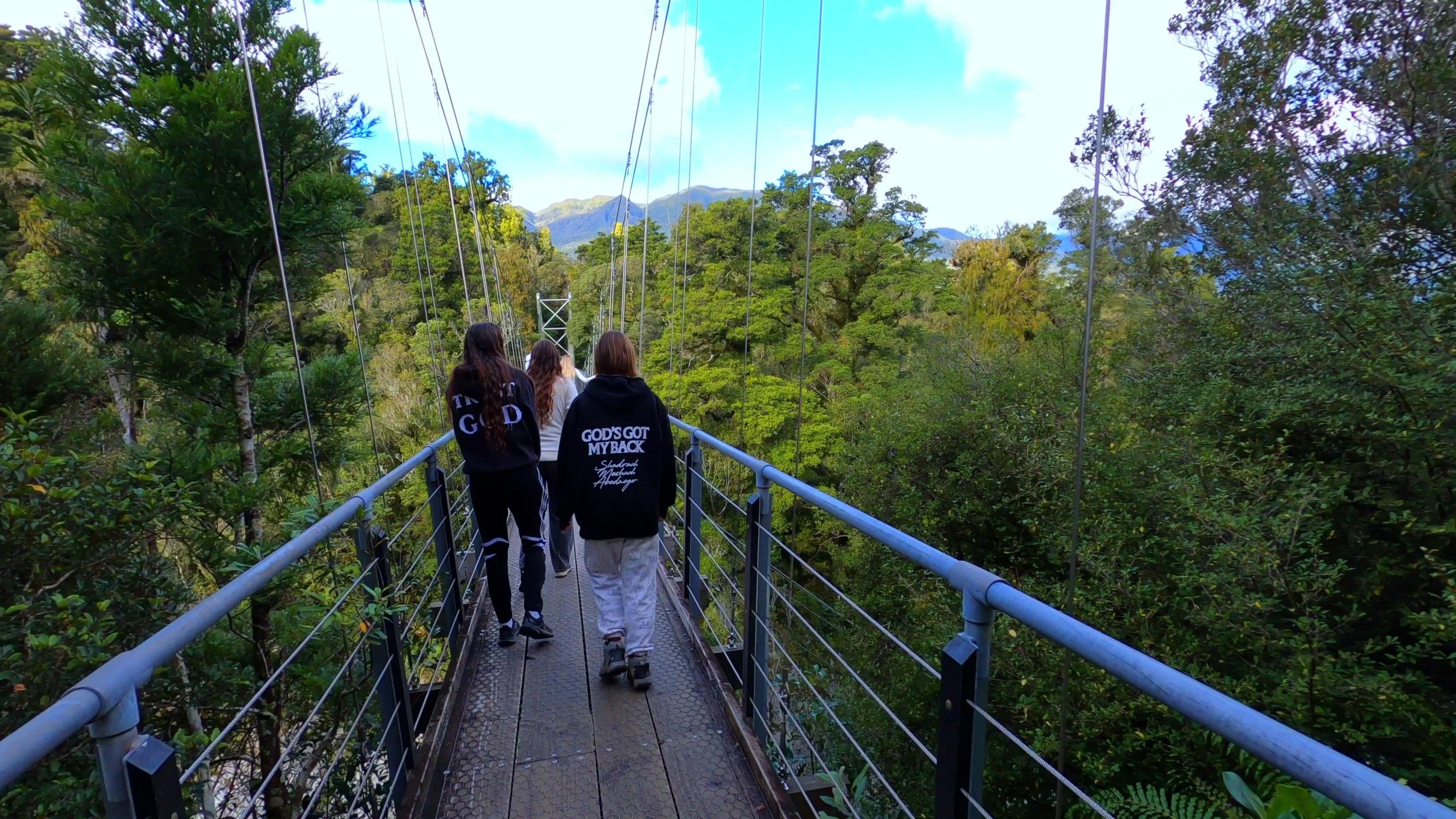
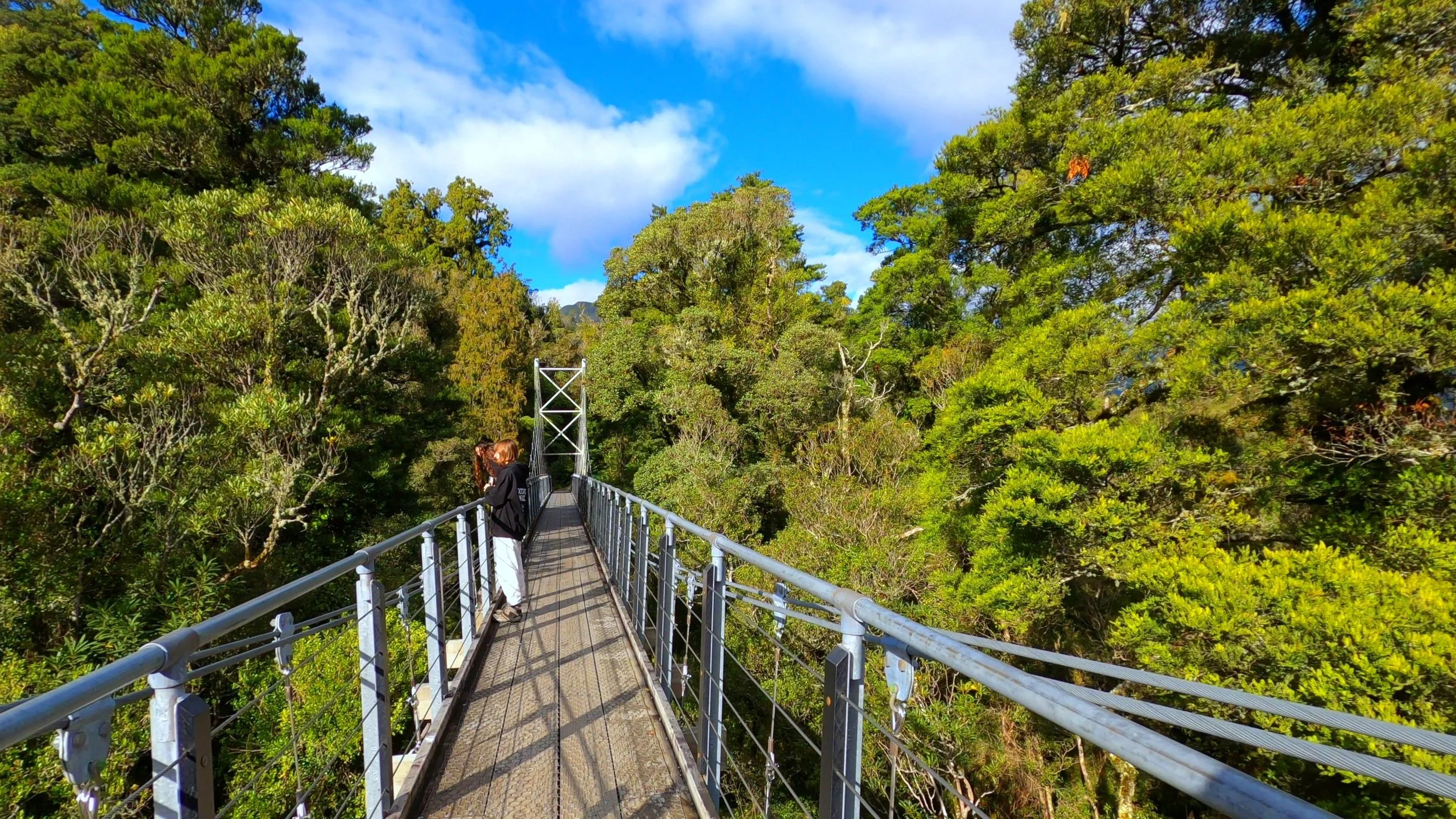
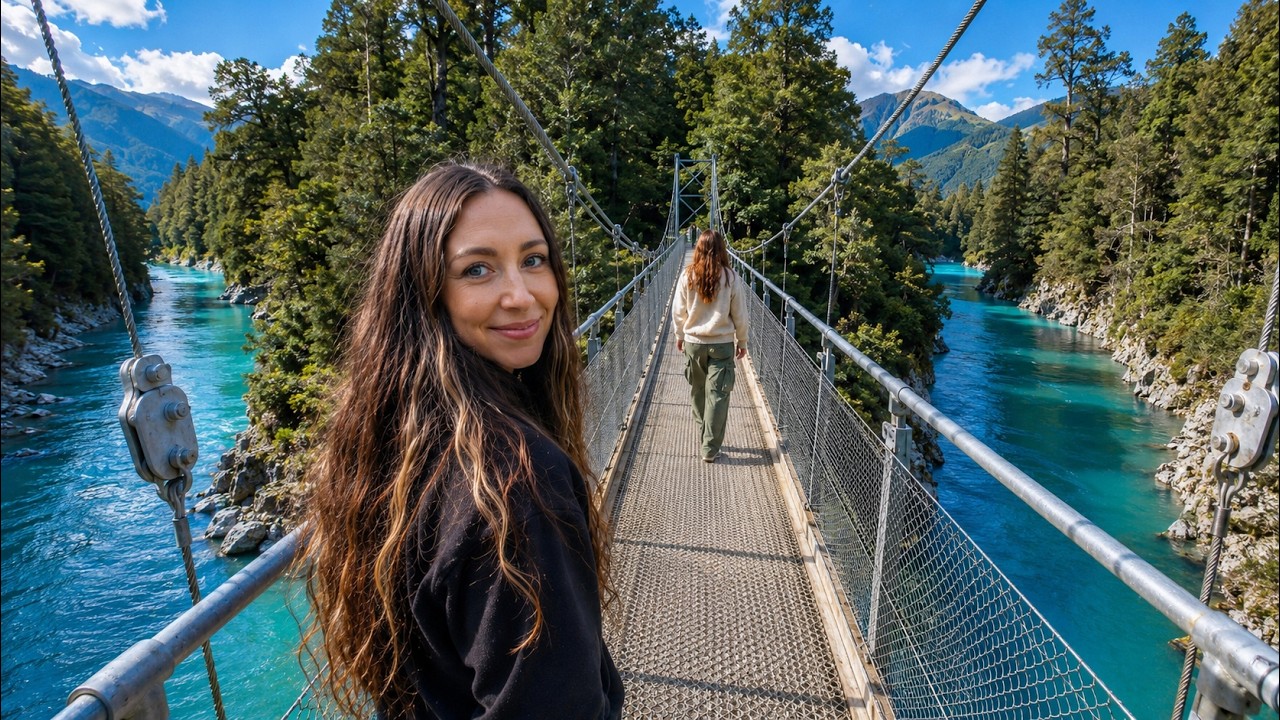
The full loop then takes you across two proper suspension bridges: the lower crossing and the much bigger 90-metre upper bridge.
For us, the bridges were half the fun. The other half was trying to understand how the river could possibly be that blue.
The Hokitika Gorge Walk
You can make this a very short viewpoint visit or continue around the full loop through the forest and across both main bridges.
DOC places the reserve about 33 km inland from town.
Current regional sources differ slightly on the complete loop distance.
Longer if you stop as much as we did.
Formed track, boardwalks, viewpoints and suspension bridges.
Wheelchair accessible according to DOC.
Continue from the first viewing platform.
One of the longer suspension bridges in New Zealand.
No booking is currently required.
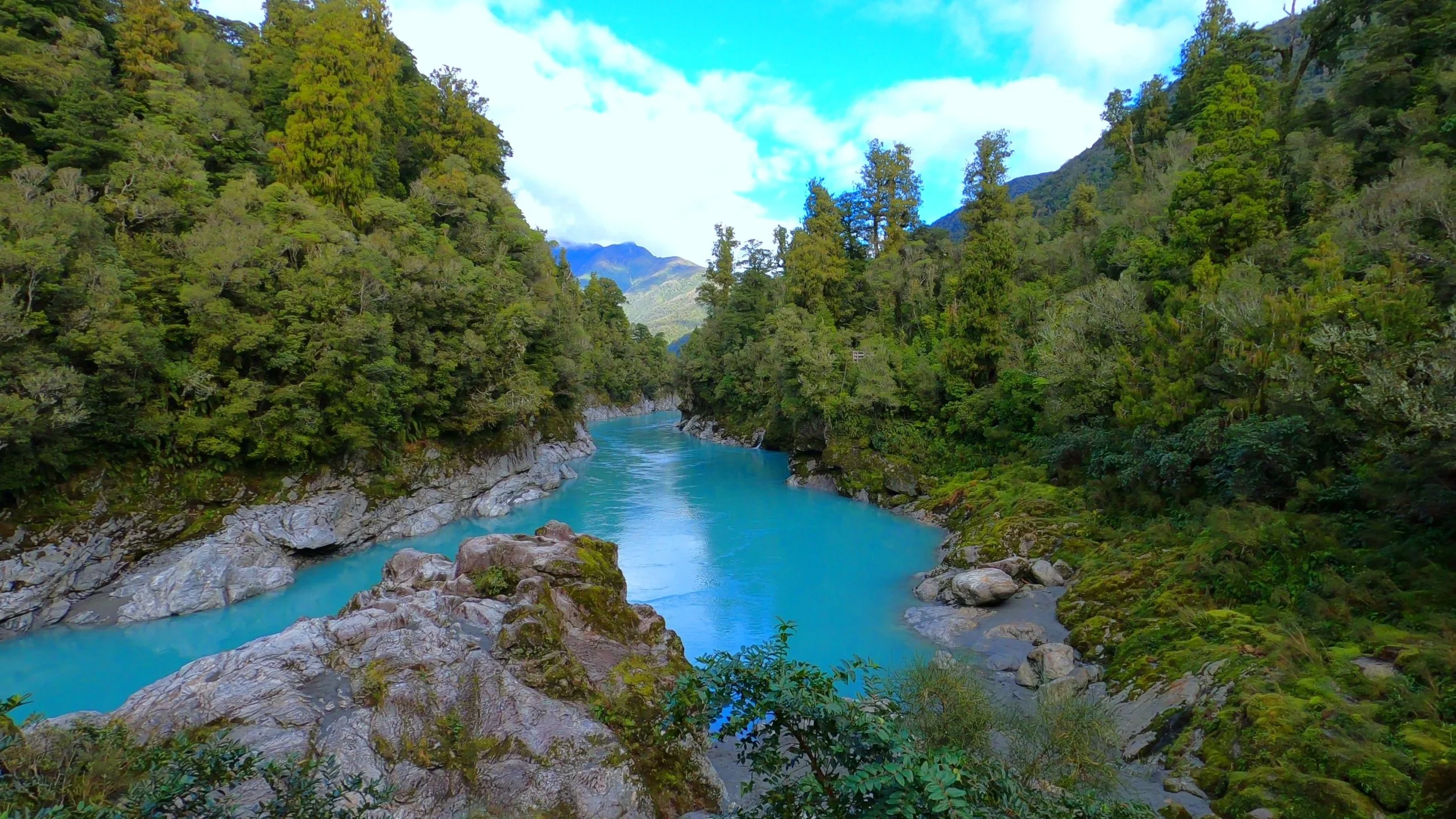
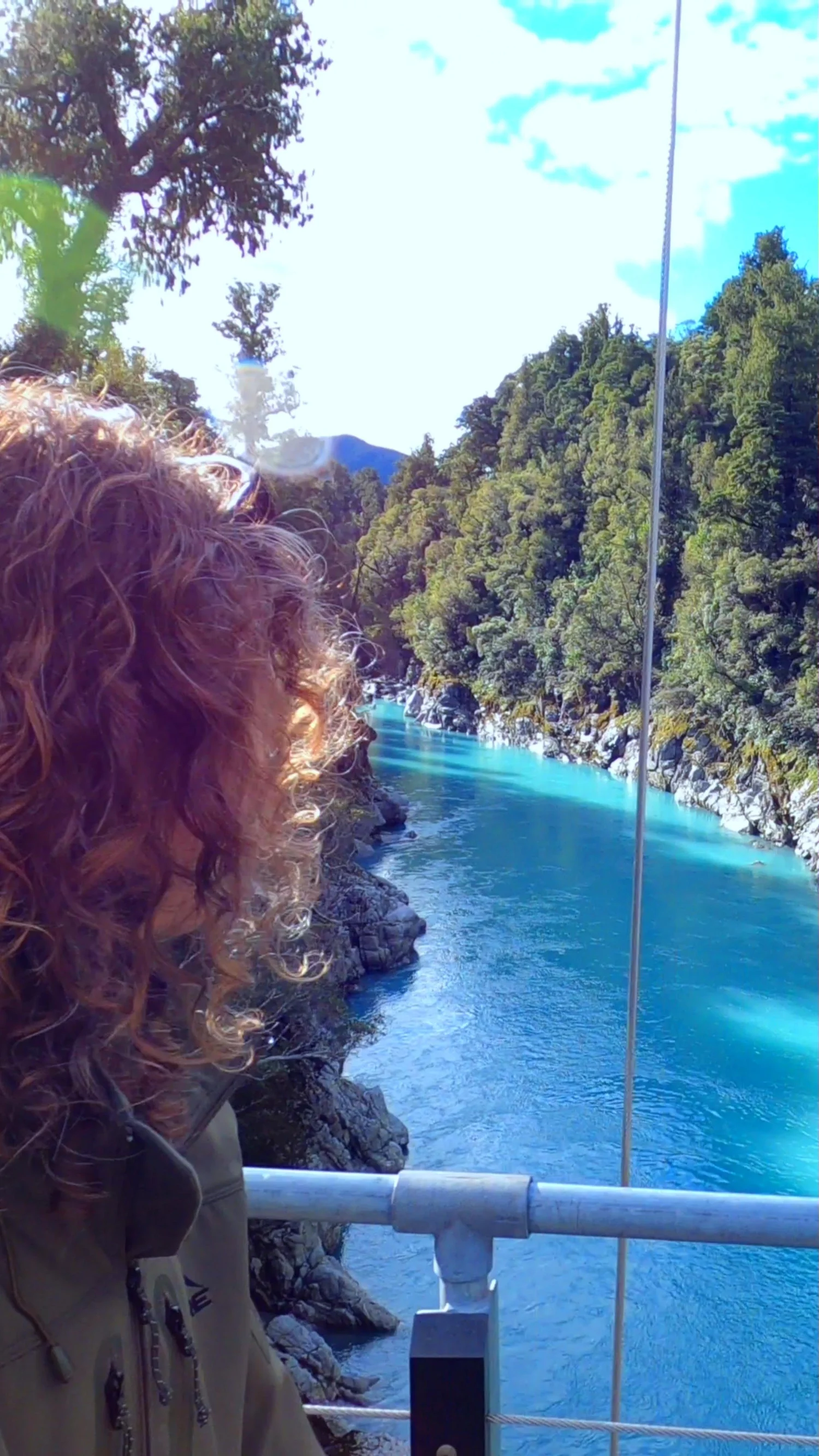
“Okay. It is really blue.”
Photos had prepared us for the colour. Seeing it through the trees still caught us off guard.
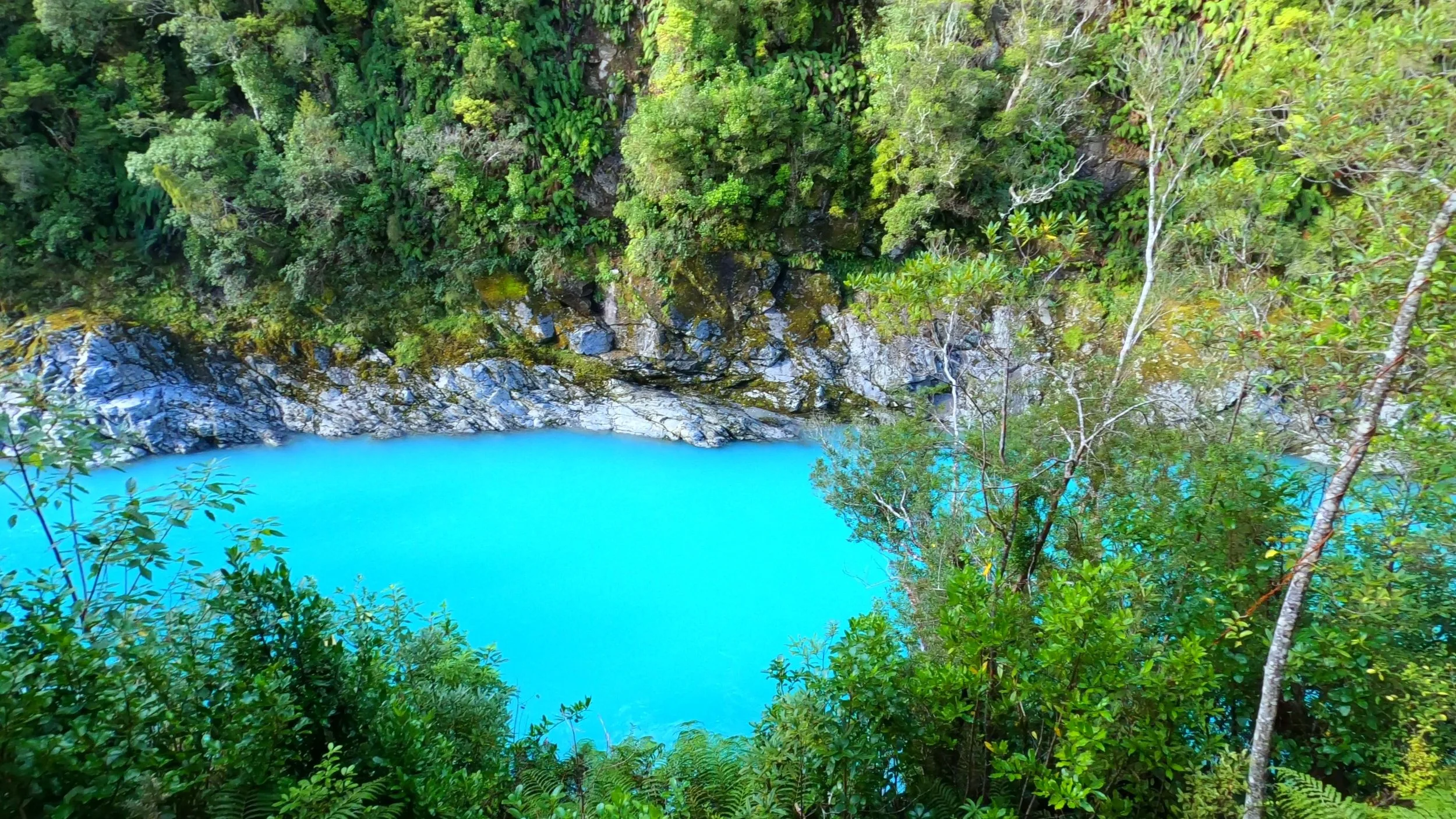
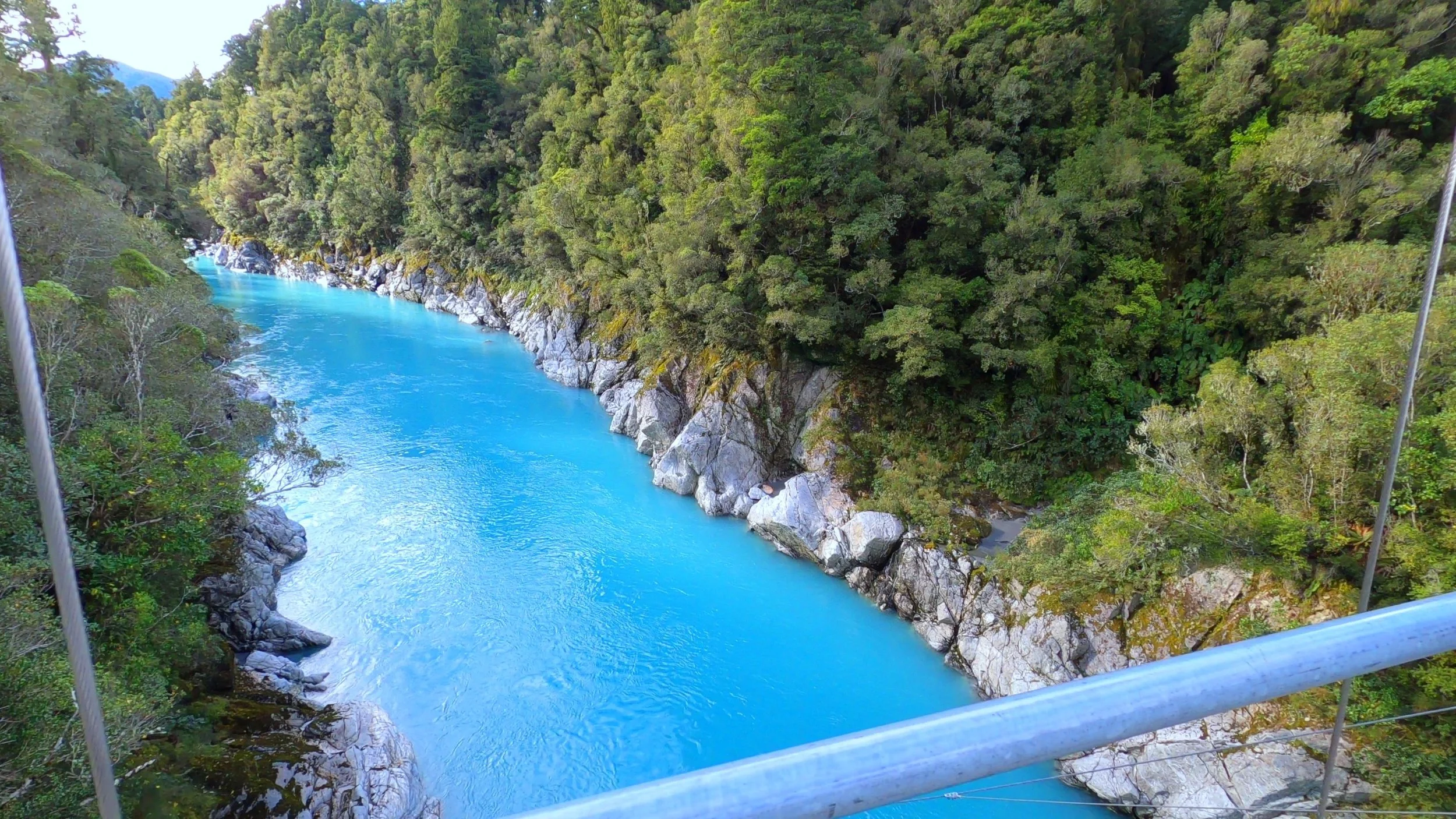
The colour starts much farther up the mountains.
Glacial action grinds rock into extremely fine sediment that is carried downstream by the river.
Moving ice breaks and grinds rock into extremely fine material.
The suspended glacial silt travels downstream with the Hokitika River.
That extremely fine material contributes to the famous colour we came to see.
DOC says the Hokitika River tends to look bluer after a spell without rain and in sunlight. After heavy rain, increased glacial silt can make the river look grey.
The track never feels like it is only about the river.
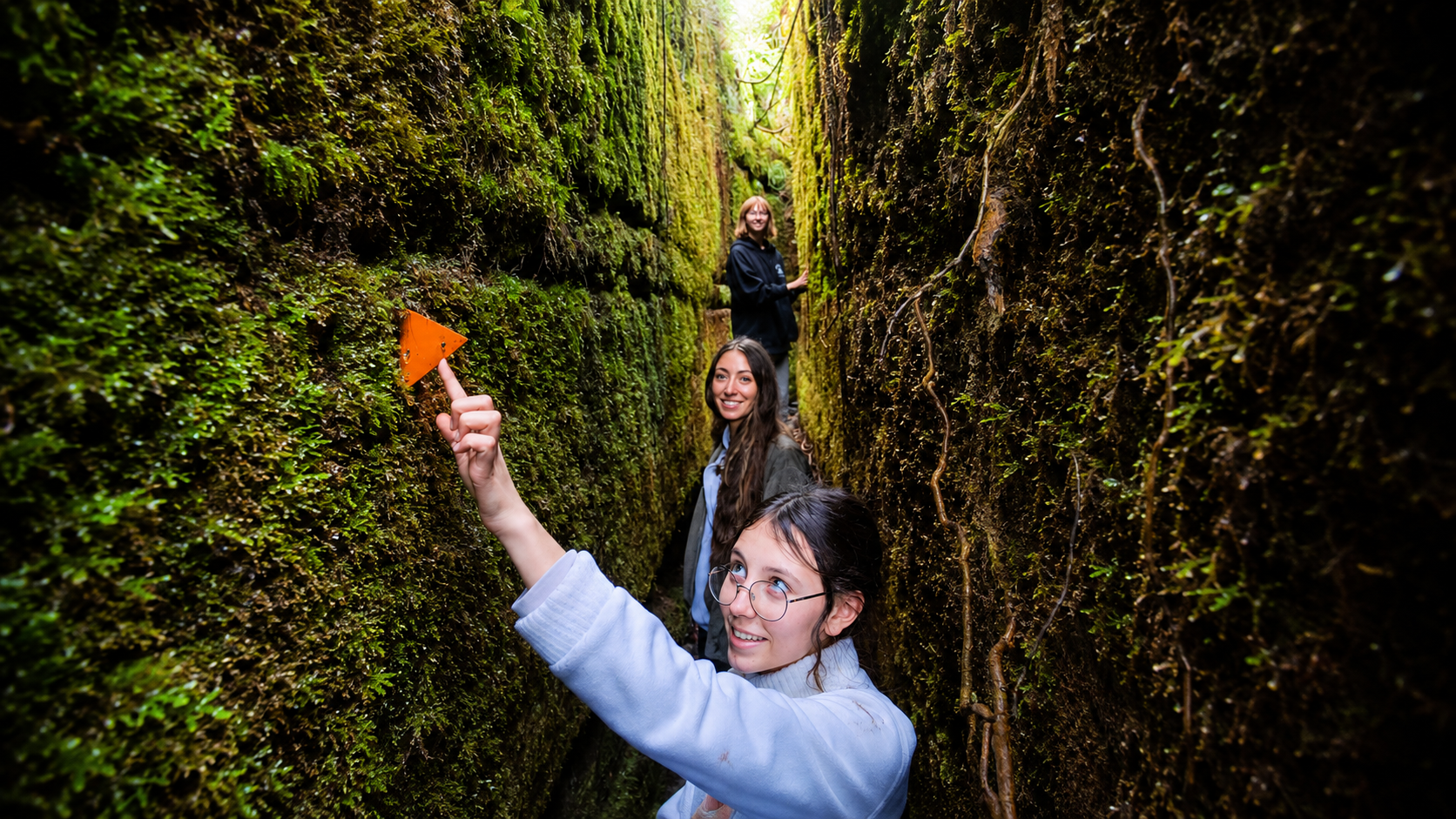
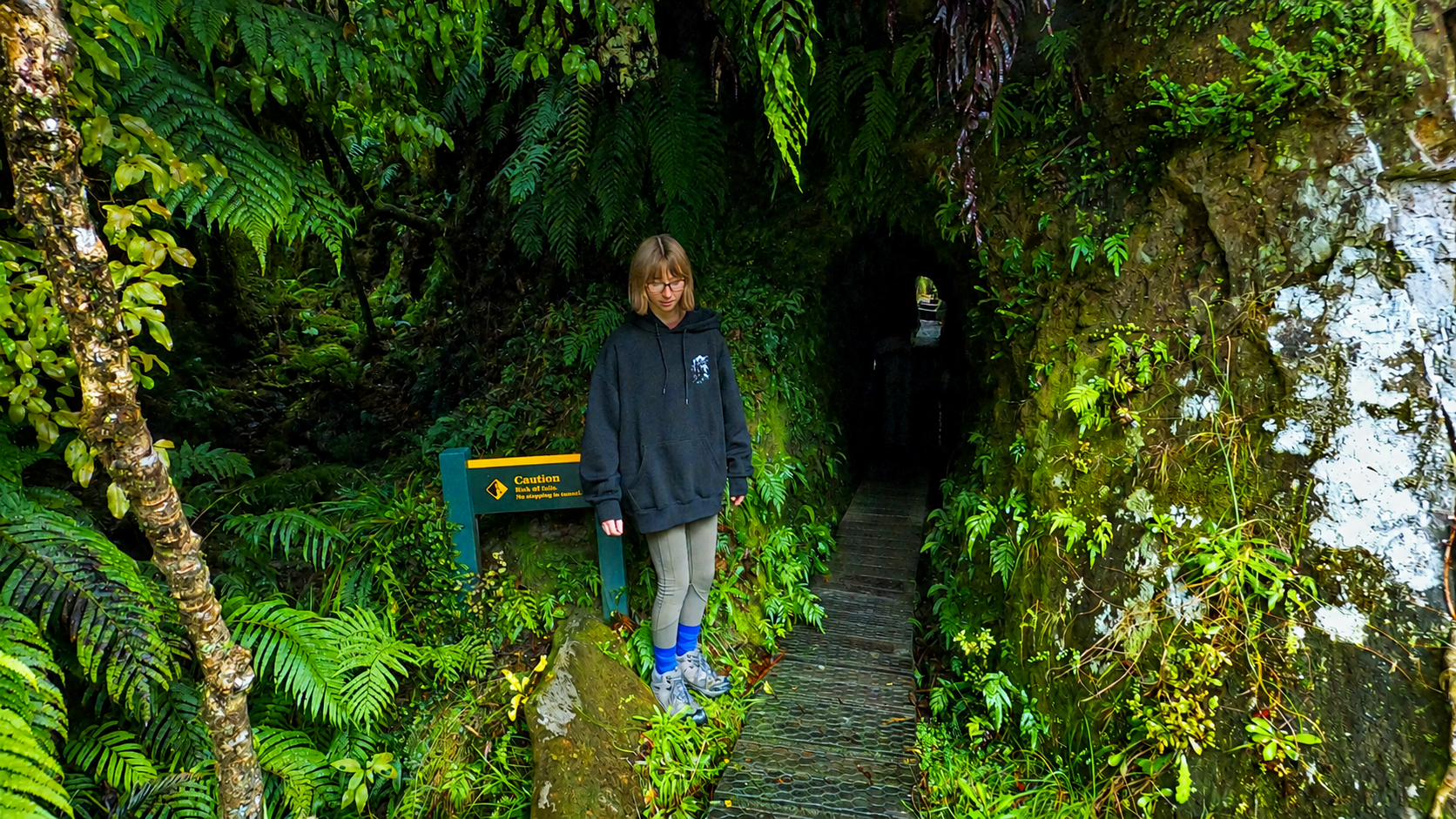
Boardwalks curve through mature West Coast forest, little bridges cross creeks and the river keeps appearing through the trees.
Somewhere along the way, Malaya decided a boardwalk that also crossed water deserved its own name: a bridgewalk.
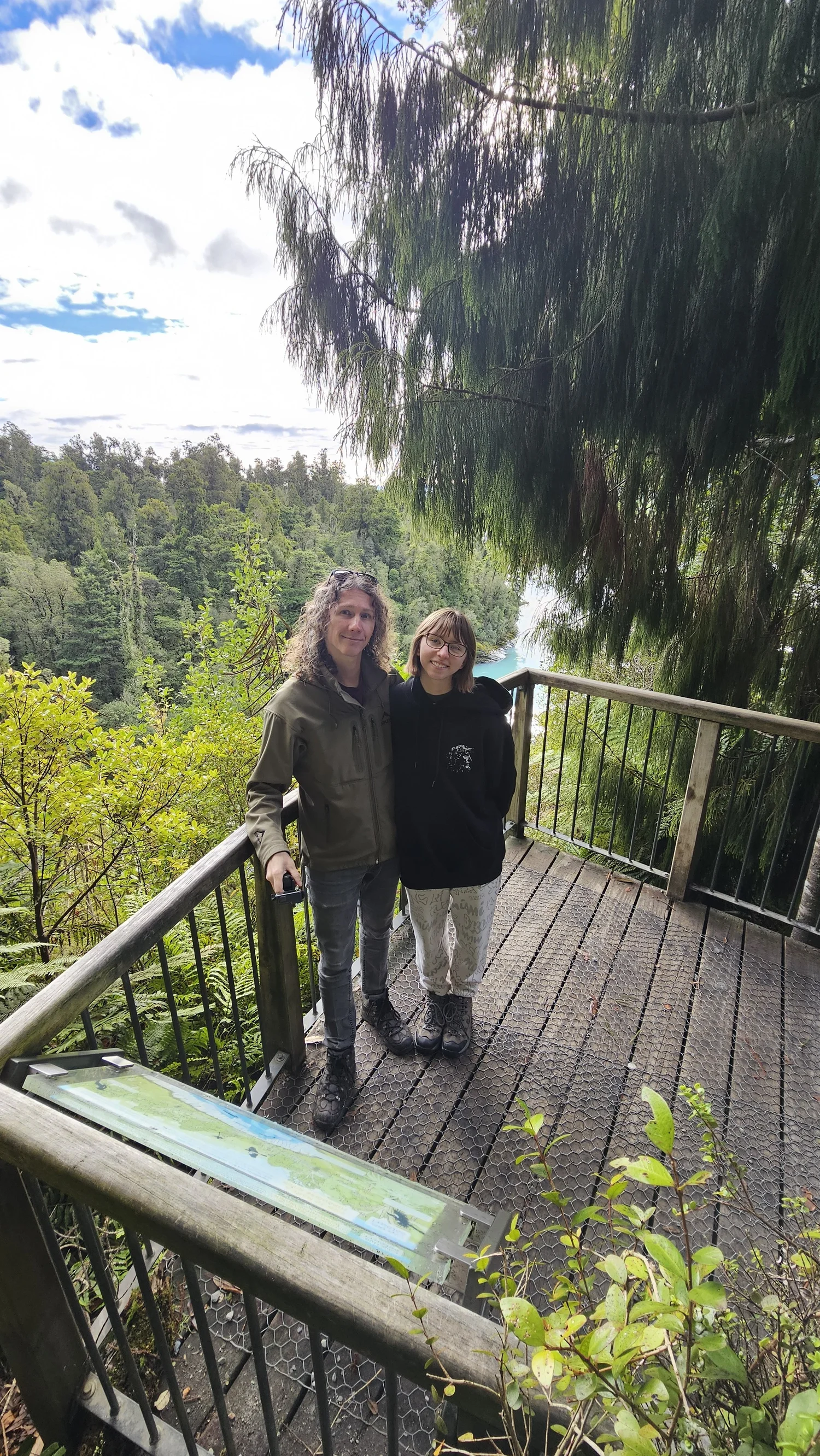
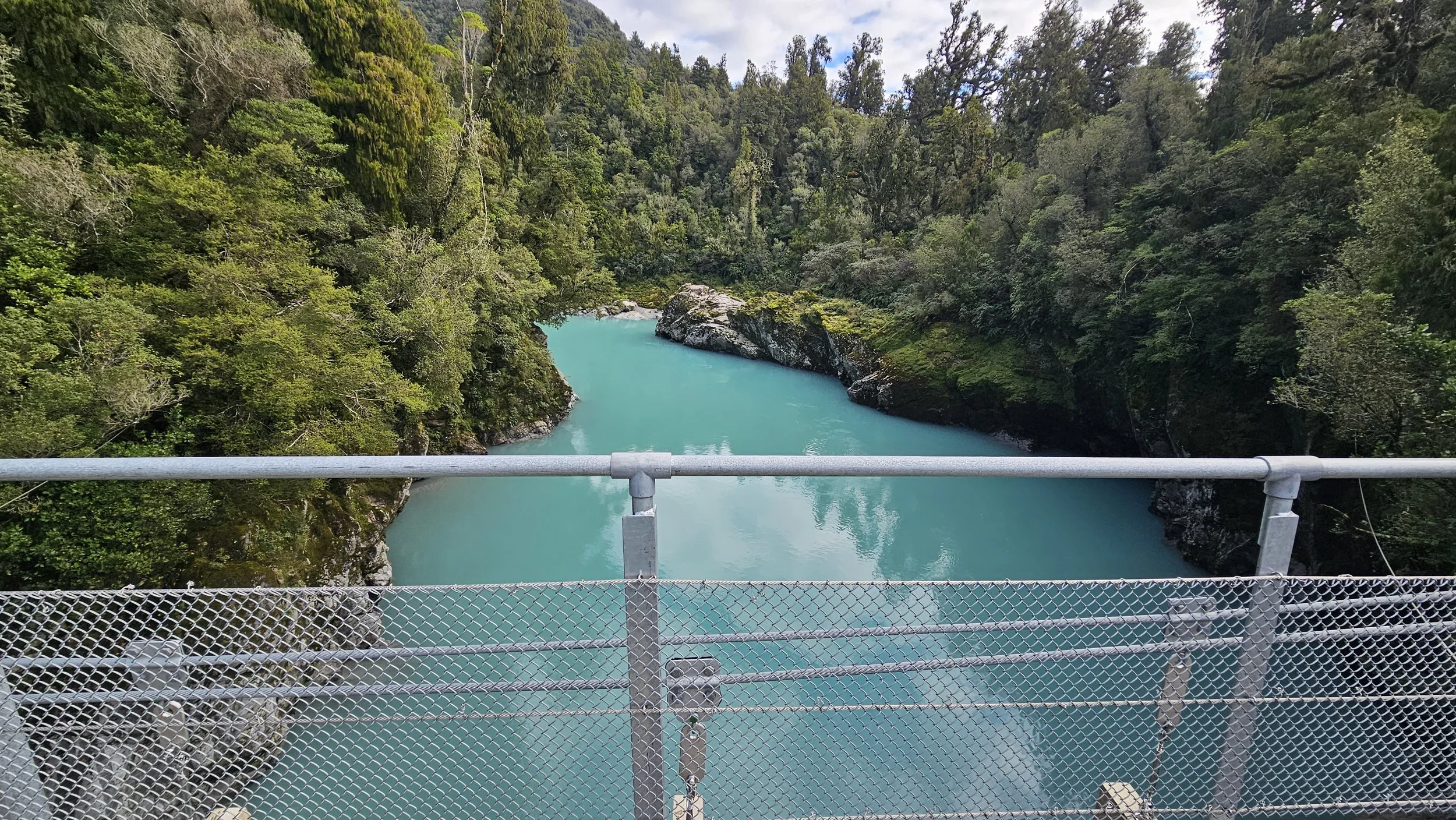
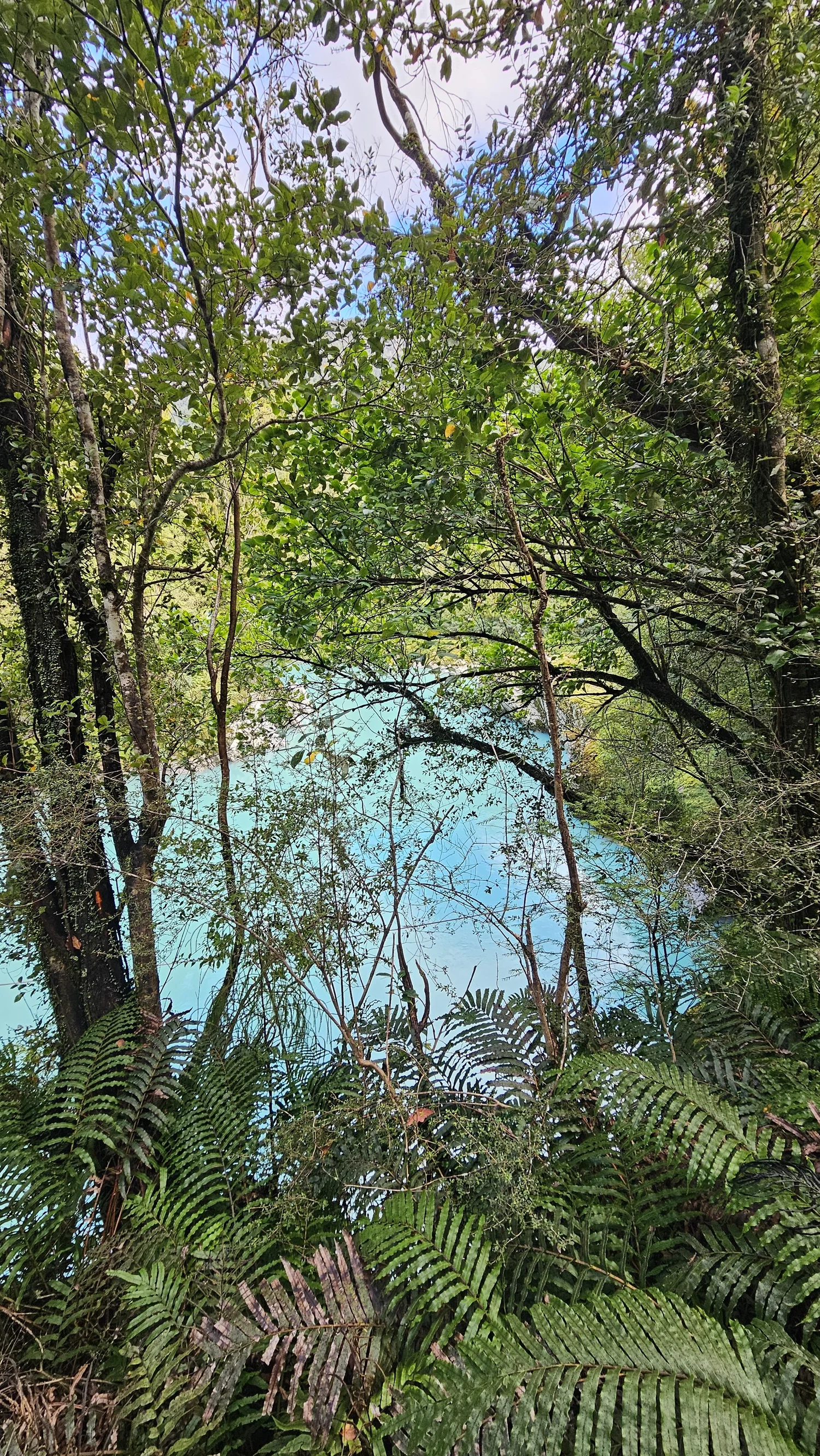
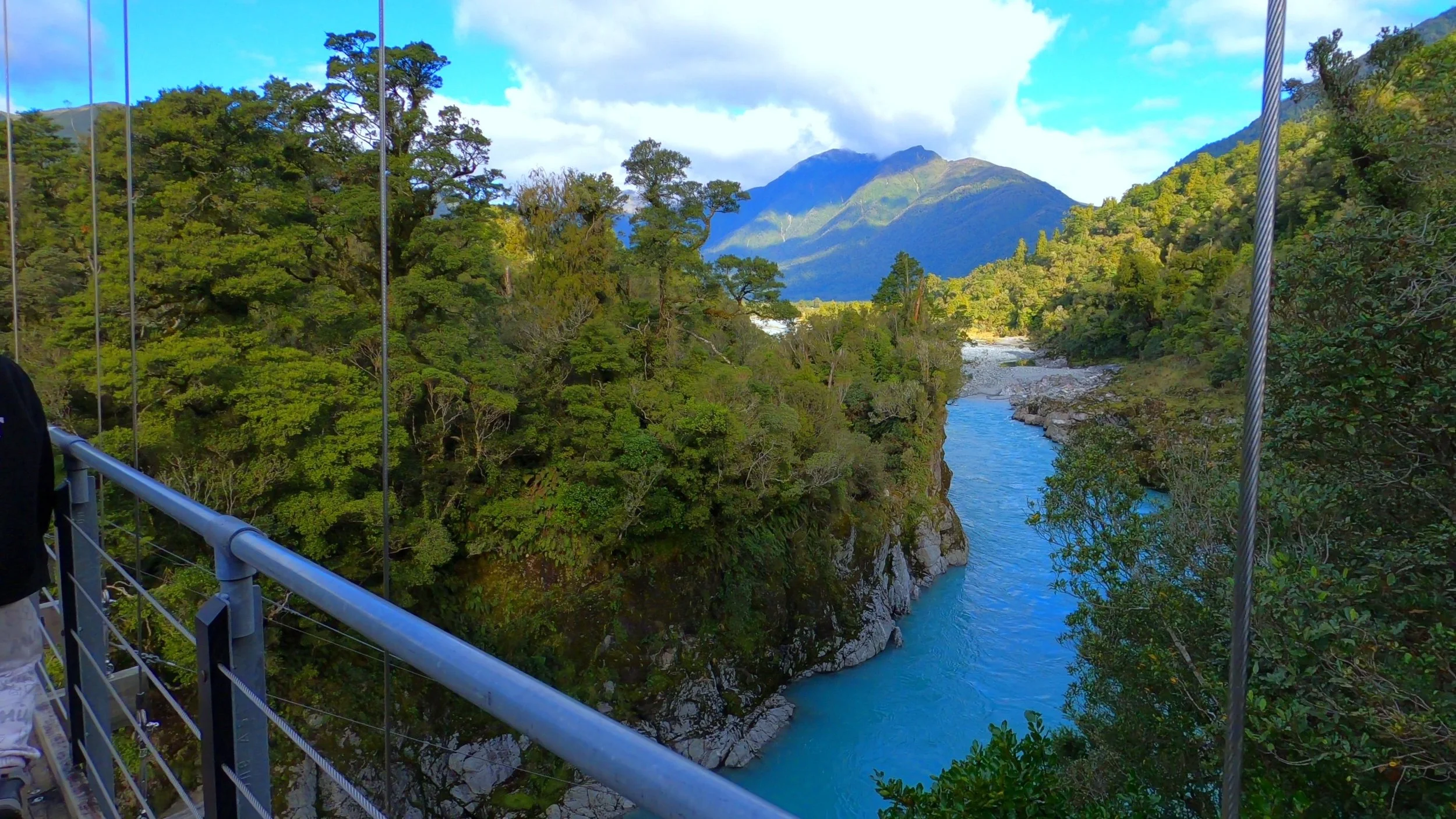
The lower suspension bridge.
This crossing is newer than it looks.
The previous bridge closed in October 2023 after structural concerns were identified.
The replacement suspension bridge officially opened on 23 May 2025, restoring the complete Hokitika Gorge loop.
Structural concerns removed this crossing from the full loop.
Full access around the loop was restored.
The Hokitika River warning is serious.
We walked down toward the river and immediately found signs explaining just how dangerous the water can be.
DOC warns that the Hokitika River is swift, deep, cold and dangerous in all conditions. People have drowned here.
Strong currents, cold water and sudden drop-offs make the river dangerous.
Stay back from the water's edge and take extra care on river rocks.
Stay on the formed track and supervise younger children closely.
We found a green stone. Identifying it is another story.
Down beside the river, one smooth green stone had us wondering whether we had finally found pounamu.
We compared the feel of it with the other river stones and it definitely got us excited, but we could not properly confirm its identity there.
Pounamu is much more than an interesting green rock. It is a taonga with deep cultural importance and specific ownership and collection rules.
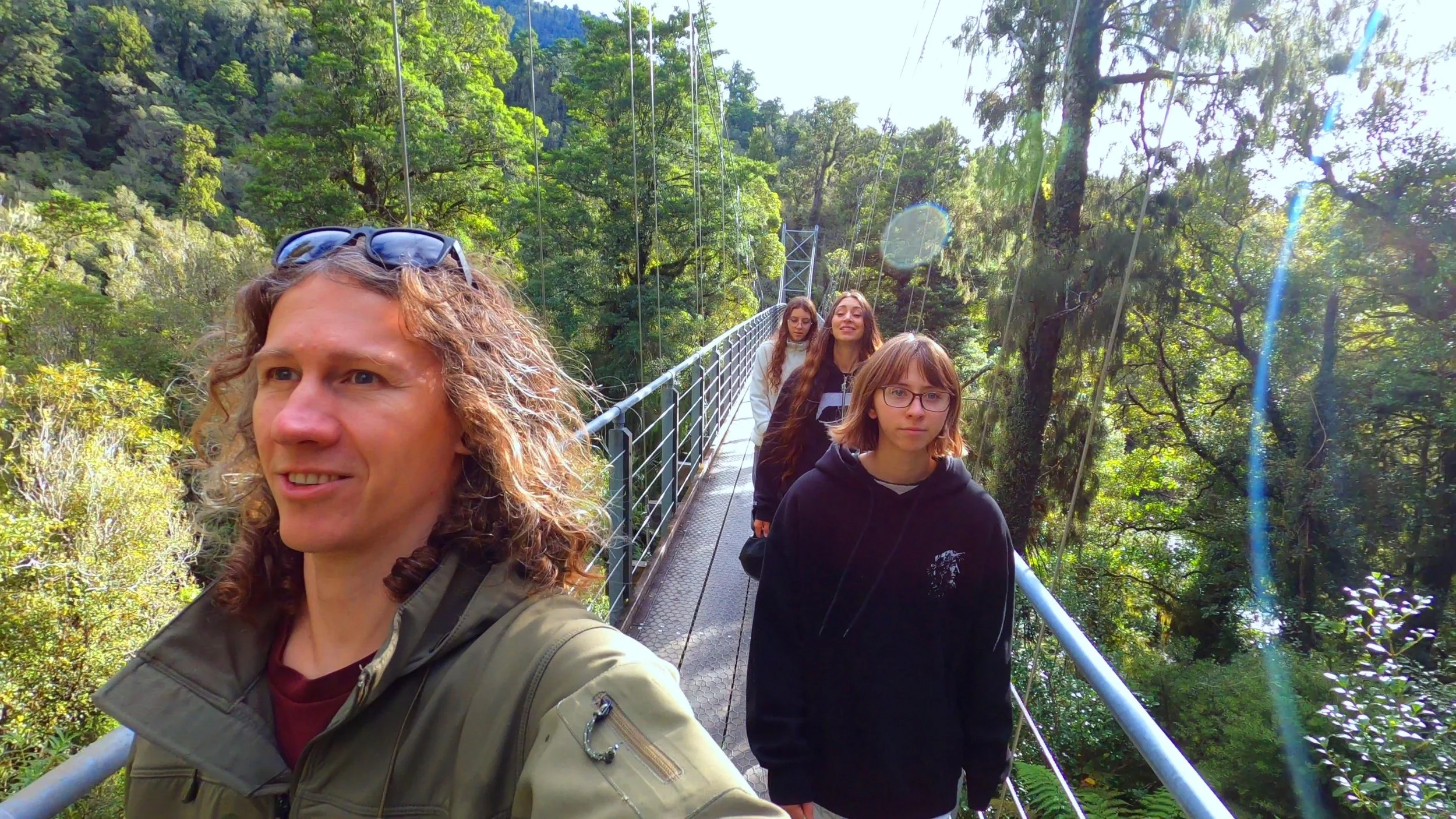
90 METRES
The upper suspension bridge
This was the bridge that made us stop and properly take in the size of the gorge.
DOC lists the upper Hokitika Gorge suspension bridge at 90 metres long and describes it as one of New Zealand's longer suspension bridges.
It crosses the main channel of the Hokitika River before carrying the track into the forest canopy, with views toward the foothills of the Southern Alps/Kā Tiritiri o te Moana.
At the time, this was the longest bridge our family had crossed in New Zealand so far. That is part of our own travel story, not a national record.
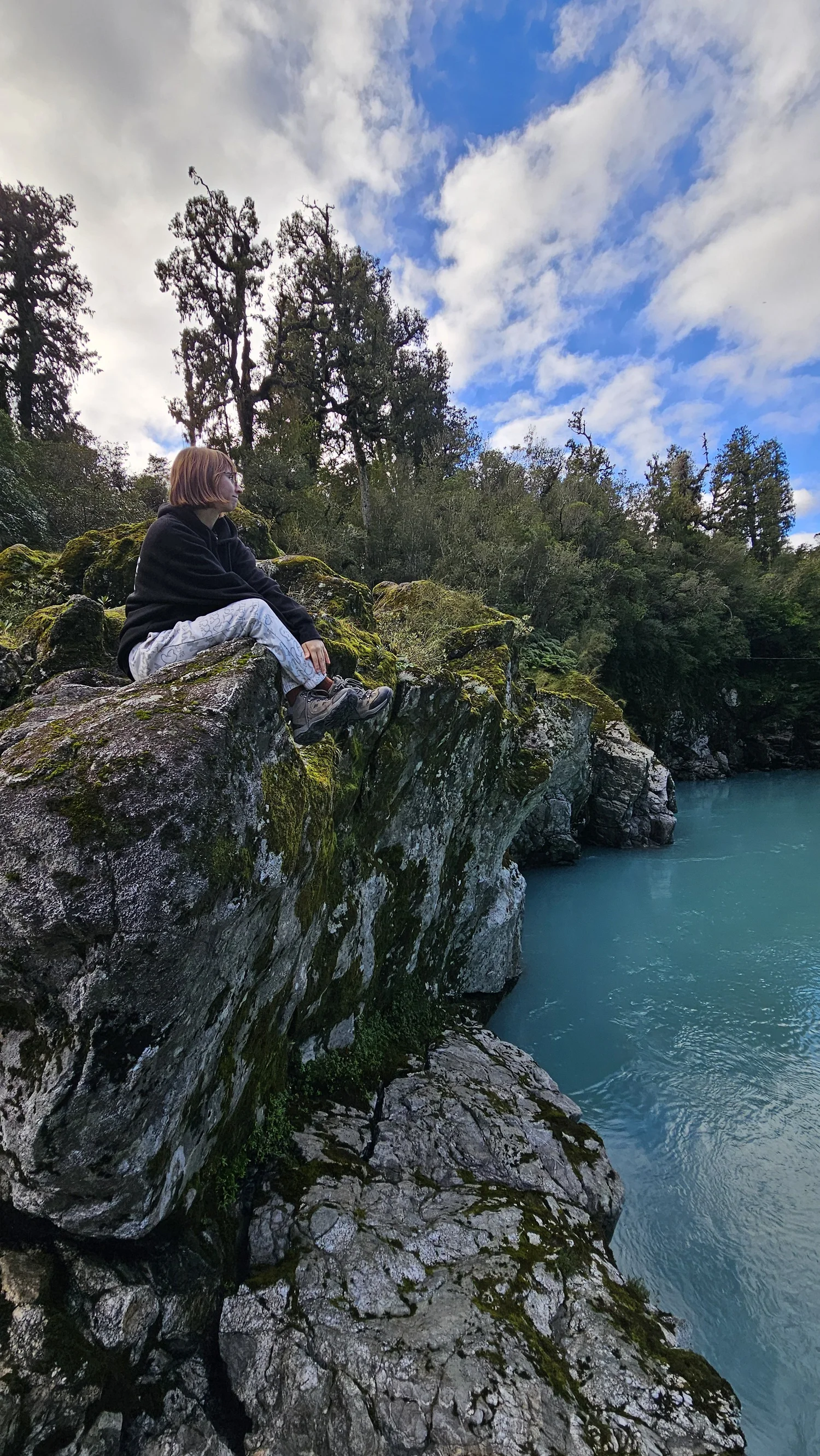
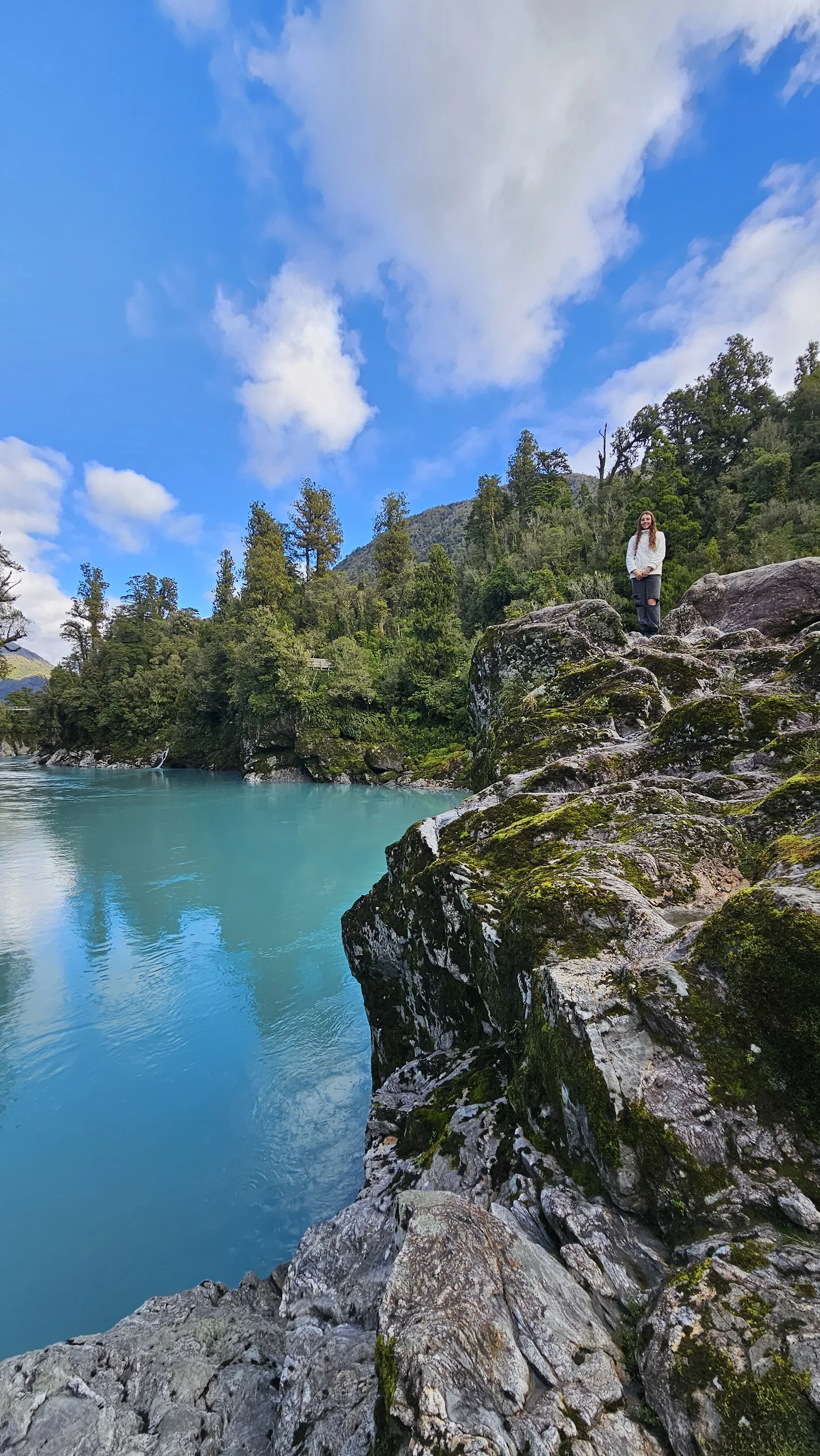
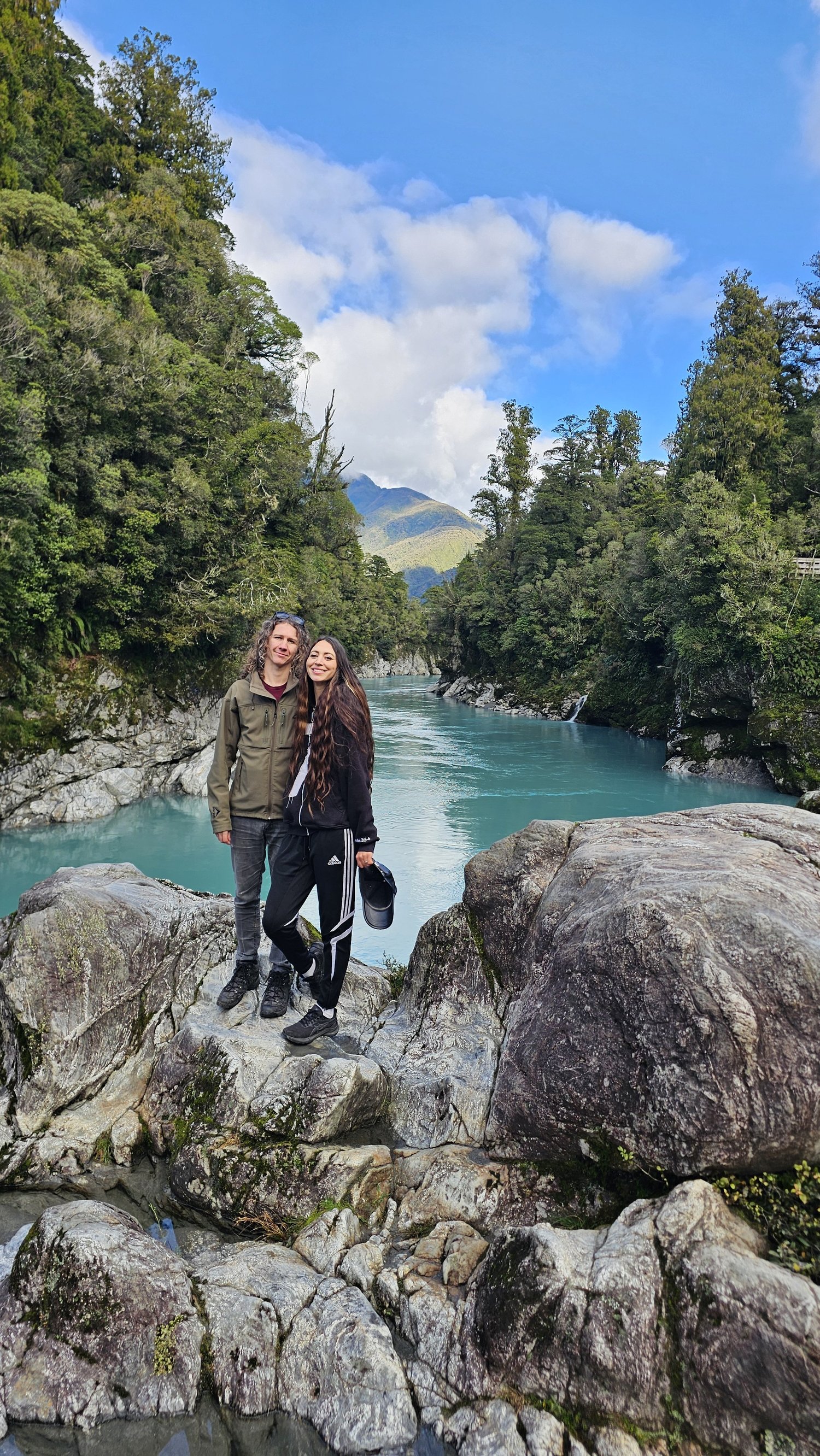
Easy walking. Very hard to stop looking around.
For our family, the walking itself was straightforward. The difficult part was moving fast enough to finish anything remotely close to the published time.
We were stopping for river views, bridge bouncing, waterfalls, forest, pīwakawaka, stones, photos and whatever else caught someone's attention.
We visited outside the busiest part of the year and only crossed paths with a handful of other groups. DOC warns that the car park can get very busy during the summer season from November to April.
Our recorded outing, not the official track distance.
Recorded elevation gain on our walk.
A few things worth knowing before you head to the gorge.
Current practical information below was rechecked against DOC on 7 September 2026.
Parking is available for cars and campervans, with two marked mobility spaces.
You do not currently need to reserve a time for the Hokitika Gorge Walk.
DOC lists toilets and an accessible toilet at the trailhead.
Drinking water is not available at the reserve.
DOC warns they can be fierce here. Our family can confirm they were highly motivated.
DOC says recent heavy rain can make the river appear grey instead.
The first 150 m viewing platform is wheelchair accessible.
DOC does not provide rubbish bins here.
Flying a drone on conservation land without the required permit is prohibited.
The page gives you the guide. The video gets the family adventure.
Come along for the first glimpse of that water, suspension bridge bouncing, sandfly warfare, the pounamu question and considerably more family nonsense than belongs in a practical guide.
Hokitika Gorge Walk FAQ
How long is the Hokitika Gorge Walk?
How far is Hokitika Gorge from Hokitika?
Why is Hokitika Gorge turquoise?
How long is the Hokitika Gorge suspension bridge?
Are there two suspension bridges at Hokitika Gorge?
Is Hokitika Gorge Walk suitable for families?
Can you swim at Hokitika Gorge?
Can you find pounamu at Hokitika Gorge?
Is Hokitika Gorge wheelchair accessible?
Are there toilets at Hokitika Gorge?
Are sandflies bad at Hokitika Gorge?
Current track sections, accessibility, bridge length, parking, toilets, water availability, river safety, sandfly advice, drone rules, rainforest information and directions were checked against the Department of Conservation. Lower bridge reopening information and current published loop figures were checked with West Coast NZ. Pounamu ownership and collection guidance was checked with Te Rūnanga o Ngāi Tahu. Our recorded distance, elevation, crowd level and family reactions are from our own visit.
Absolutely.
Hokitika Gorge gave us exactly what we hoped for: huge blue water, beautiful forest and two very good reasons to keep calling this bridge day.
It is an easy place to understand why people stop, but the best part for us was simply having another ridiculously fun family day together.