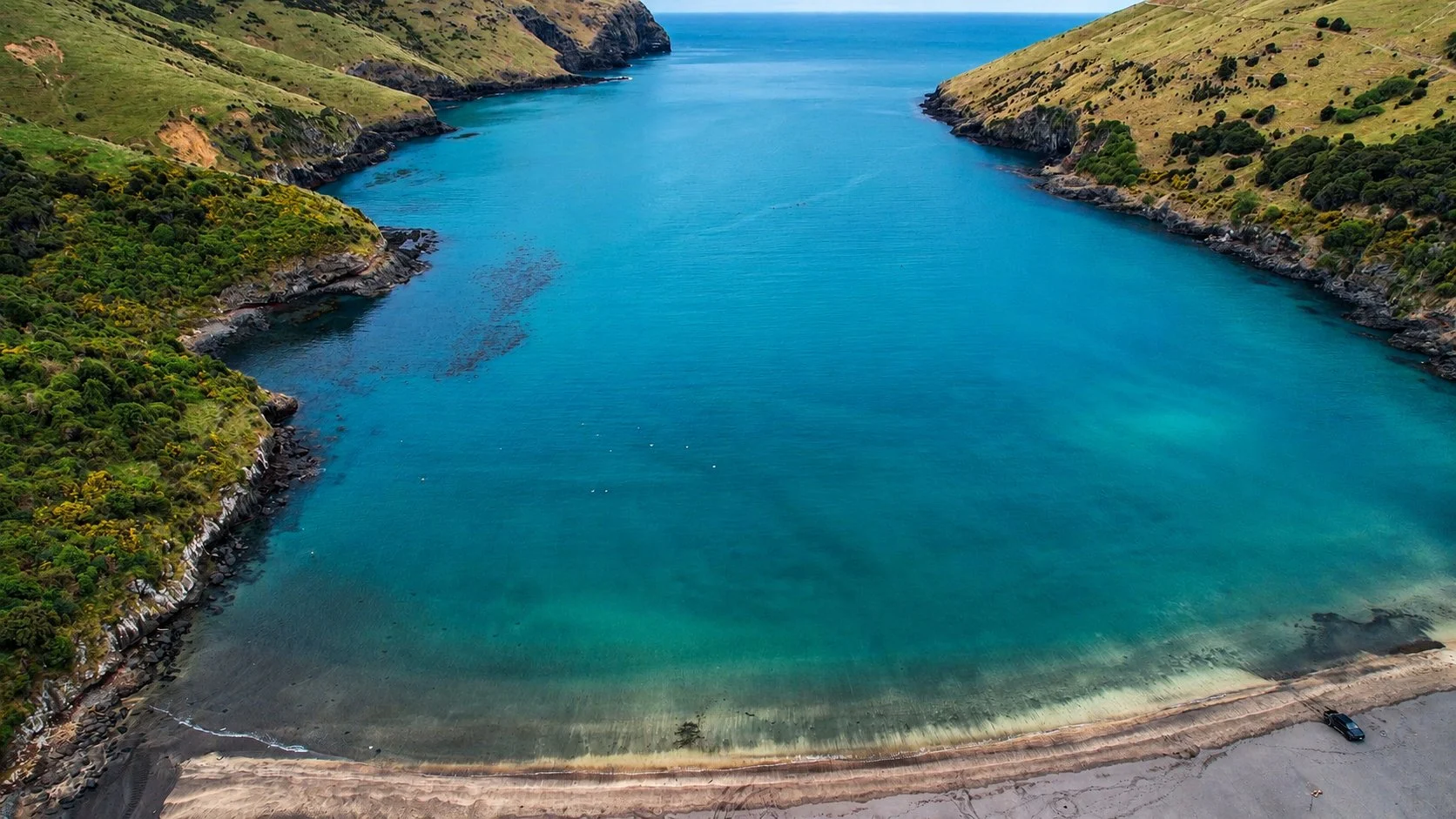

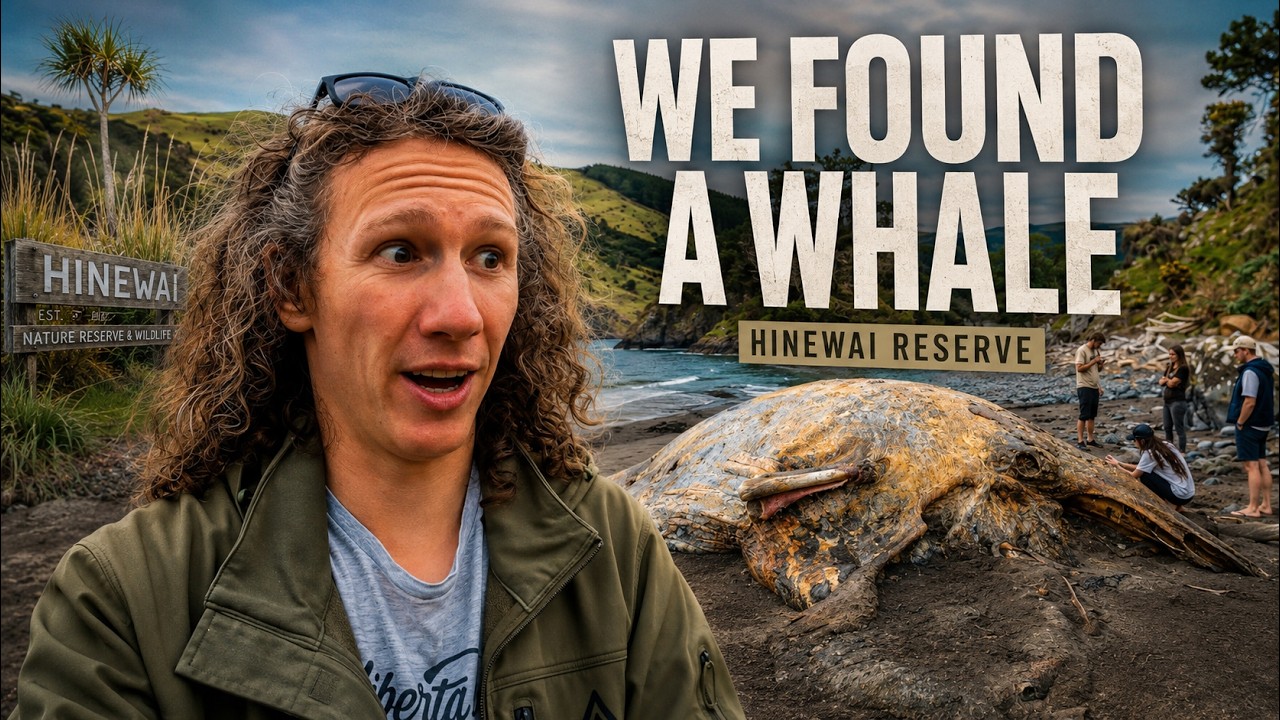
Hinewai Reserve We found a whale on a hidden beach.
But reaching it meant hiking through regenerating native bush, past waterfalls and all the way down to the coast on our longest New Zealand hike yet.
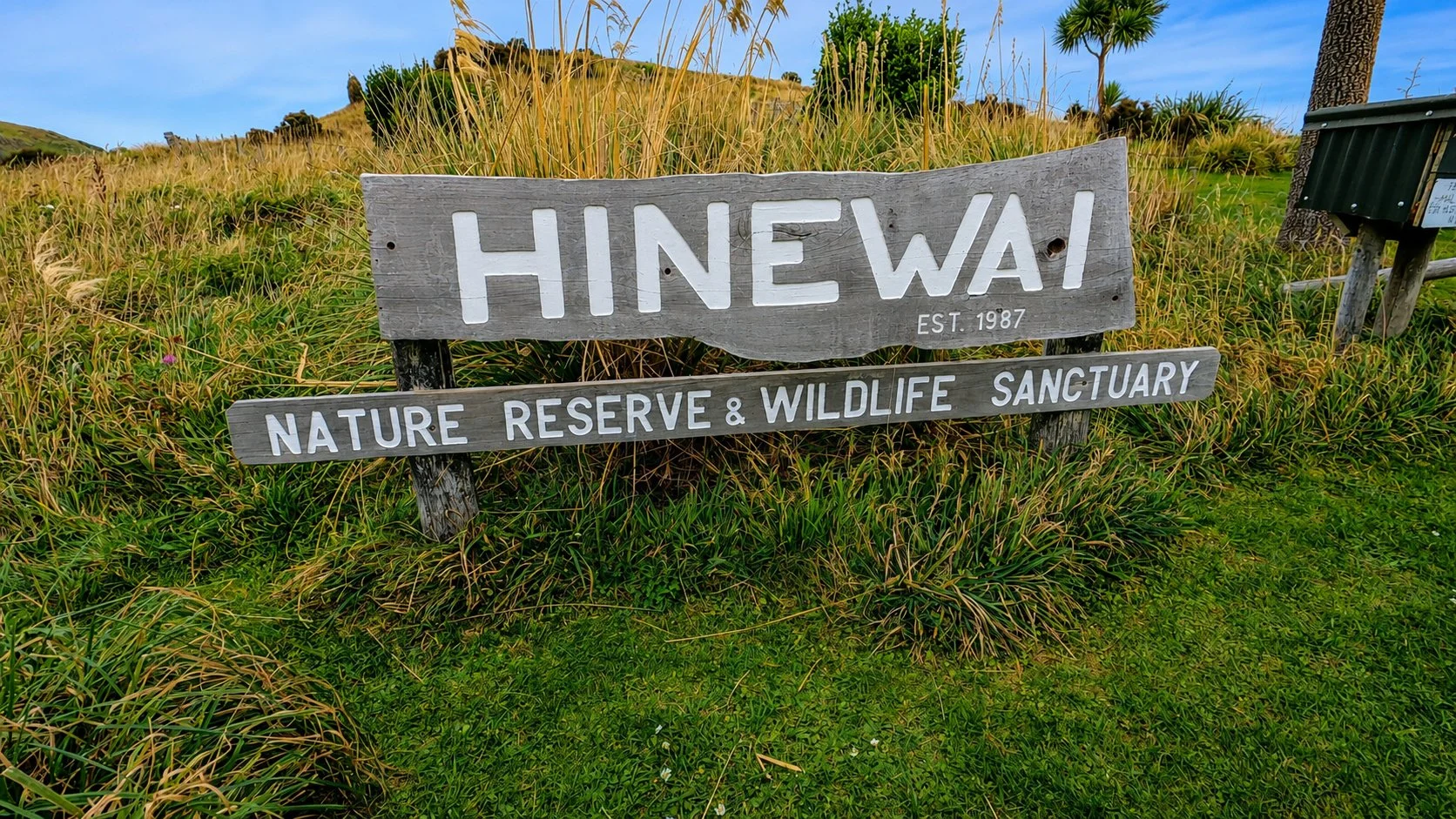
The road ended at a reserve we had barely heard of.
Hinewai sits on the south-eastern side of Banks Peninsula, beyond Akaroa and high above the coast. We arrived with our Kiwi mates Luke and Isaac, checked the maps, and decided to head all the way down toward the sea.
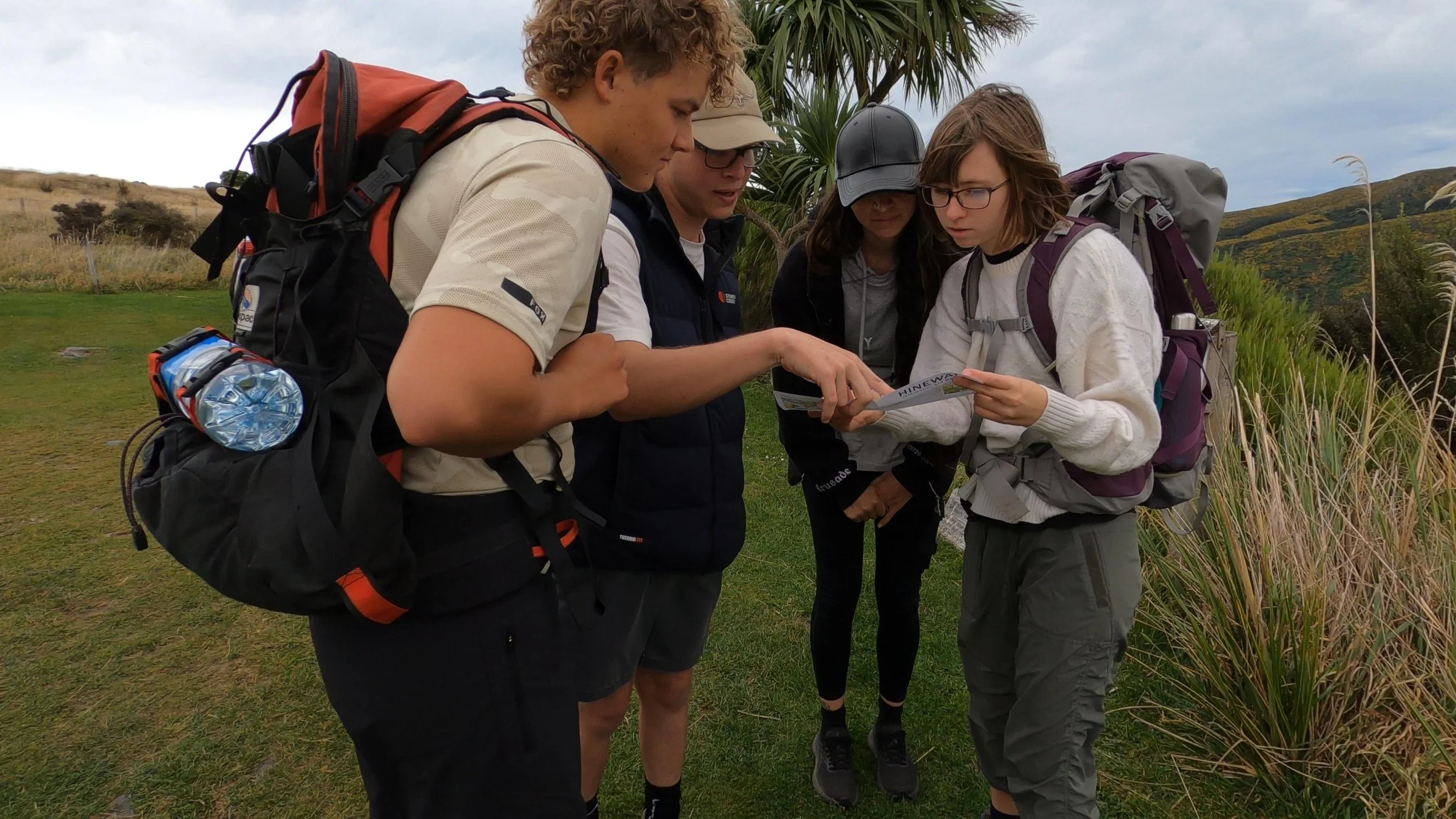
There is not one Hinewai walk.
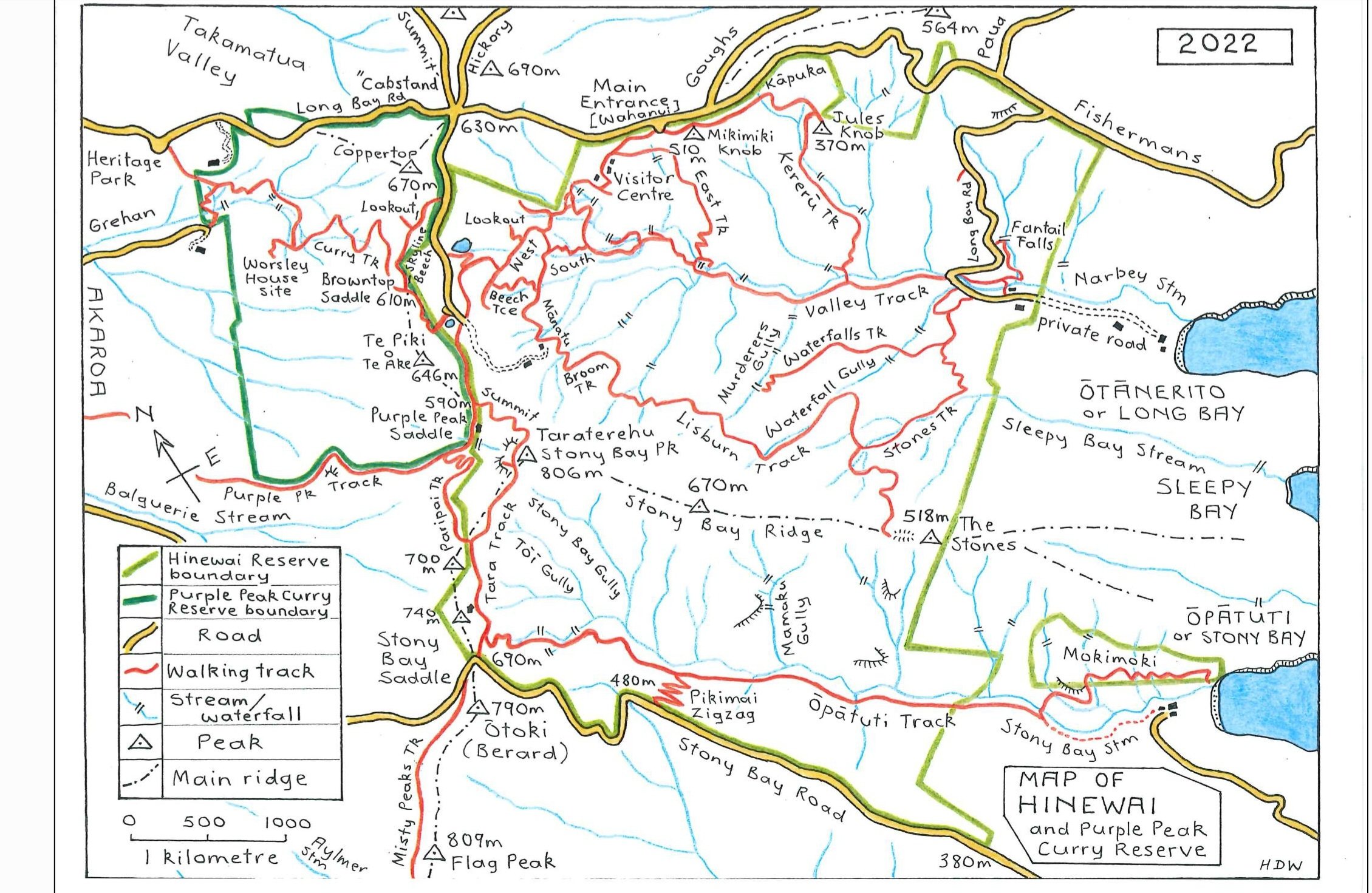
There is a whole network of tracks.
Hinewai and the adjoining Purple Peak Curry Reserve have about 20 km of publicly accessible walking tracks, ranging from short walks to much longer routes through steep country.
We stitched together our own route through the reserve, using waterfalls, track junctions and the coast as our targets.
That number comes from our group's recorded hike through several connected tracks. Hinewai has many possible route combinations.
This is why you need the map.
With so many junctions, waterfalls, ridges and routes to the coast, Hinewai is a place where a little planning matters.
Hinewai Reserve.
East of Akaroa on the south-eastern side of the peninsula.
Privately owned and managed for ecological restoration.
A network of publicly accessible walking tracks.
Visitors are welcome on foot. Donations help support the reserve.
Our group's recorded distance for this route.
Recorded elevation varied slightly between our watches.
Dogs and other pets are not allowed in the reserve.
Camping is not allowed within Hinewai Reserve.
We found a whale on a hidden beach.
Come through Hinewai with us, chase waterfalls, hike all the way down to the coast, discover the whale, and then tackle the climb back out.
 ▶
▶
Hinewai does something surprising with one of New Zealand's most hated plants.
It lets some gorse stay.
Hinewai's restoration strategy relies heavily on natural regeneration. Rather than removing every patch of gorse, the reserve allows it to act as a temporary nurse canopy while native vegetation grows beneath it.
Over time, native trees rise through the gorse and shade it out. Walking through the reserve means moving through different stages of that recovery.
Hinewai is an active ecological restoration project. The goal is to allow native vegetation and wildlife to re-establish naturally, with intervention focused on the introduced plants and animals that seriously interfere with that process.
Then the tracks started dropping.
And once we committed to the coast, we knew every metre down was eventually coming back up.
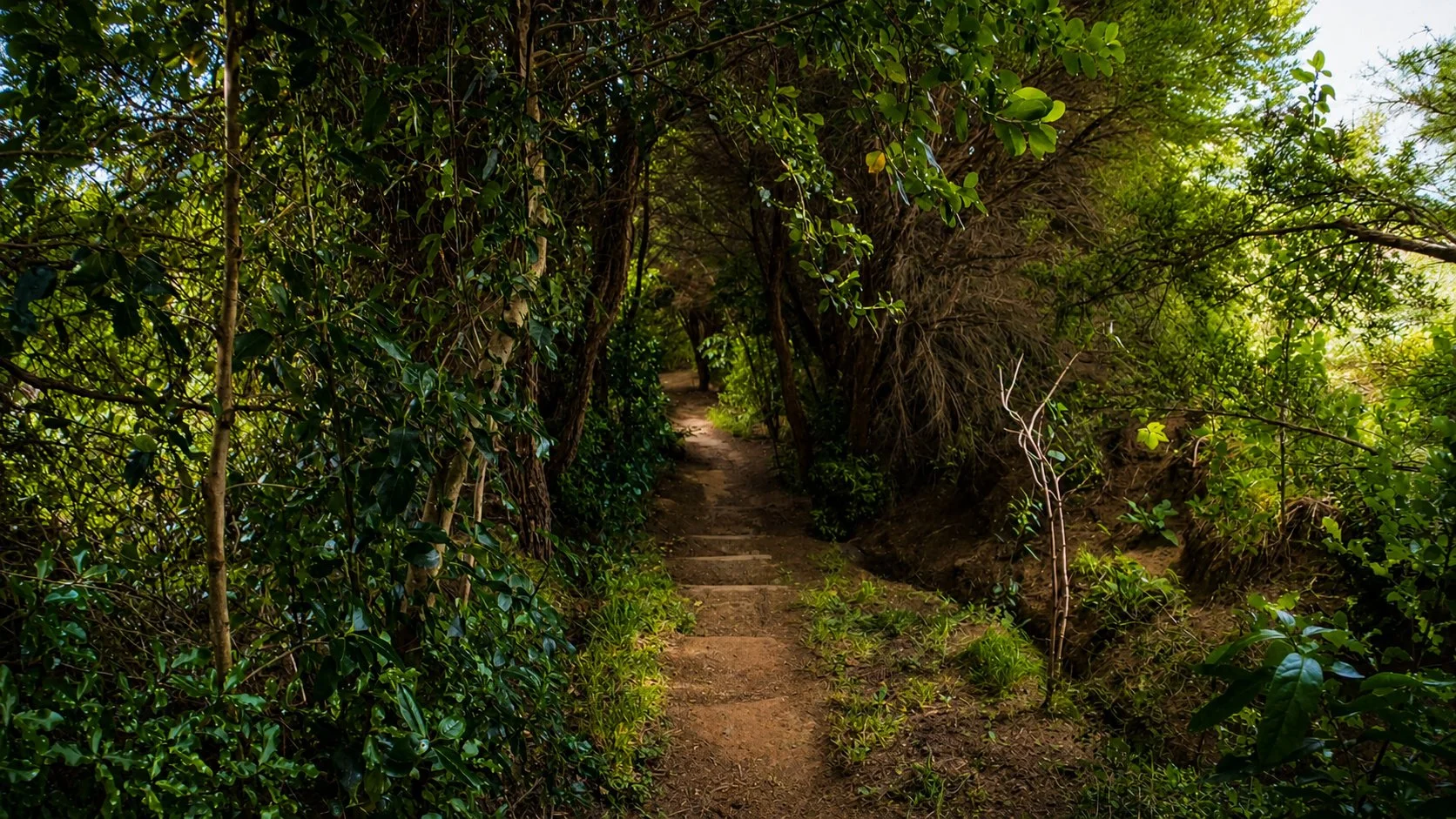
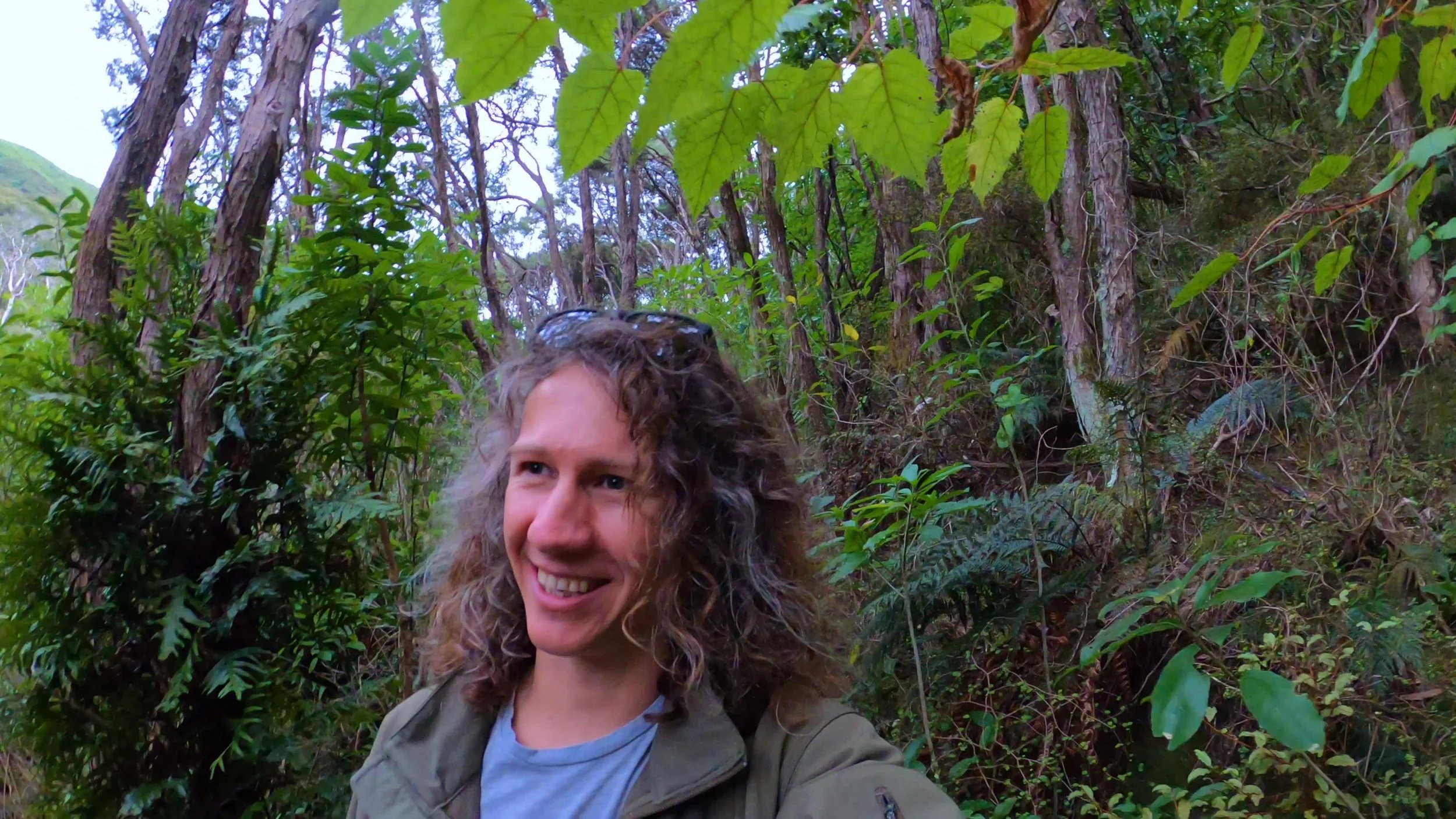
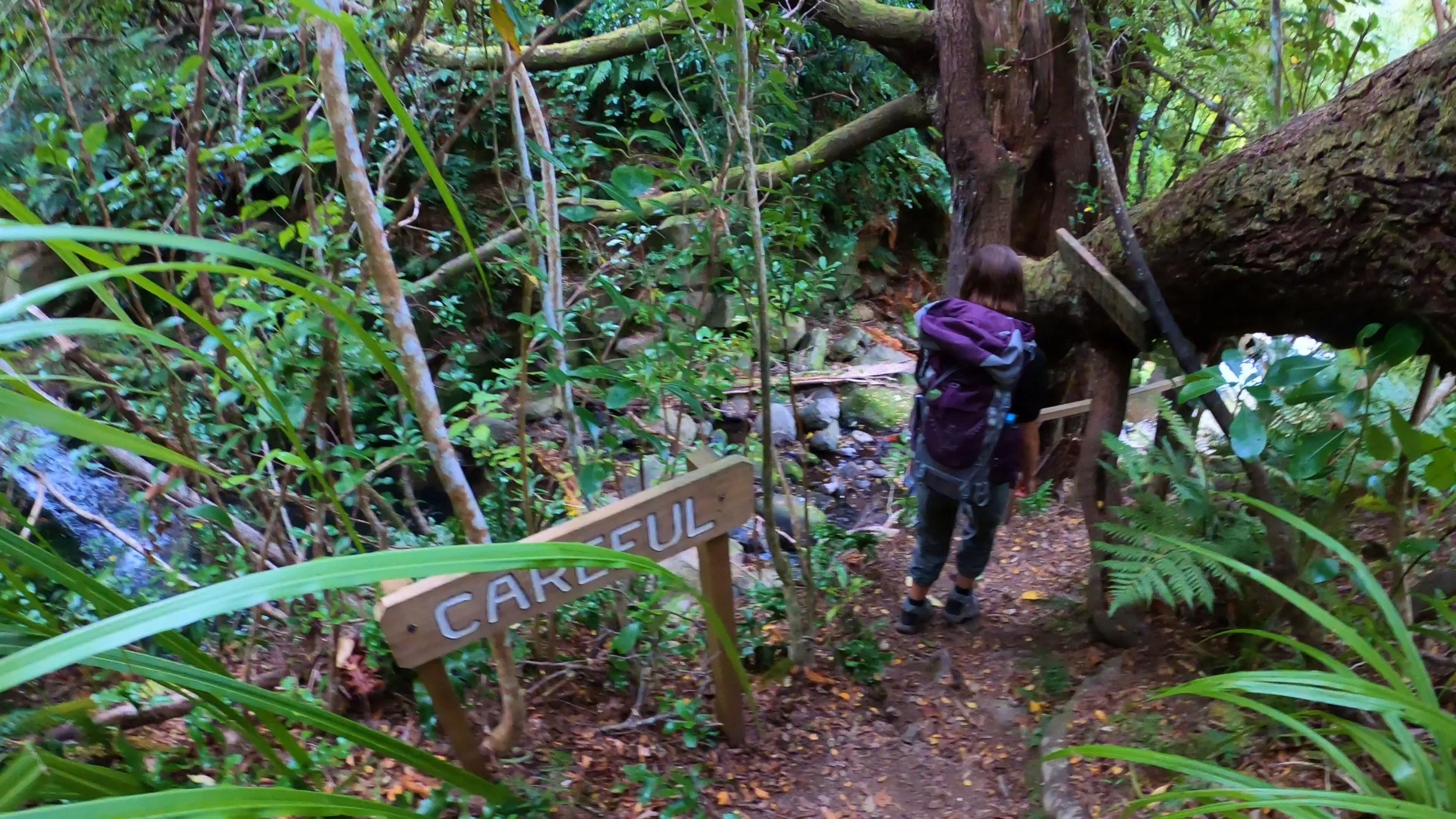
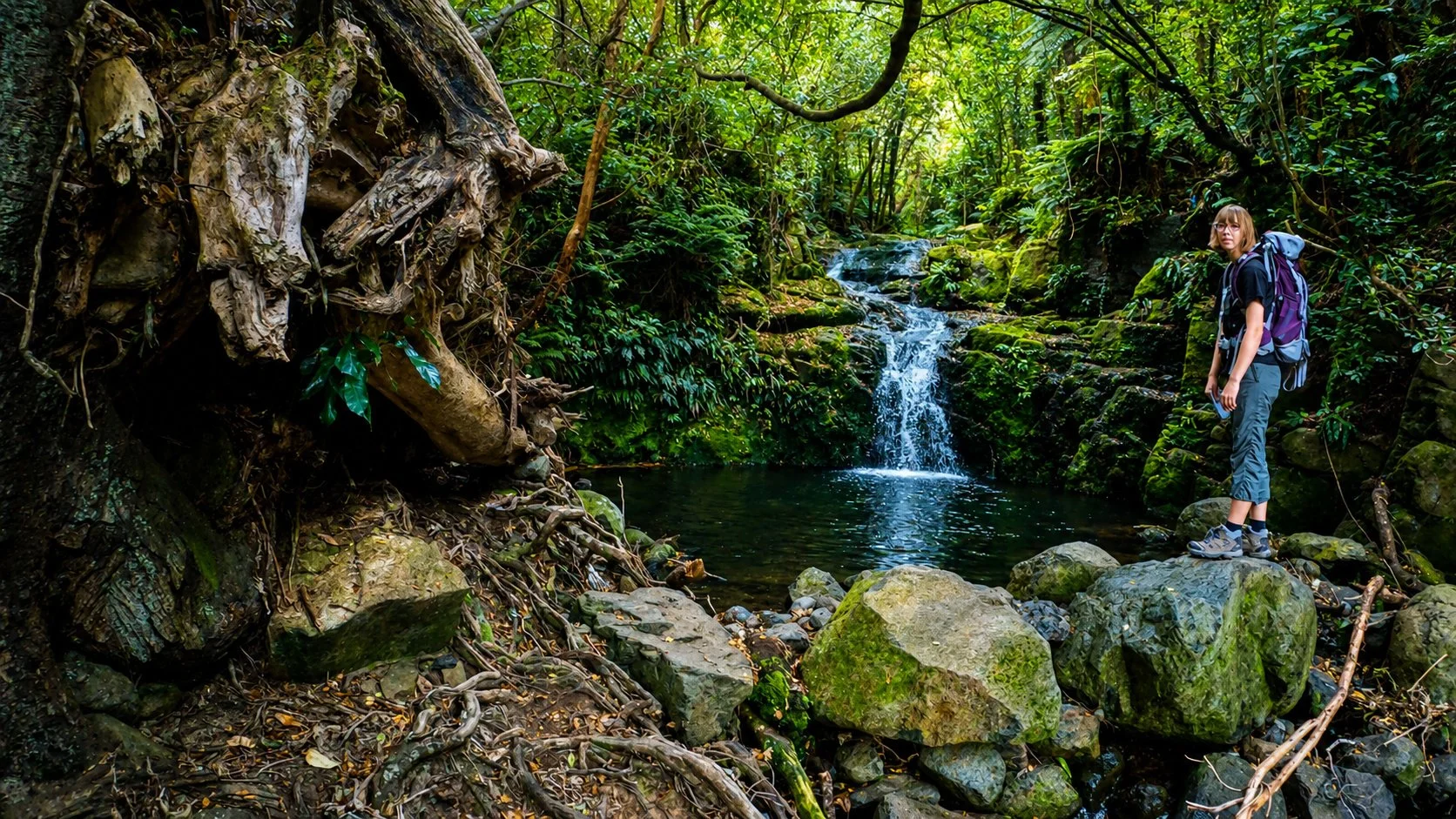
Hinewai kept giving us reasons to leave the main route.
Permanent streams through the reserve create more than 50 waterfalls. We kept following side tracks, signs and little detours to see what was around the next corner.
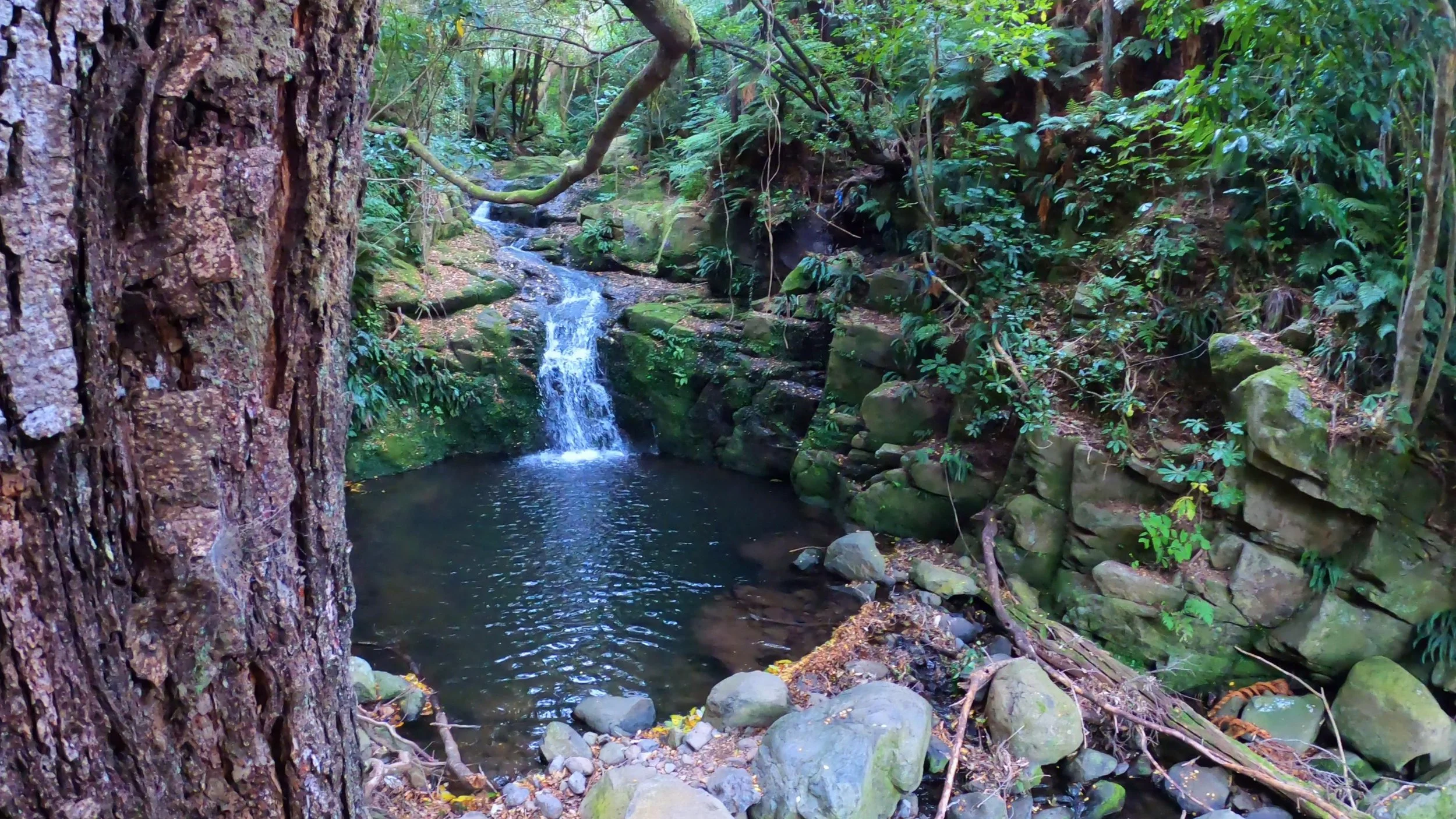
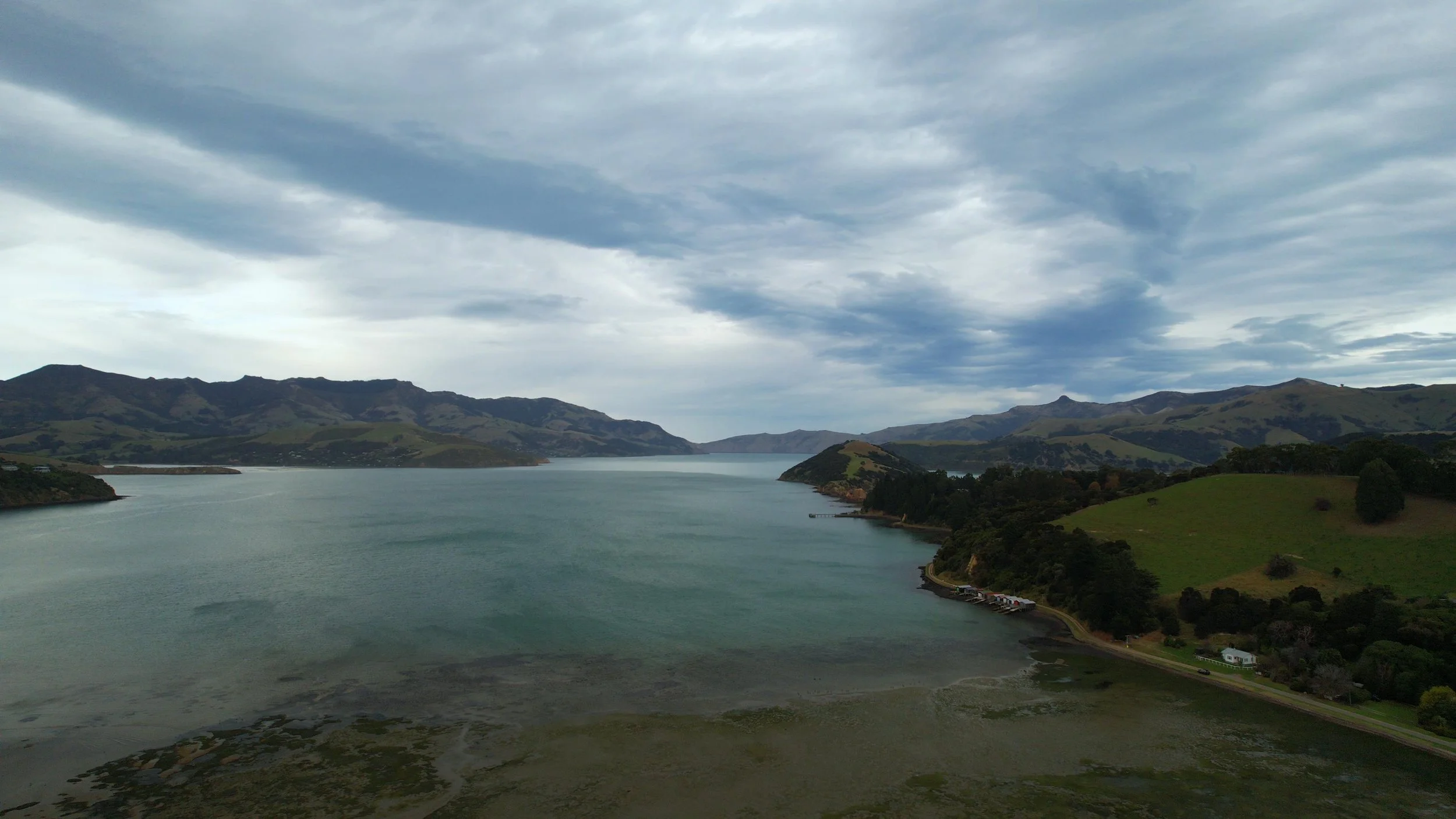
The destination had been below us the whole time.
After hours in the bush, seeing the Pacific and the beach below finally made the scale of the descent obvious.
Shoes off. Lunch out. We thought we had reached the relaxing part.
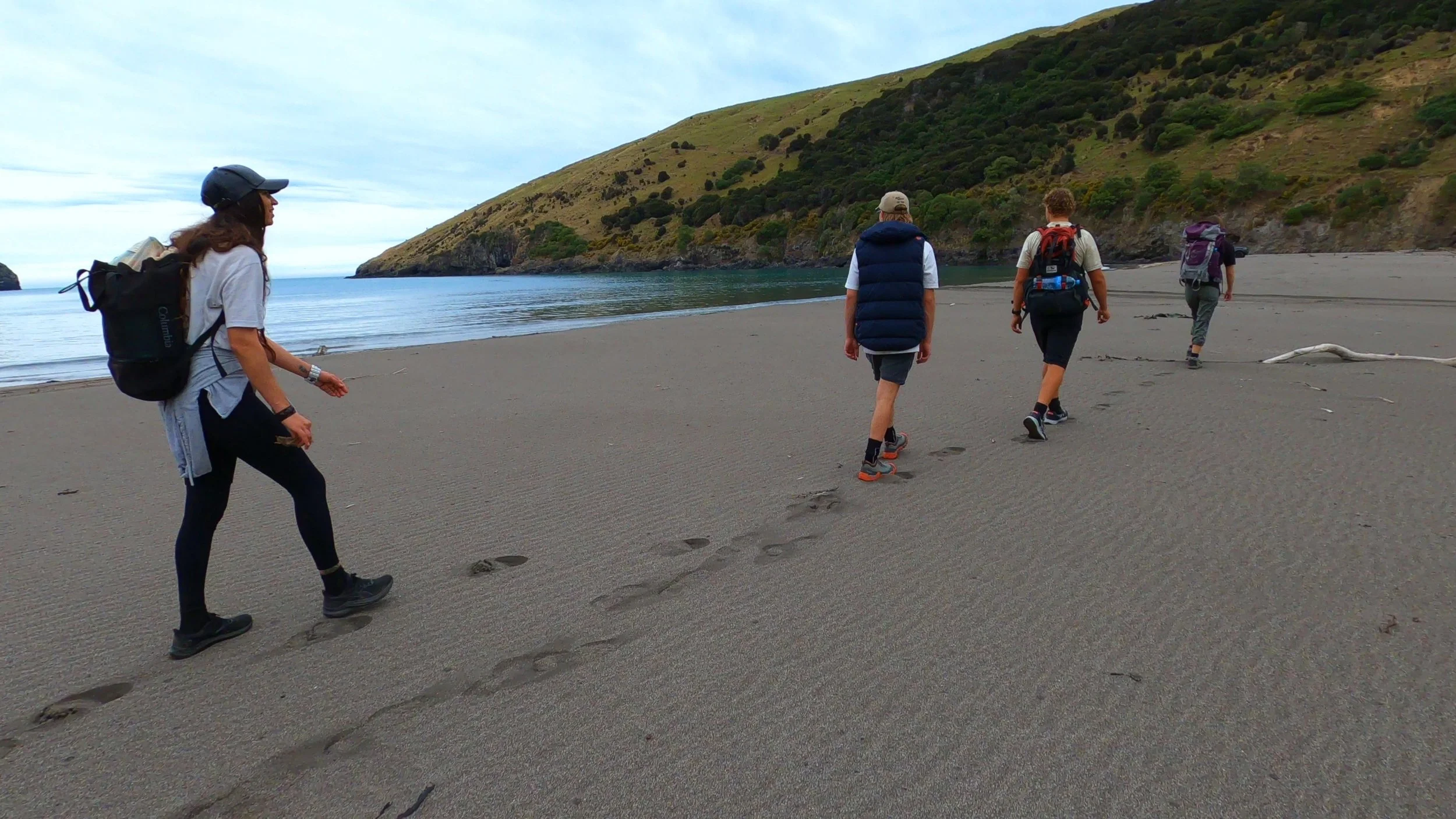
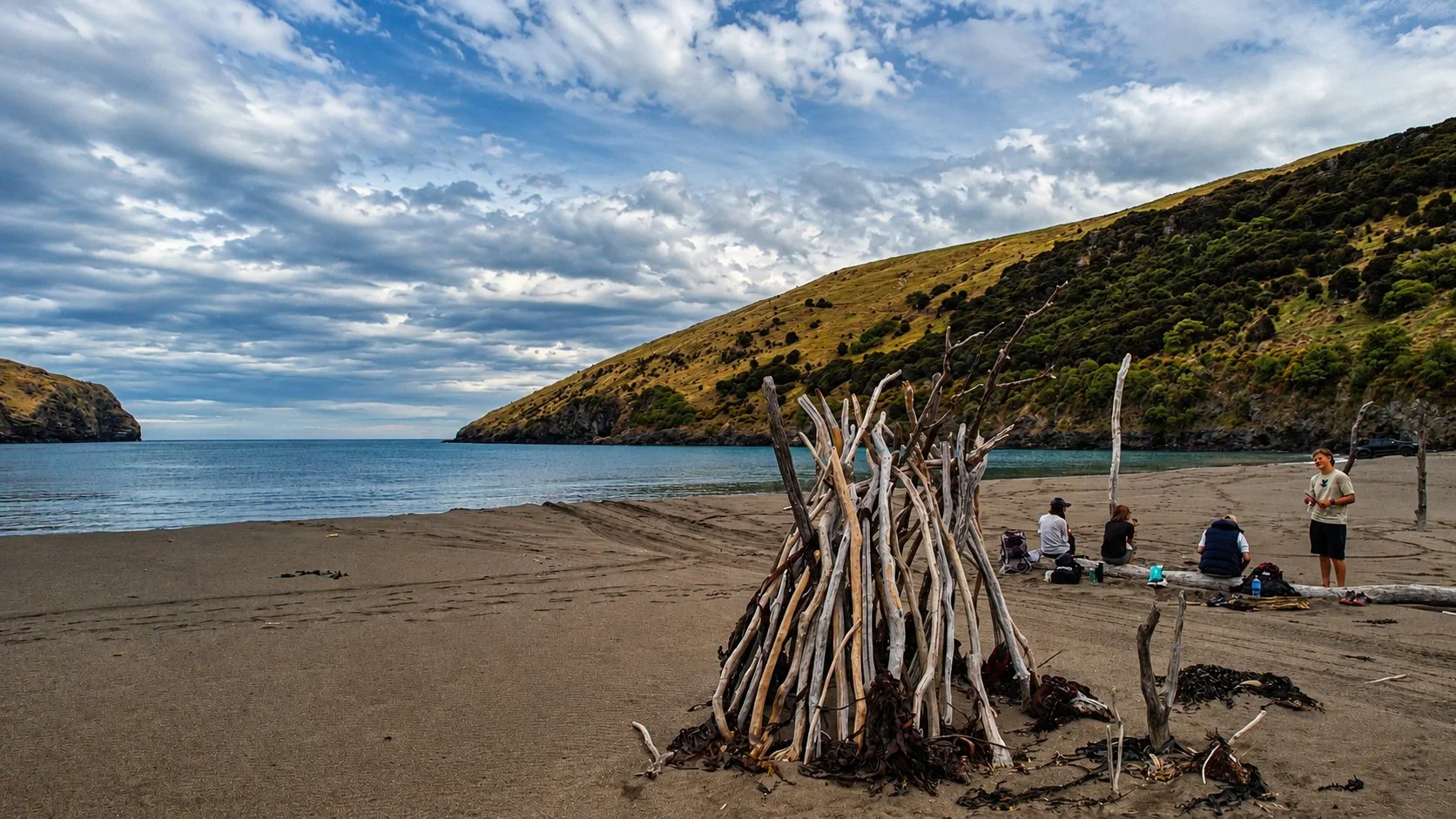
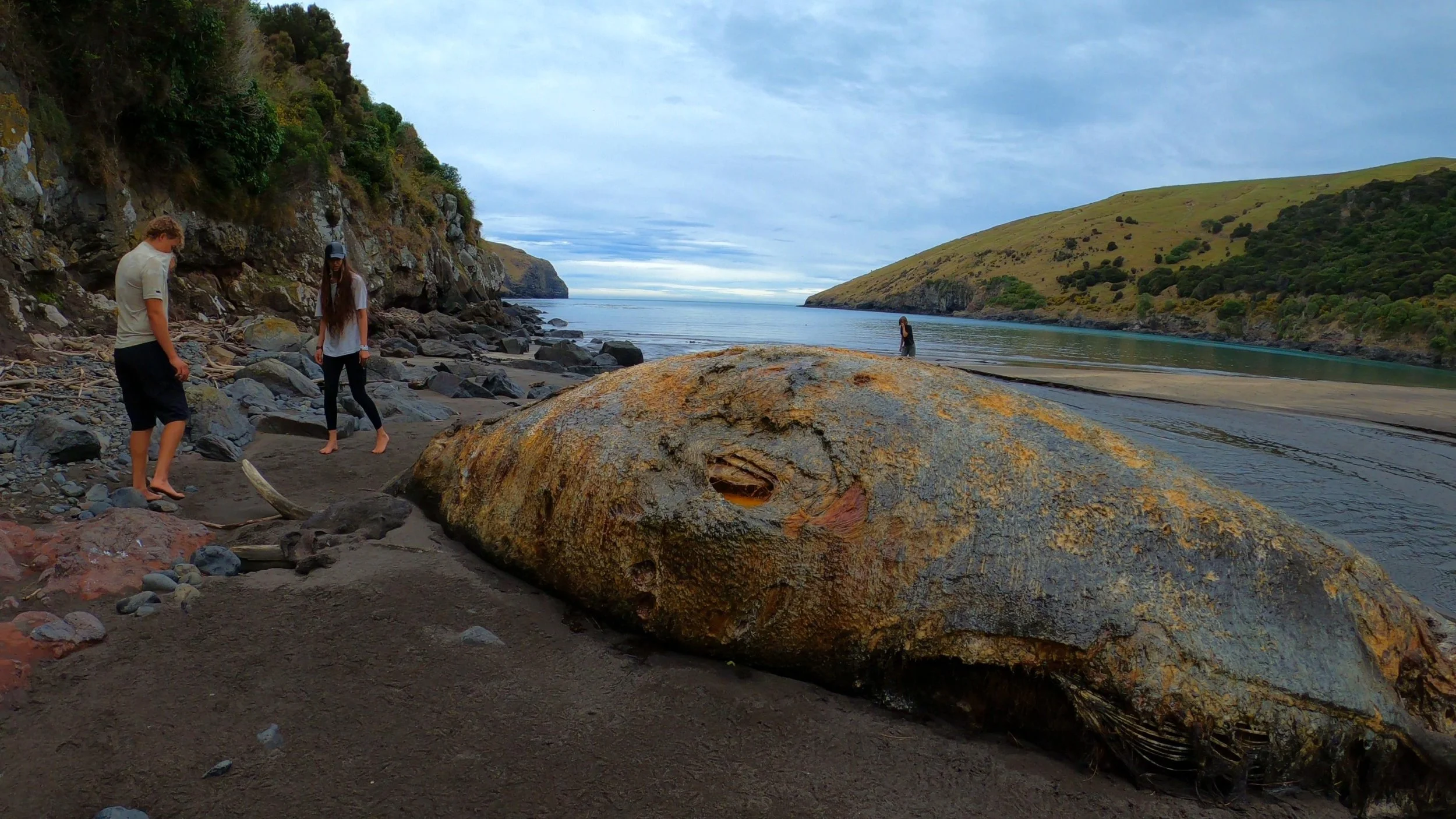
We expected a hidden beach.
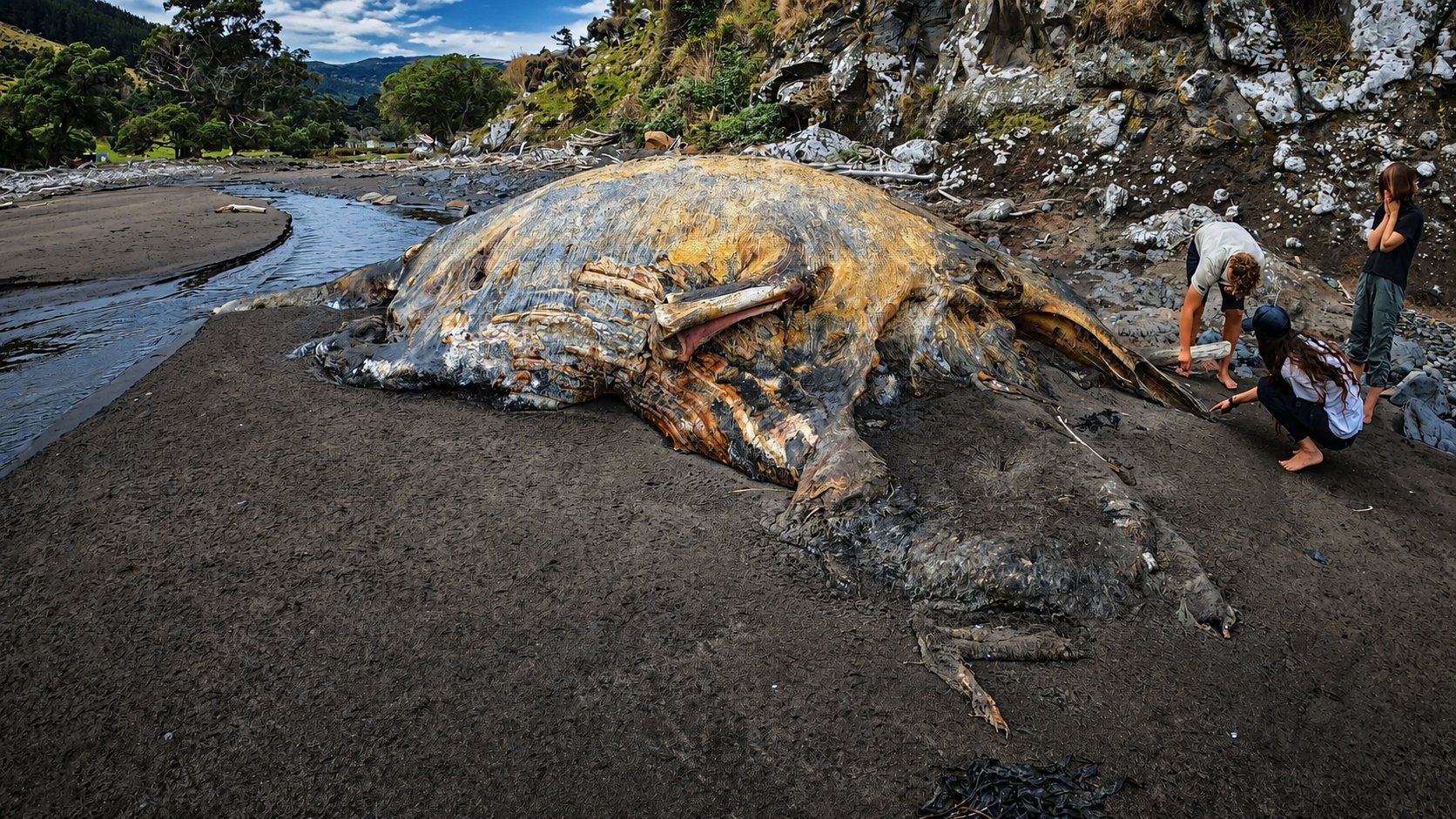
We found a whale.
A dead whale had washed ashore. None of us had expected to find something like this after hiking all the way down from the reserve.
It turned our lunch stop into a science lesson.
We looked closely at the whale, wondered what species it might be, and then found something else lying nearby.
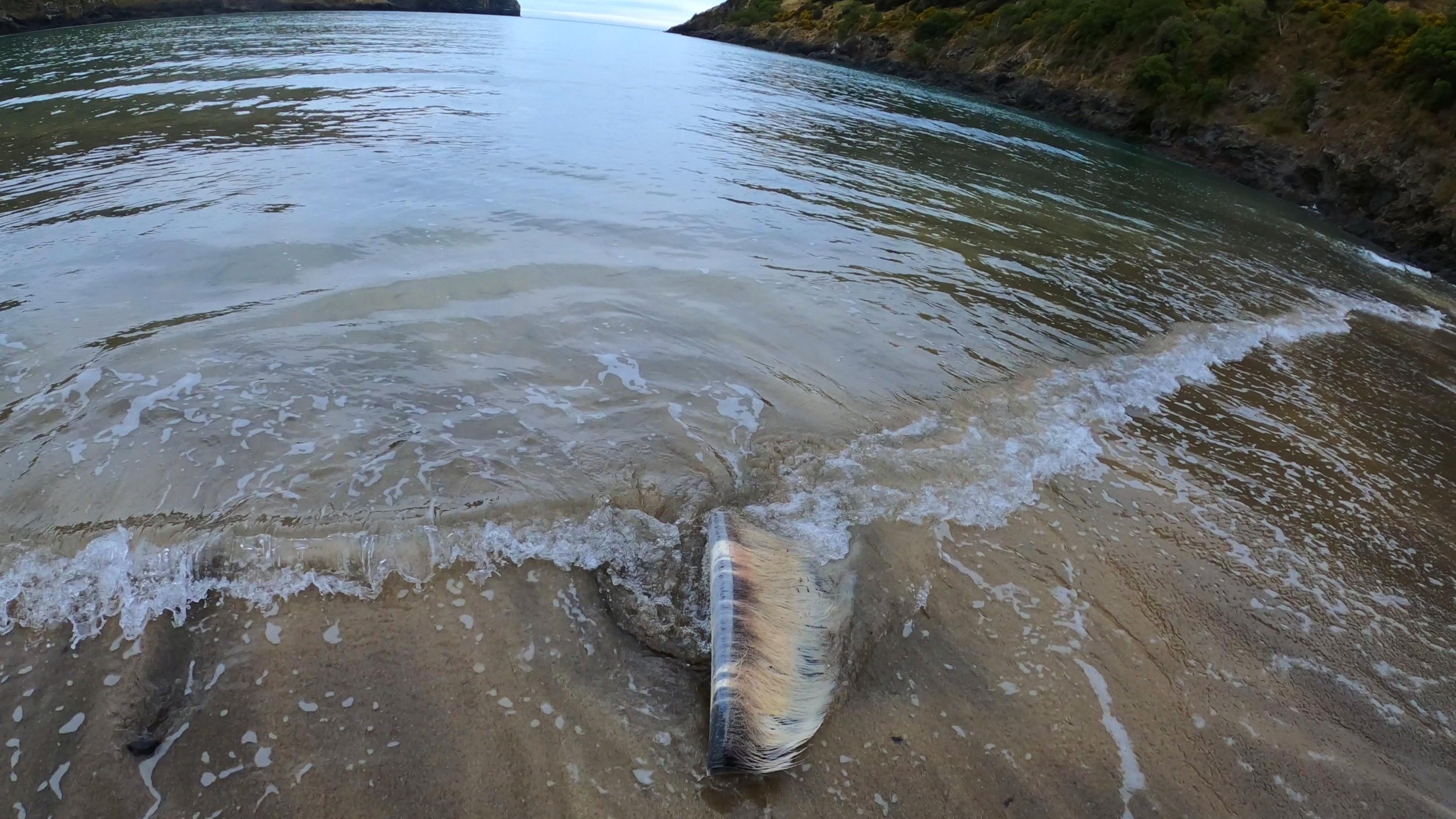
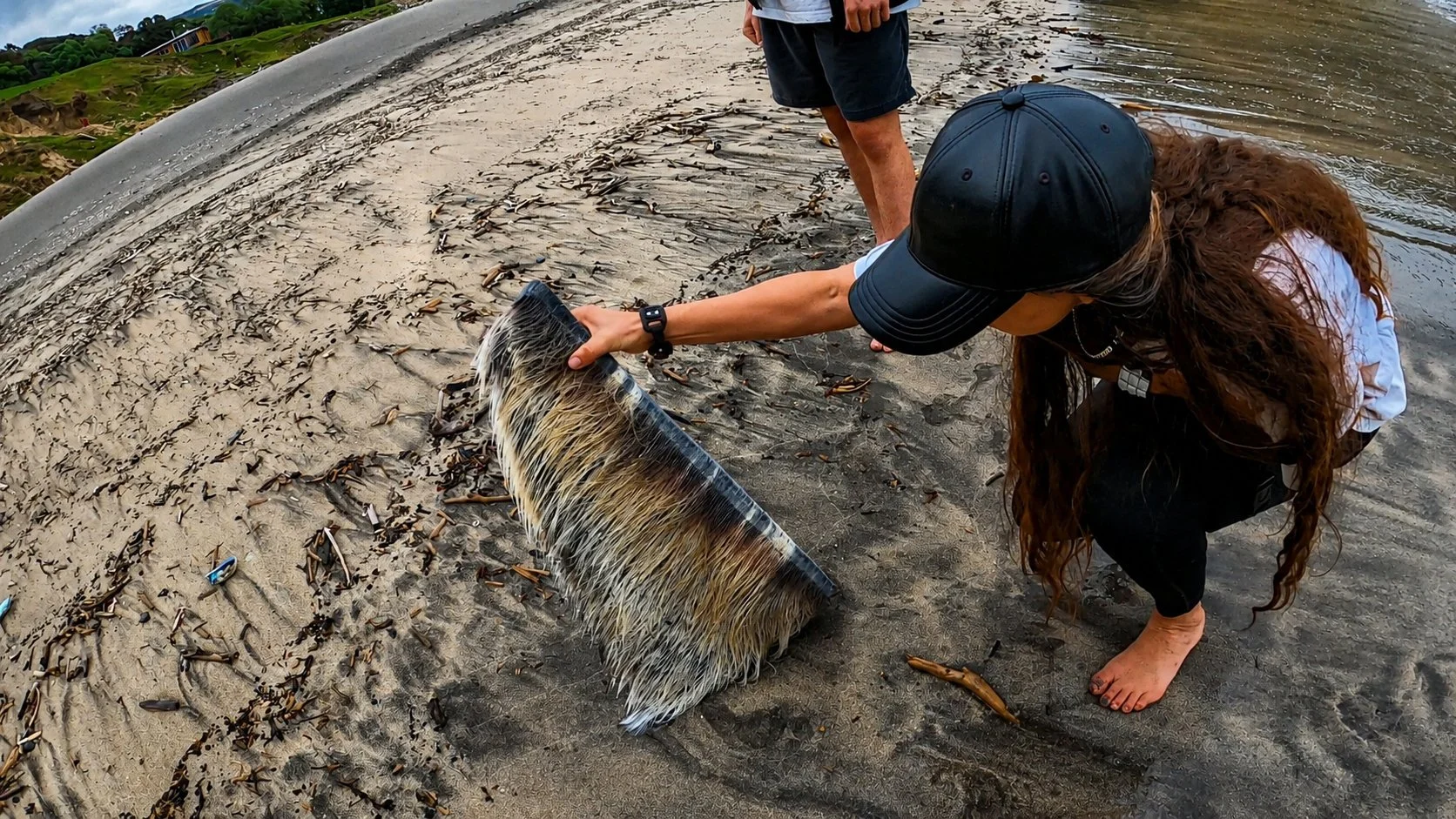
It looked almost like flexible plastic.
Baleen is not a tooth. It is part of the filter-feeding system used by baleen whales.
Plates hang from the whale's upper jaw, and fringed inner edges act like a filter, helping strain small prey from seawater.
The piece we found felt surprisingly flexible and rubbery, with a fibrous edge that looked completely different from what we expected.
Marine mammal remains are protected in New Zealand. DOC has rules around possessing whale parts, including baleen. A stranded or dead whale should be reported to DOC.
Keep your distance and contact DOC.
DOC manages whale strandings in New Zealand and asks the public to report stranded or dead whales through the DOC emergency hotline.
Every metre down had to be climbed again.
We chose a different return route that looked quicker on the map. It was also steeper.
The watches surprised all of us.
We had all guessed shorter.
Recorded by Luke's watch during our route through Hinewai.
Our devices differed slightly, so we show the recorded range.
These are our group's recorded figures from the route we chose. They are not official Hinewai distance or elevation specifications, and other track combinations can be much shorter or longer.
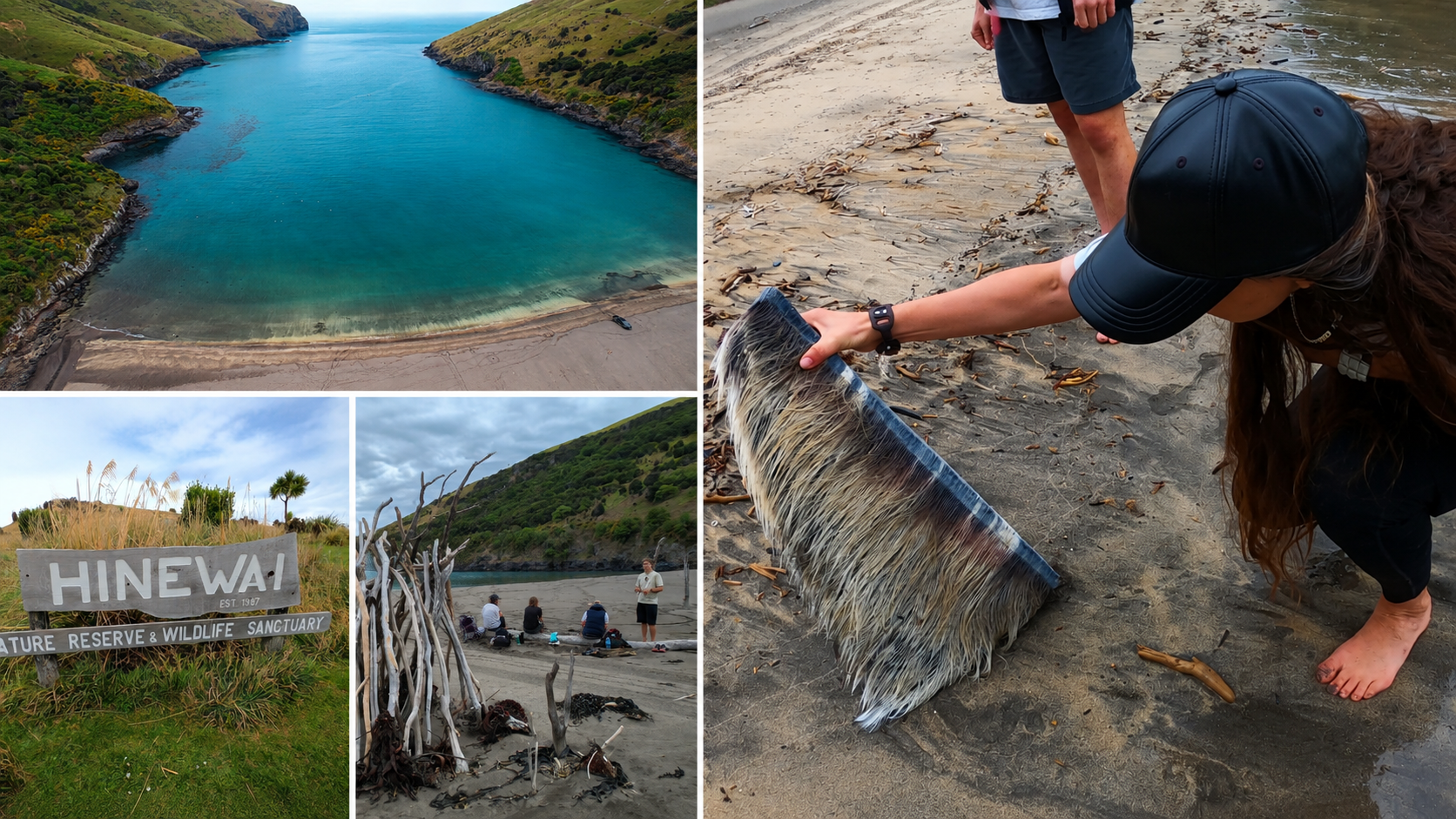
Hinewai rewards exploring, but do not underestimate the terrain.
Entry
Hinewai is privately owned and managed but visitors are welcomed on foot. Entry is free, with donations encouraged.
Track network
Hinewai and adjoining Purple Peak Curry Reserve have about 20 km of public walking tracks. There are many possible route combinations.
Steep terrain
Hinewai specifically warns that there is a lot of up and down, some track sections are steep and tracks can become slippery after rain.
Toilets
Toilets are available at the Visitor Centre, Ōtānerito and several other points around the track network.
Drinking water
Hinewai says clean drinking water is available at the Visitor Centre and from flowing streams. Check current advice when visiting.
Dogs and pets
Dogs and other pets are not permitted because they can disturb wildlife and may also be endangered by pest-control traps or poison.
Camping
Camping is not allowed anywhere in Hinewai Reserve.
Fires
Hinewai has a total year-round fire ban, including smoking, cookers and fires of any kind.
Hinewai's current official website still notes that the major December 2021 rain event damaged tracks, bridges and other infrastructure. Many routes are walkable again, but the reserve advises visitors to get current information at the Visitor Centre.
What we would want to know before going.
Where is Hinewai Reserve?
Is Hinewai Reserve free?
How big is Hinewai Reserve?
How long are the Hinewai walking tracks?
Is Hinewai difficult?
Can you walk to the beach from Hinewai?
Are there waterfalls at Hinewai?
Can dogs go to Hinewai Reserve?
Can you camp at Hinewai?
What should I do if I find a stranded or dead whale?
Official facts and our experience are kept separate.
Reserve size, access rules, track network, facilities, walking conditions and restoration information are based primarily on current information published by Hinewai Reserve.
Our route, 14.47 km distance, approximately 684–699 m recorded elevation gain, waterfall stops, beach discovery and reactions to the terrain come from our own hike.
Whale stranding and marine mammal information is based on current Department of Conservation guidance.
We went looking for waterfalls. We came back with a much bigger story.
Hinewai gave us regenerating forest, steep tracks, waterfalls, a hidden stretch of coast, an unexpected whale and the longest hike we had completed in New Zealand so far.