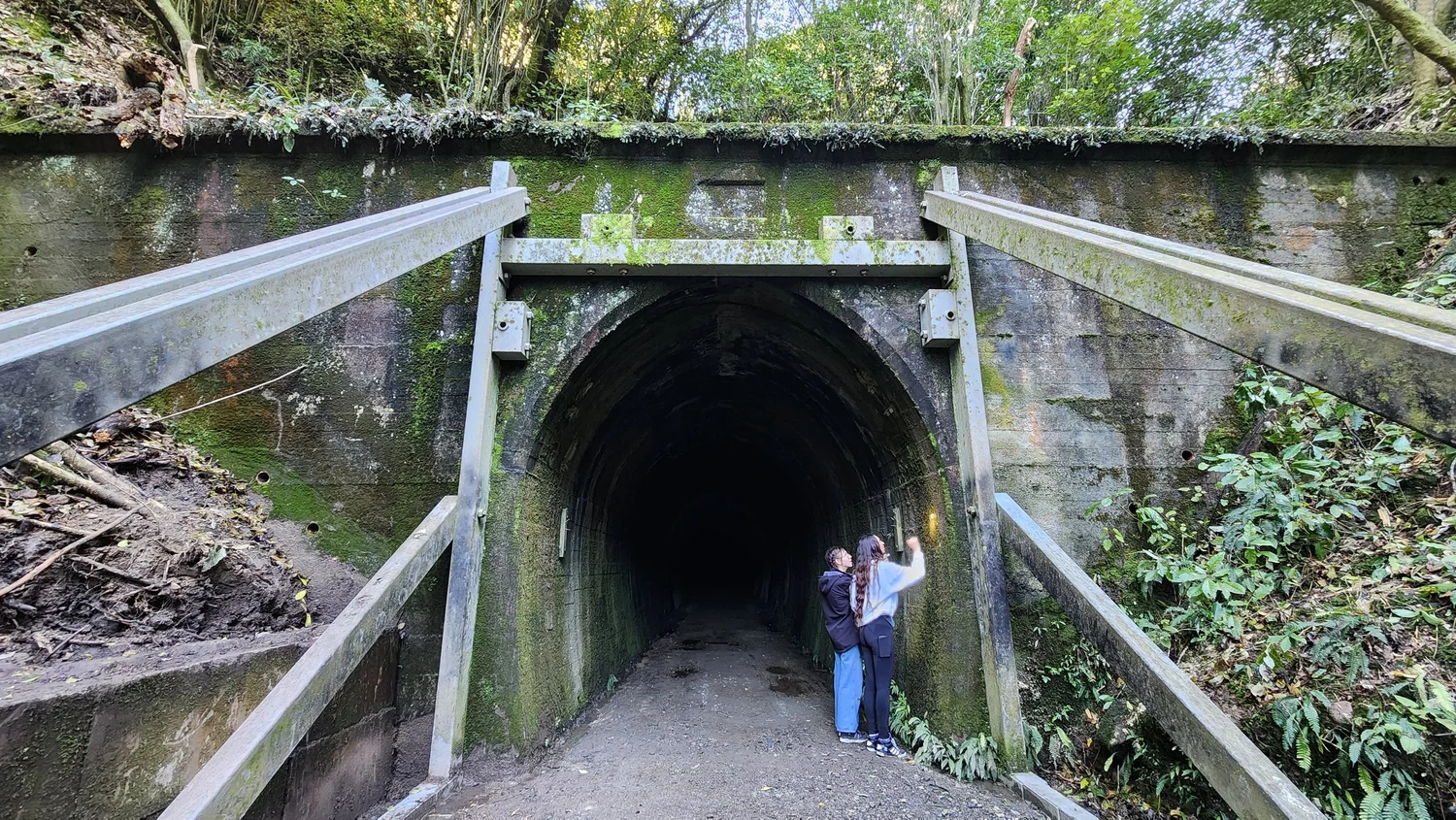

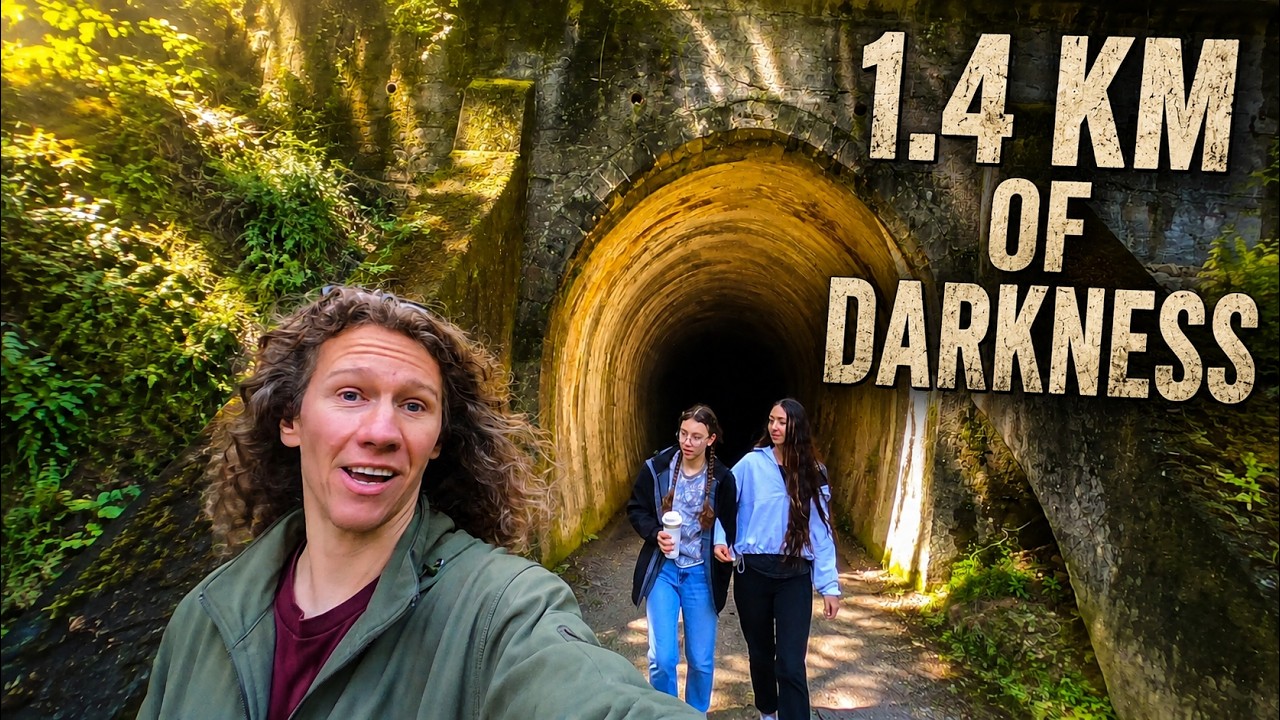
Spooners Tunnel 1.4 KM OF DARKNESS
No installed lights, just a long former railway tunnel cutting straight through the mountain.
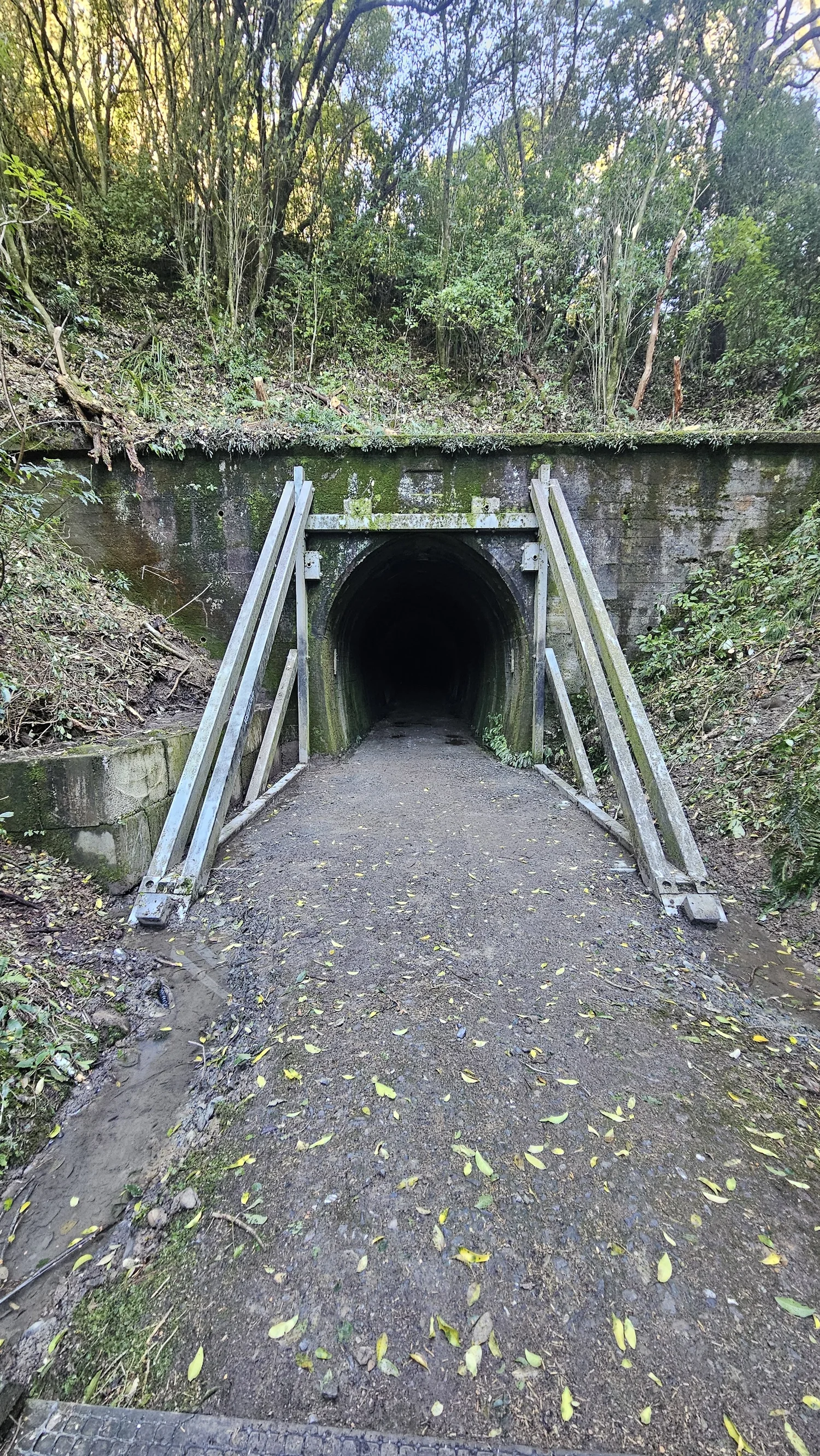
The entrance looked big. The darkness made it feel much bigger.
Once we stepped inside, the daylight behind us started shrinking surprisingly fast.
Spooners Tunnel does not have installed lighting, and the shape of the old railway tunnel means you cannot simply stand at one portal and stare through to daylight at the other end.
The farther we walked, the quieter and darker it became. Distance markers gave us some idea of our progress, but for a while it felt like the tunnel was just going to keep carrying on through the mountain.
Then the nerves settled down and the questions started. What was on the walls? Why did some sections look different? And how did crews manage to dig this from both sides in the 1890s?
Spooners Tunnel
A historic railway tunnel that now forms one of the most unusual sections of Tasman's Great Taste Trail.
Current Nelson Tasman and Great Taste Trail information.
Walkers and cyclists use the former railway formation.
Bring your own light.
Current trail guidance recommends an extra layer.
Construction began in 1891.
The Nelson railway never joined the national network.
Current Great Taste Trail rule for Spooners Tunnel.
Published trail distance to the tunnel is 1.7 km.
The page can explain the tunnel. The episode lets you walk through it with us.
From the portal disappearing behind us to the soot, railway lining and the first glimpse of daylight at the far end, this is one that works better when you can hear the tunnel too.
1.4 KM
IN THE DARK
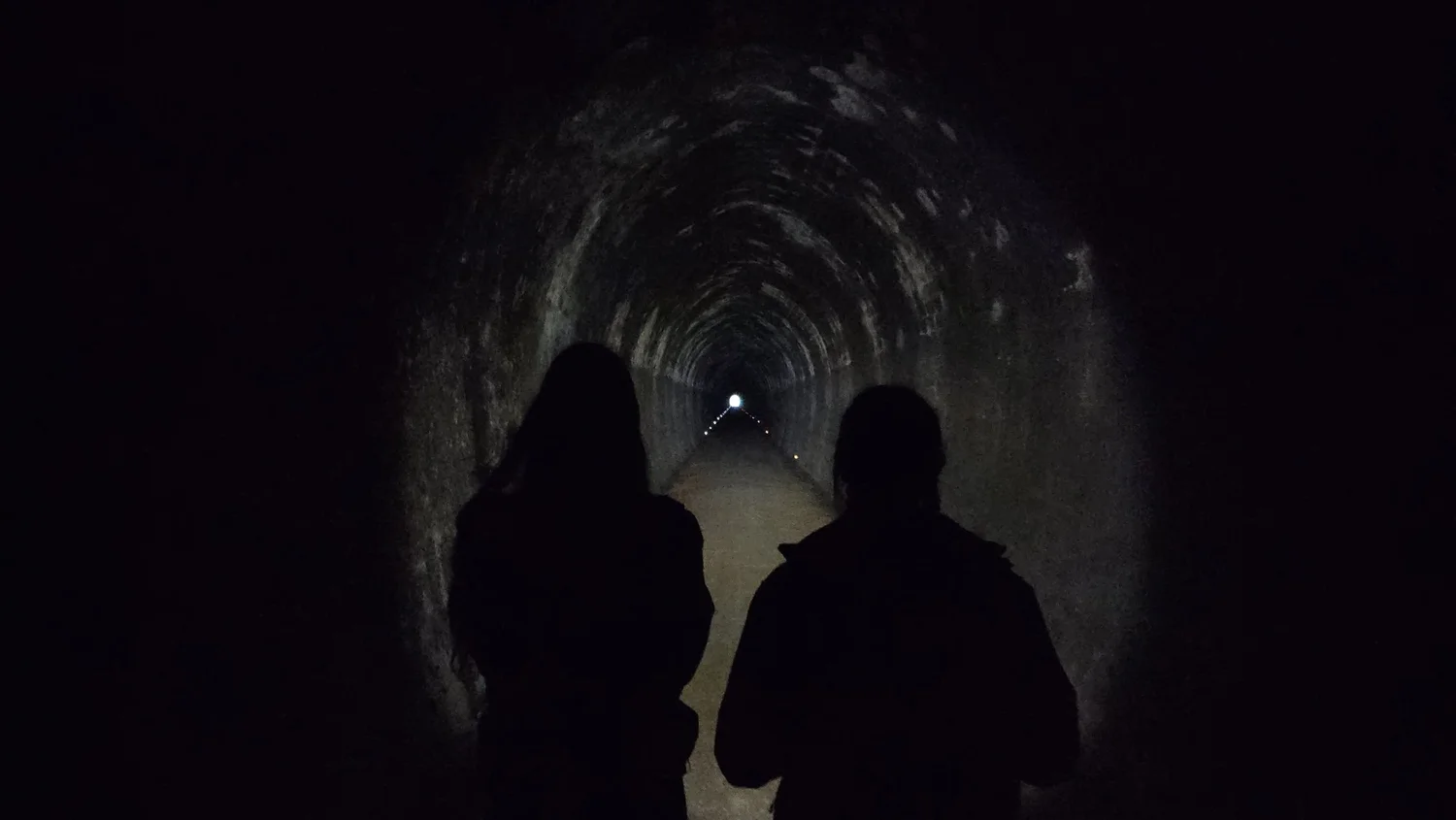
There is a point where the light behind you becomes a tiny shape, then nearly disappears.
That was when the scale of the tunnel finally started to make sense to us. This was not a quick passage under a hill. We were walking through the mountain.
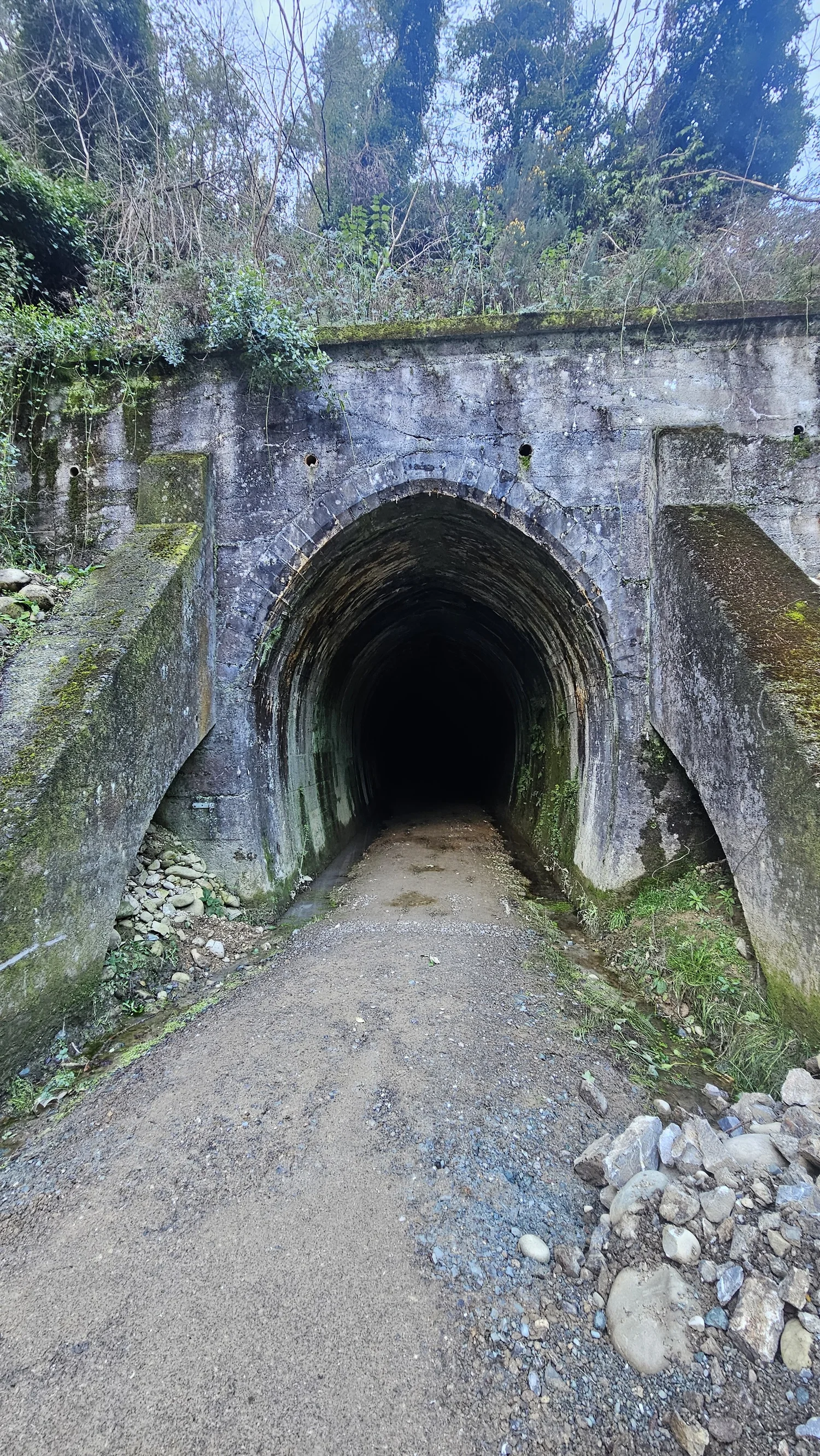
Your phone torch is not the thing I would plan this walk around.
Current Great Taste Trail guidance specifically tells visitors to bring lights and an extra layer.
Take your own reliable torch or headlamp.
Great Taste Trail guidance recommends an extra layer year-round.
Keep aware of other trail users inside the tunnel.
Once you get away from the portals, your own light becomes important.
From both ends of the mountain.
Construction began in 1891, with crews working toward each other from opposite sides of the Spooners Range.
Current Nelson Tasman information describes the tunnel as having been dug by hand. Crews worked in from both portals until the headings eventually met.
That was the part that kept getting us. No tunnel-boring machine. No GPS. Just nineteenth-century surveying, hard physical work and two crews trusting their lines through a mountain.
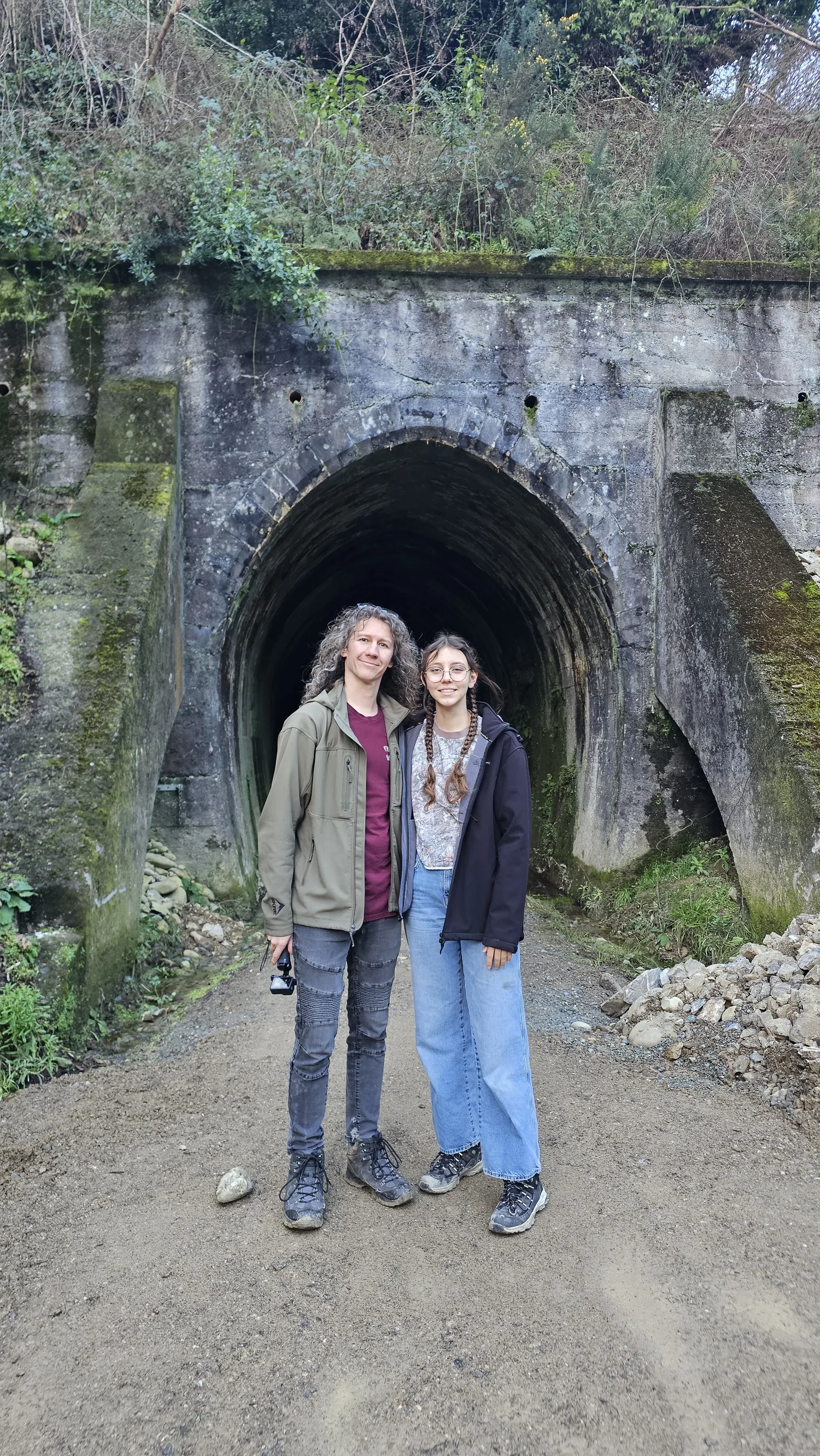
Spooners helped introduce a new way of lining railway tunnels in New Zealand.
Rail Heritage NZ records the Spooner Range tunnel as New Zealand's first use of concrete block tunnel lining, in 1893.
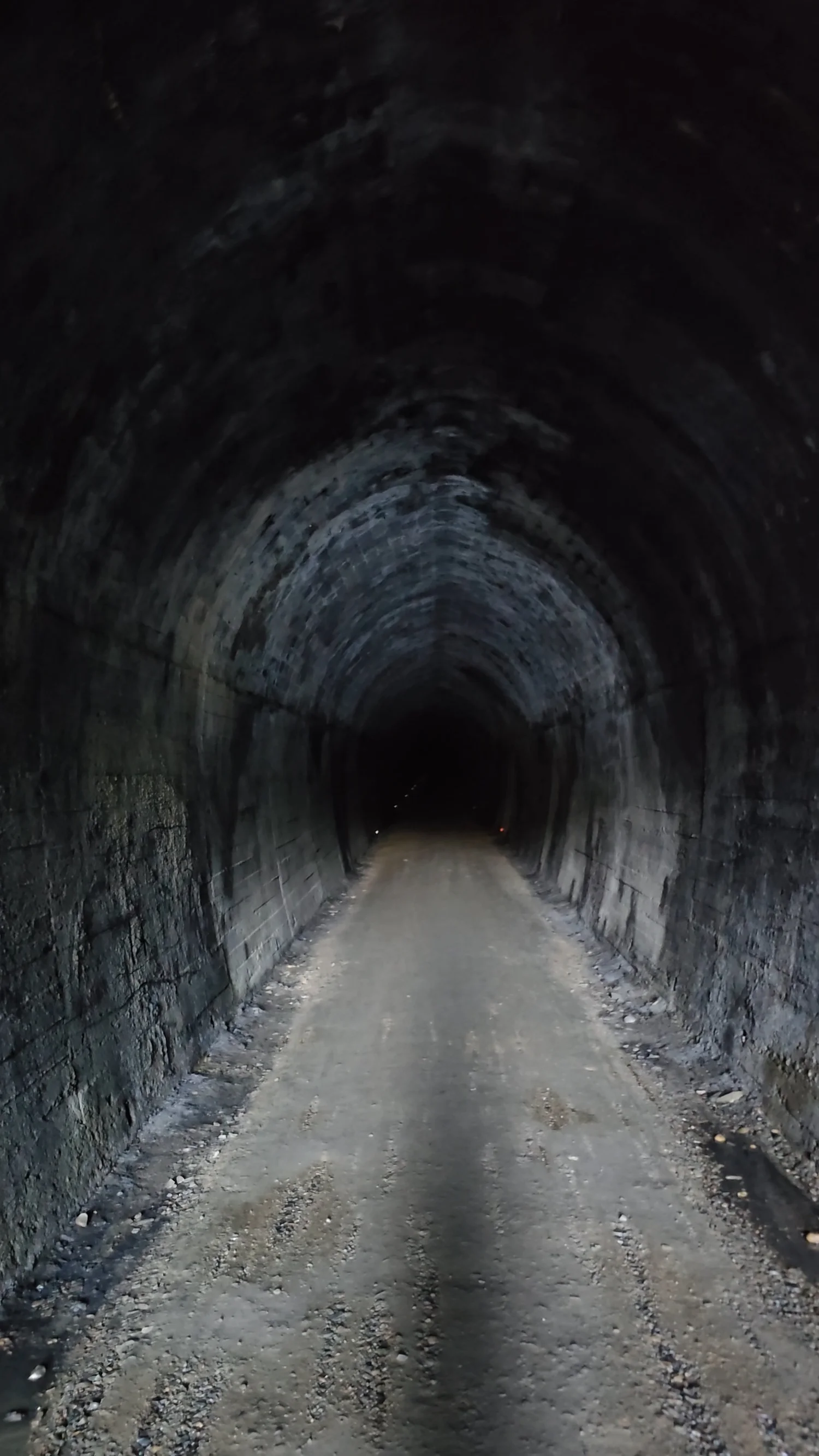
More than a century later, parts of the tunnel are still blackened.
We found thick dark residue across sections of the walls and roof.
This is where the old railway stopped feeling abstract. Trains once moved through this same space, and the tunnel still carries visible evidence of that use.
We learned very quickly that touching it was also a bad plan.
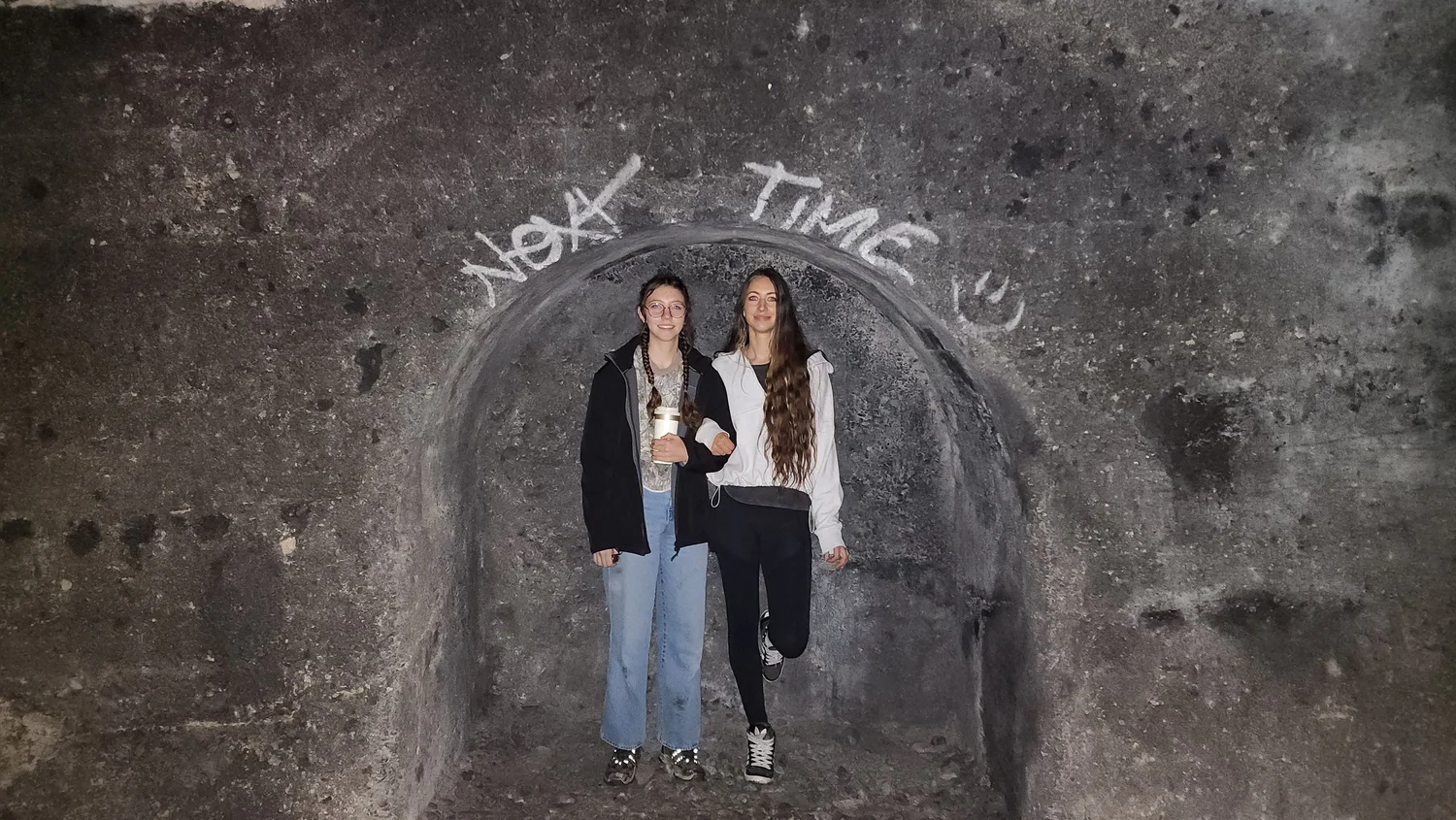
Daylight starts winning again.
After more than a kilometre underground, that tiny patch of light ahead suddenly becomes a very good-looking thing.
Walking all the way through made the tunnel feel much more impressive than simply standing at the entrance. You actually get a sense of how much mountain sits above the old railway.
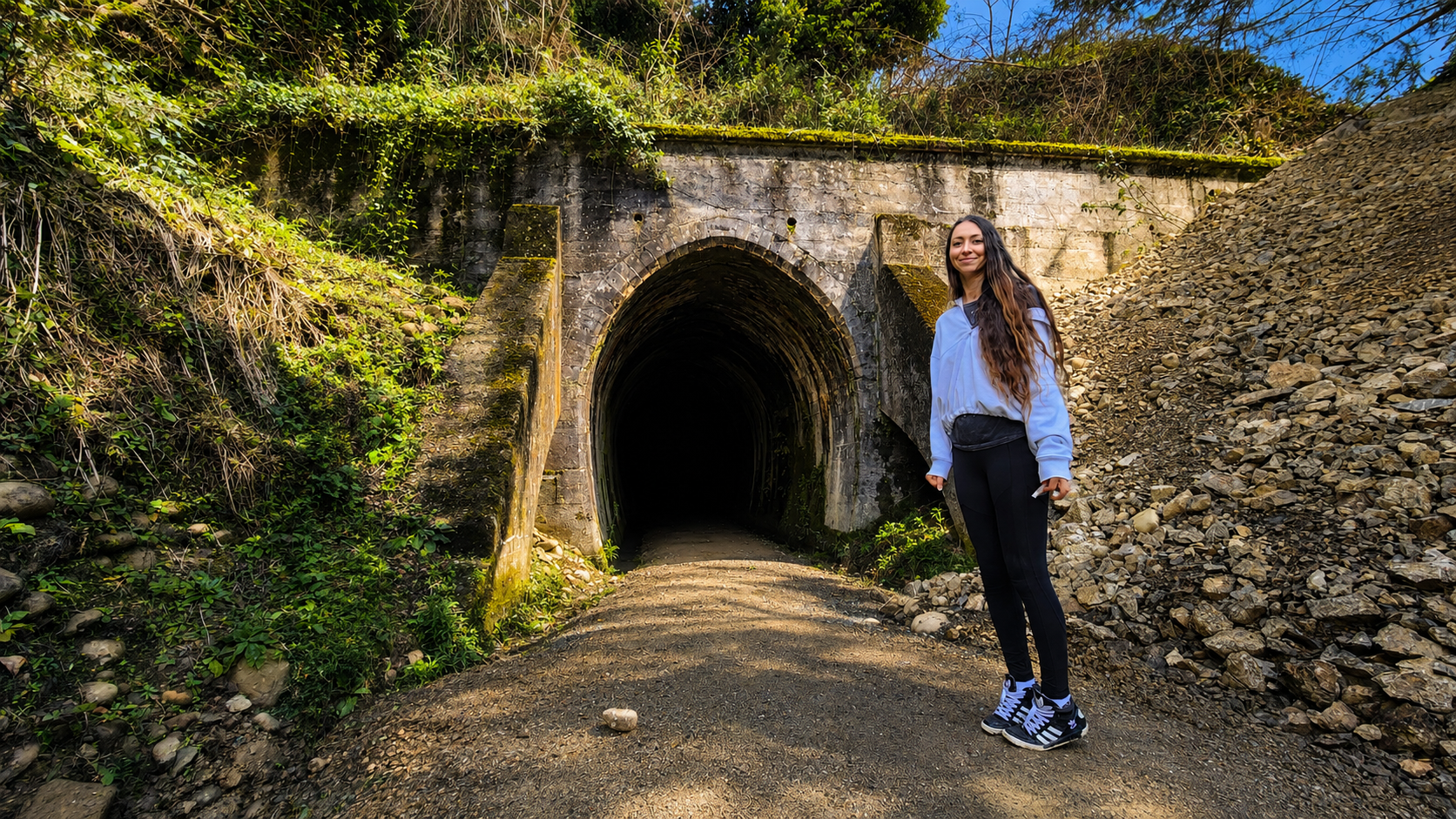
The first few hundred metres felt much creepier than the last few hundred.
Once everyone adjusted to the darkness, curiosity took over.
Losing sight of the entrance and realizing how dark the middle actually gets.
Distance markers, wall changes, soot and railway details.
Our family enjoyed it, but darkness tolerance will matter more than walking difficulty.
Yes. Preferably with everyone remembering their own torch.
We kept following the old railway south.
Decades after Spooners was built, the railway had pushed farther into the South Island.
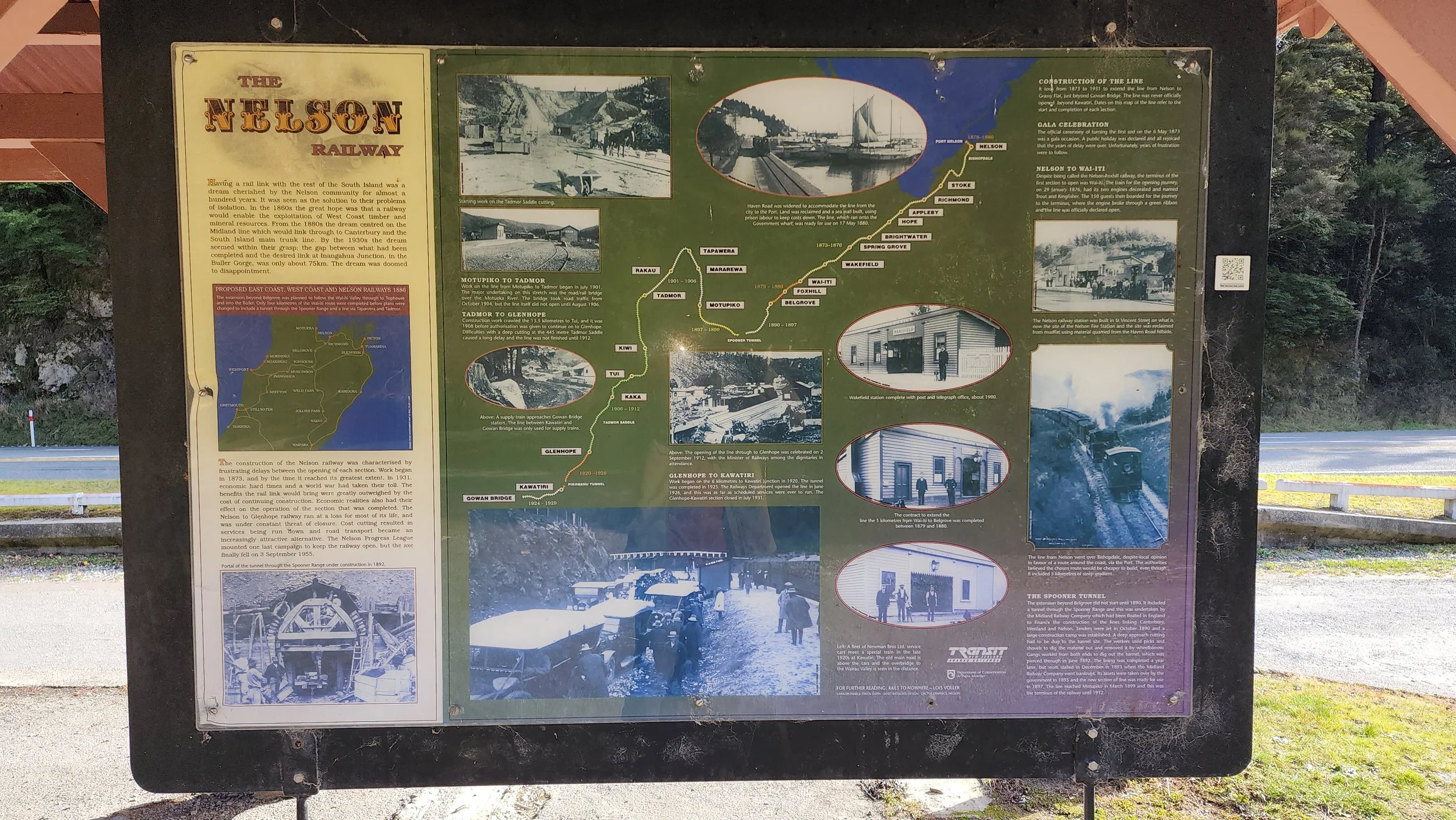
The dream was much bigger than a tunnel through the Spooners Range. Nelson wanted a railway connection to the rest of the South Island.
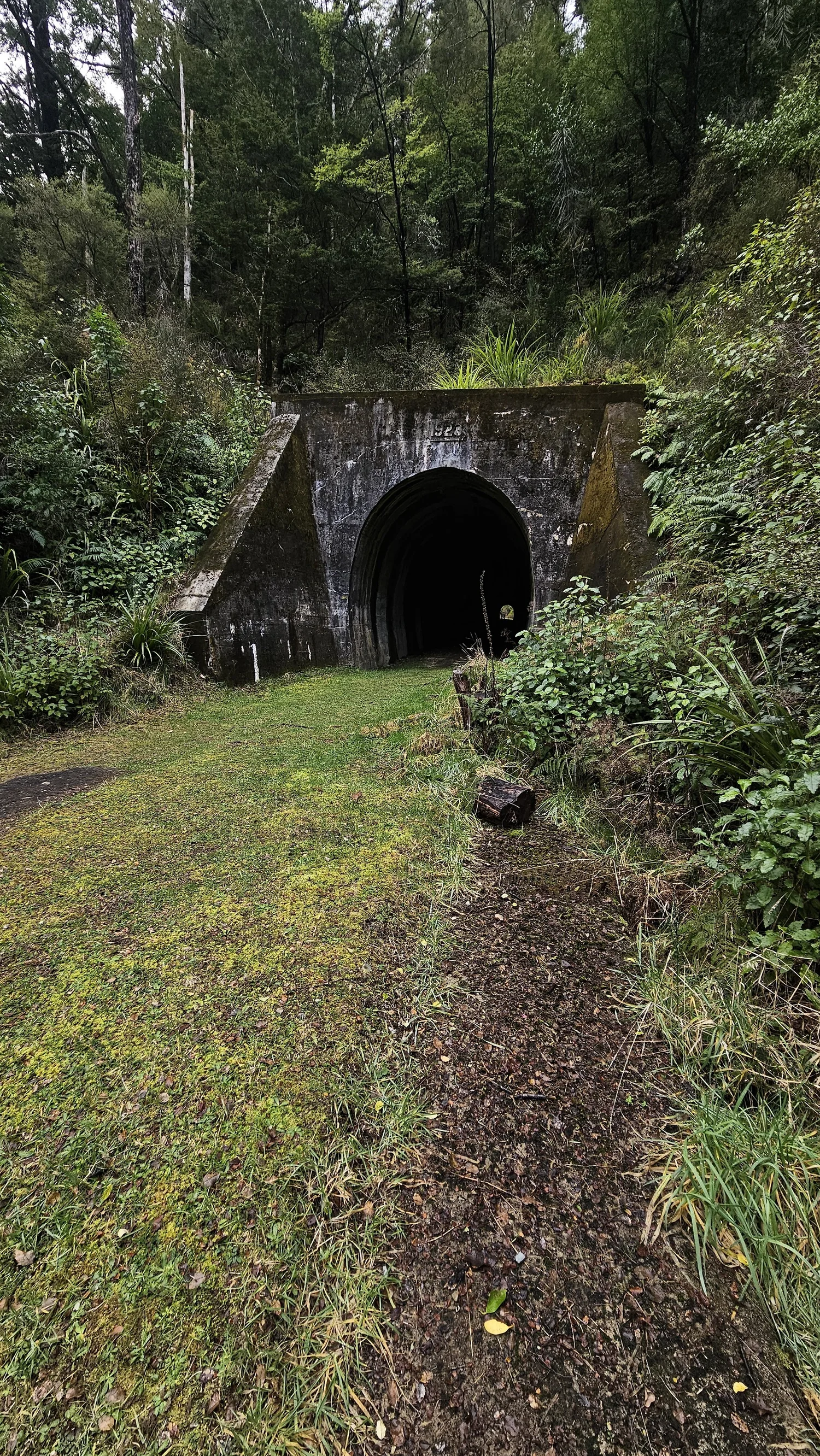
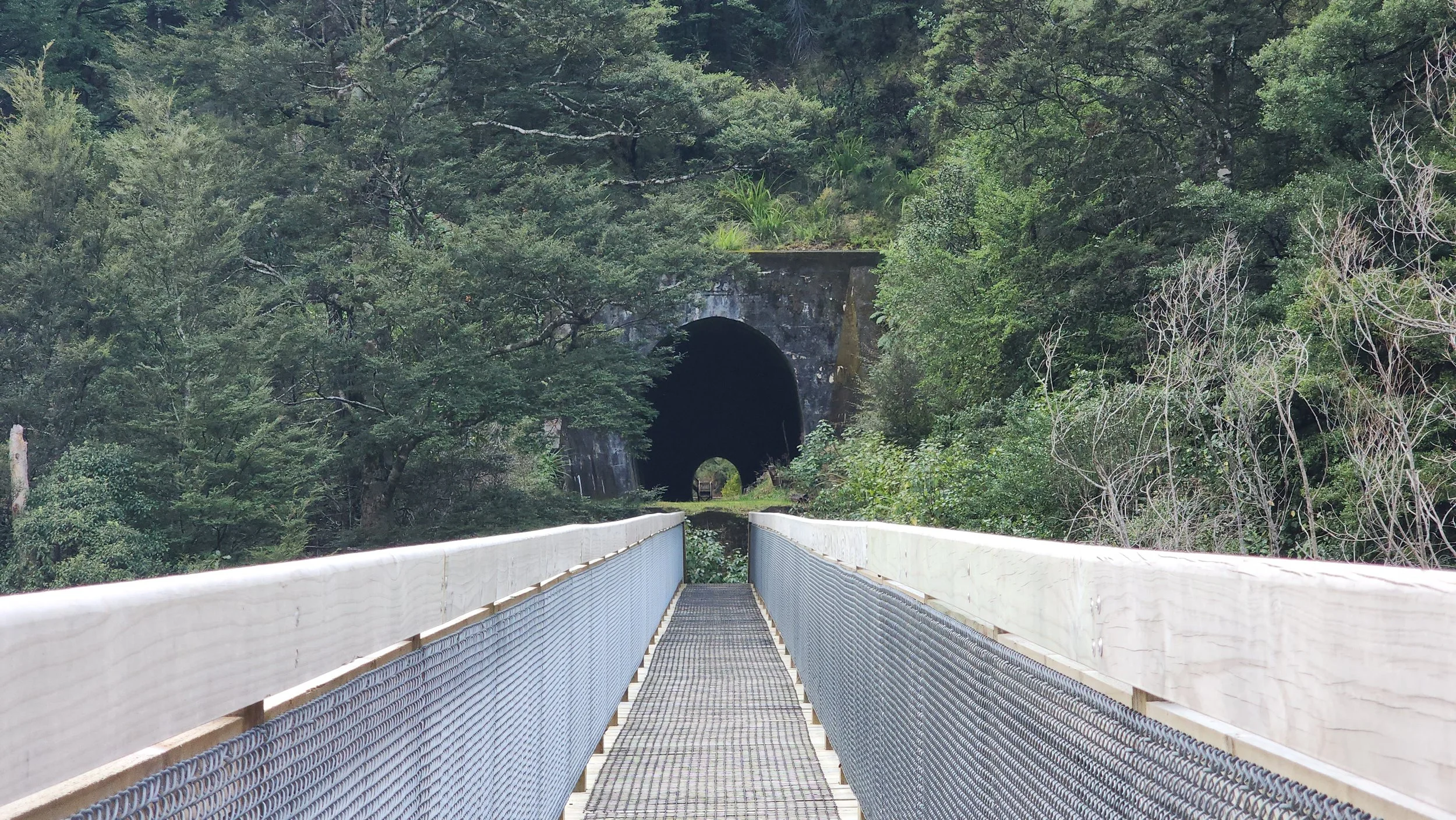
It never became the national connection people had hoped for, but parts of the route are still remarkably easy to find. At Kawatiri, another bridge and another tunnel survive beside the old line.
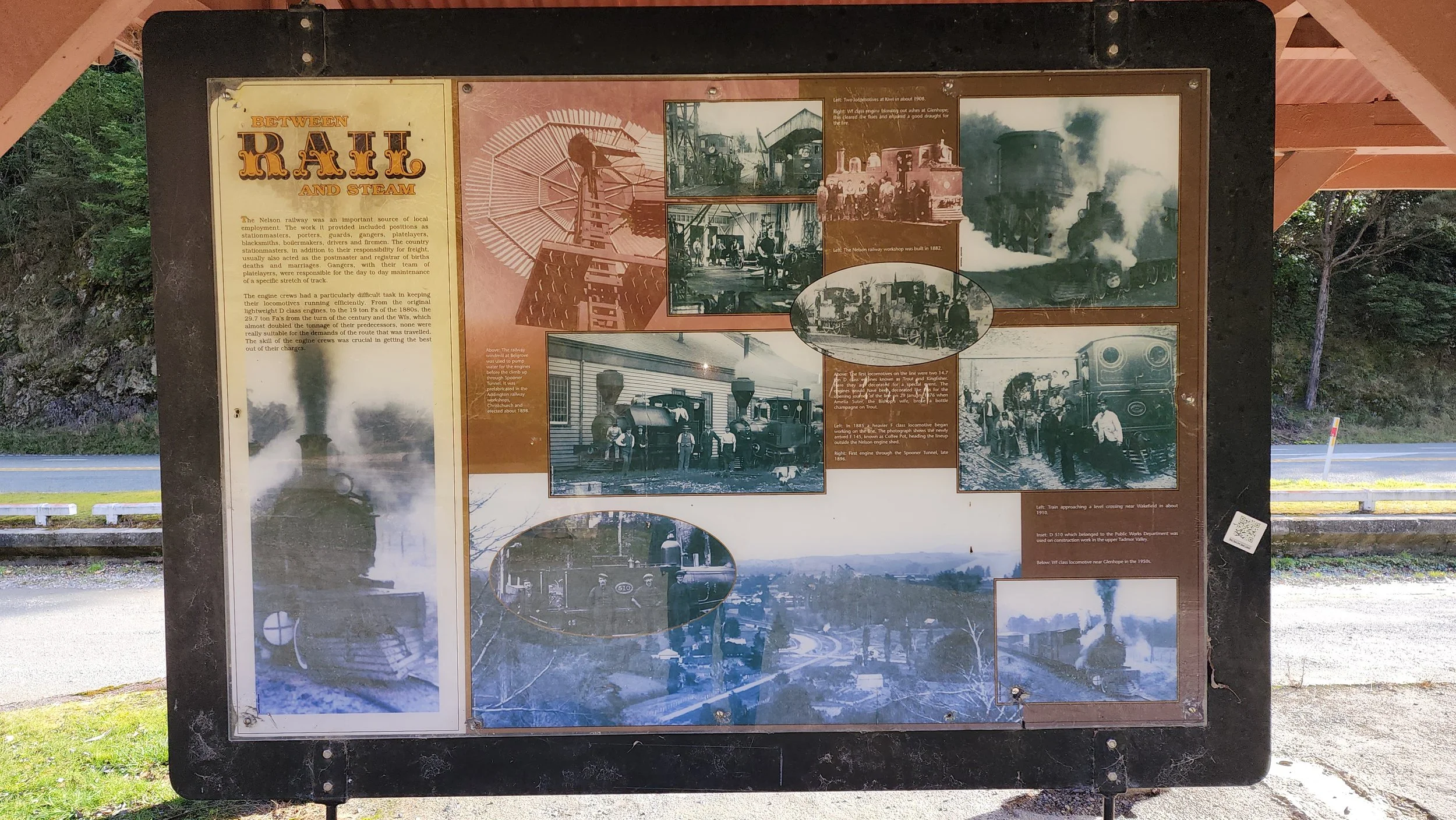
Another tunnel. Another bridge. Same unfinished railway story.
Kawatiri is a much shorter stop, but it gives you another surviving piece of the same Nelson railway.
These are the physical railway remains you walk through and across at Kawatiri.
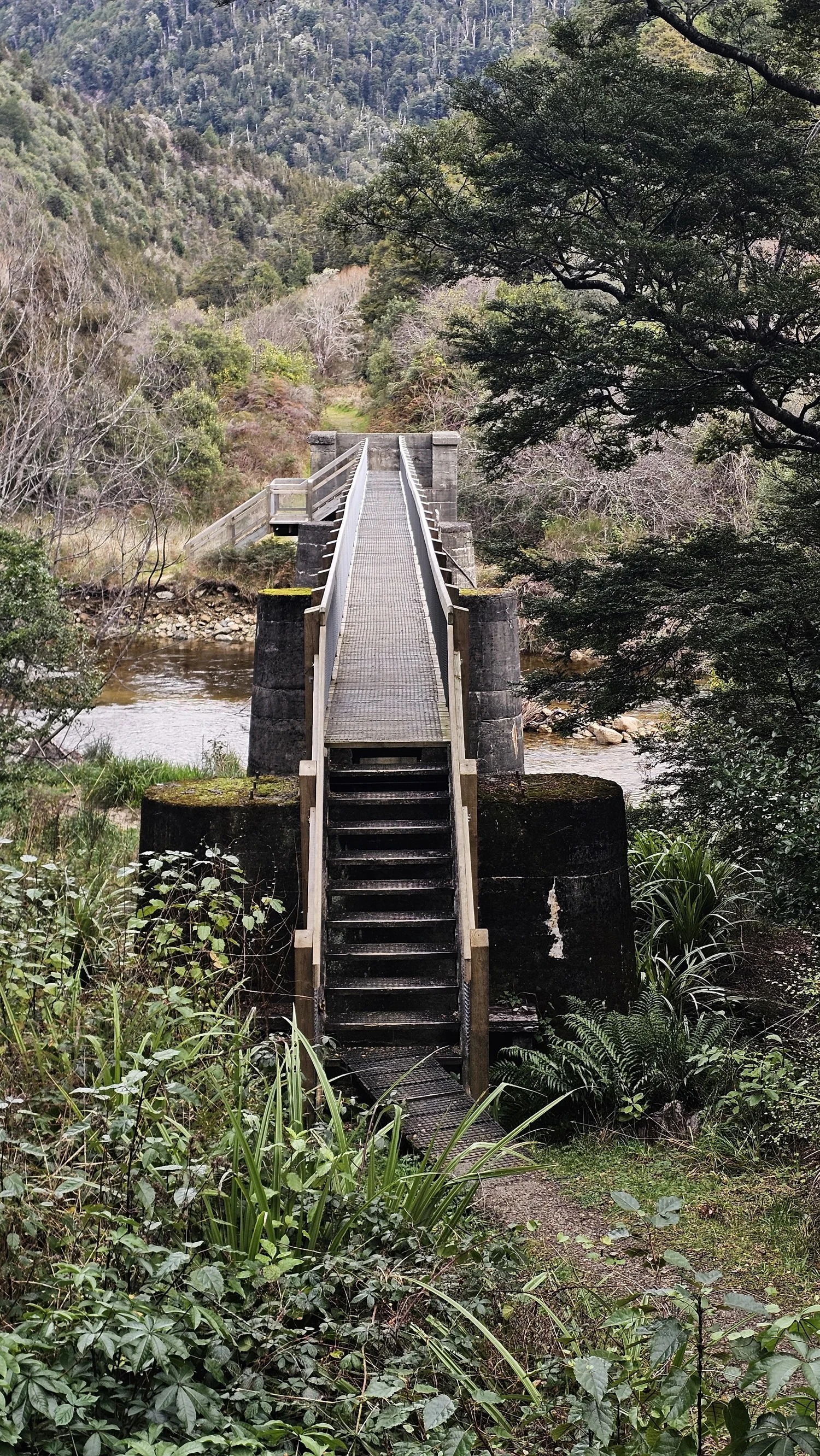
All four interpretation panels are together here, so the railway history reads as one part of the page instead of being mixed through the bridge photos.
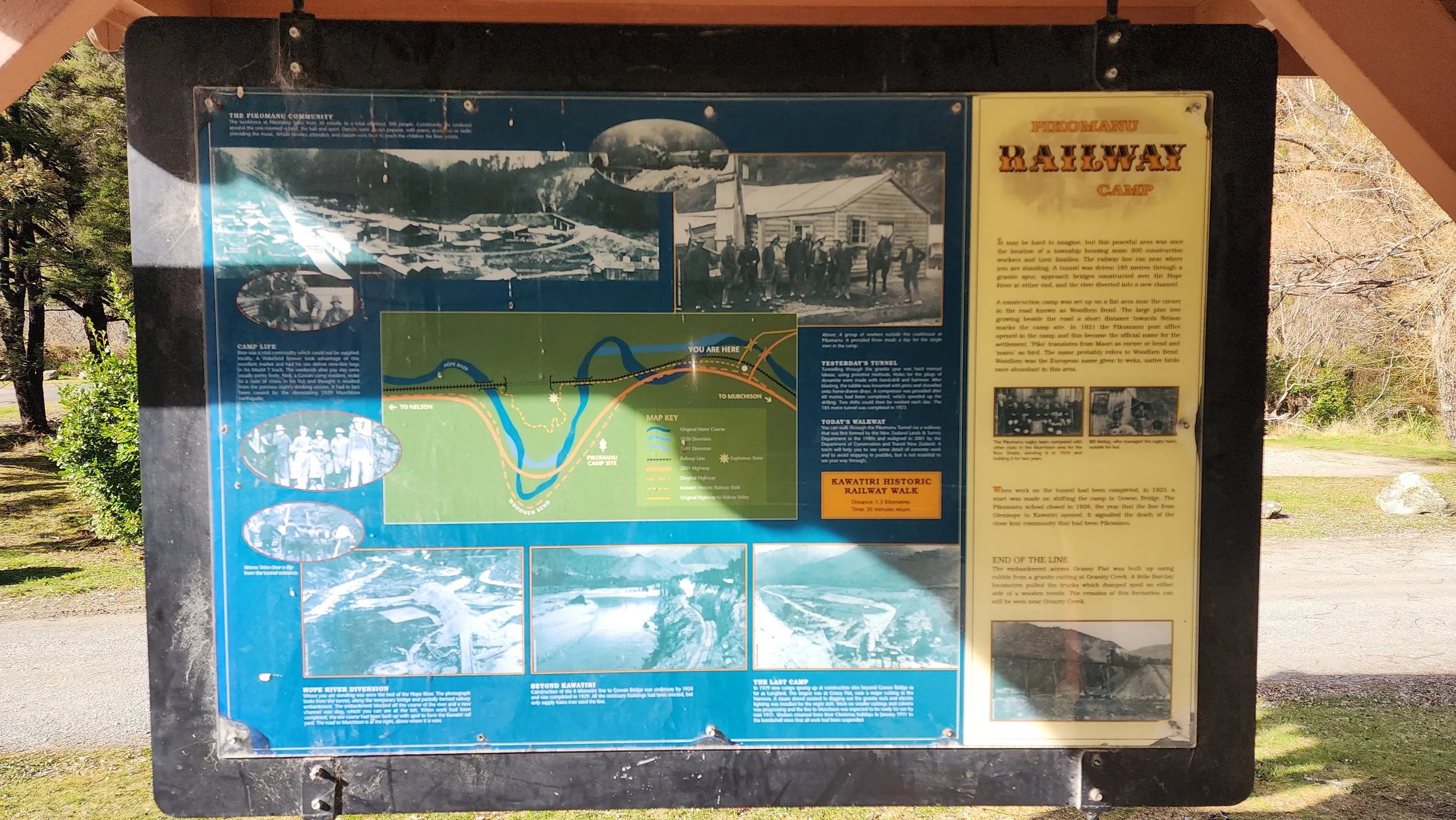
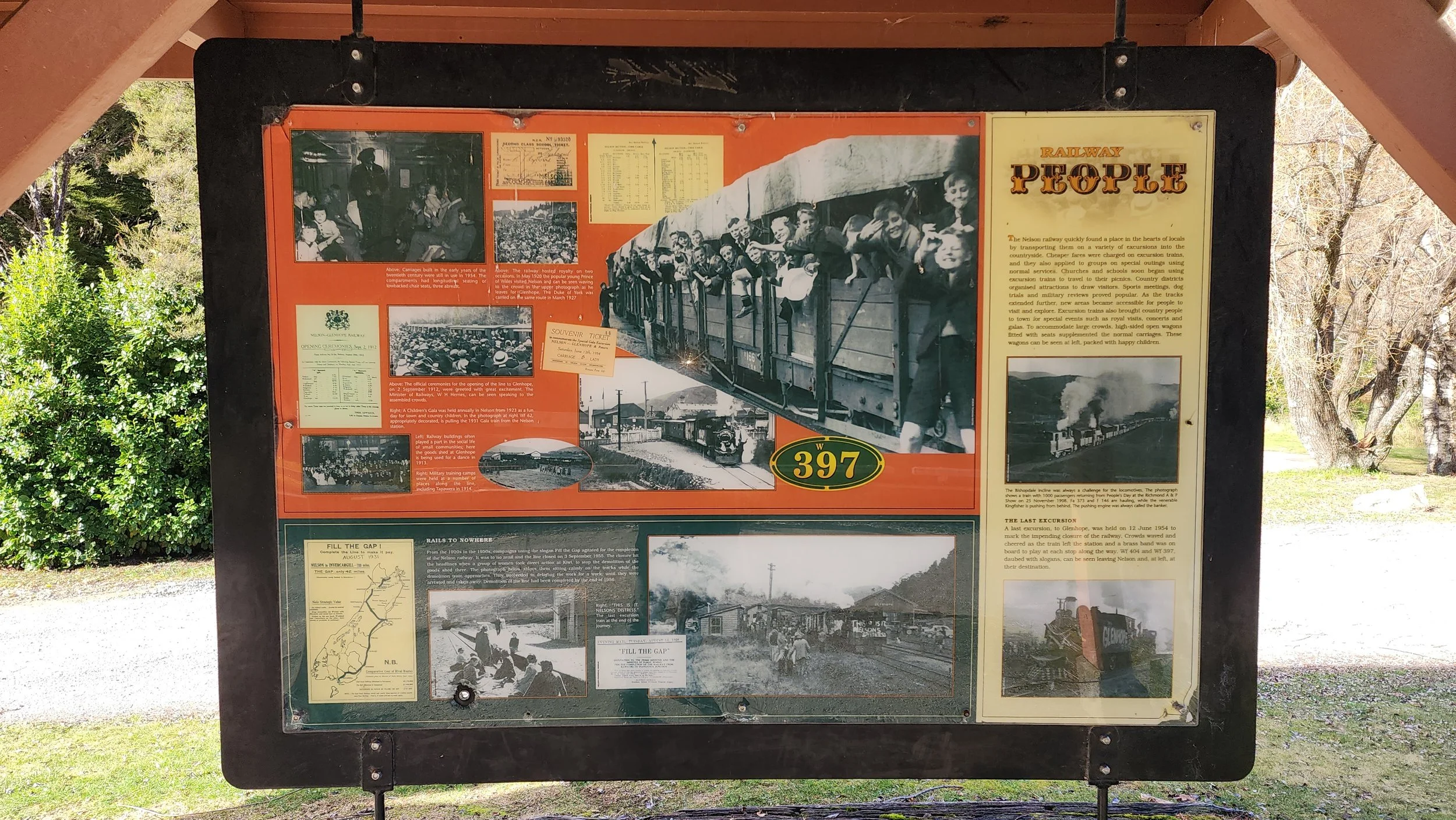
A simple historic stop beside the highway.
DOC says the old rail bridge is reached shortly after leaving the carpark.
The track passes through it before looping through beech forest.
One railway. More than sixty years of pushing south.
Crews work in from opposite sides of the range.
Concrete-block lining becomes part of the Spooners story.
The railway has pushed much farther south.
The hoped-for national connection never happens.
The tunnel is easy to walk. Being prepared for it still matters.
Current access and trail information was rechecked 8 September 2026.
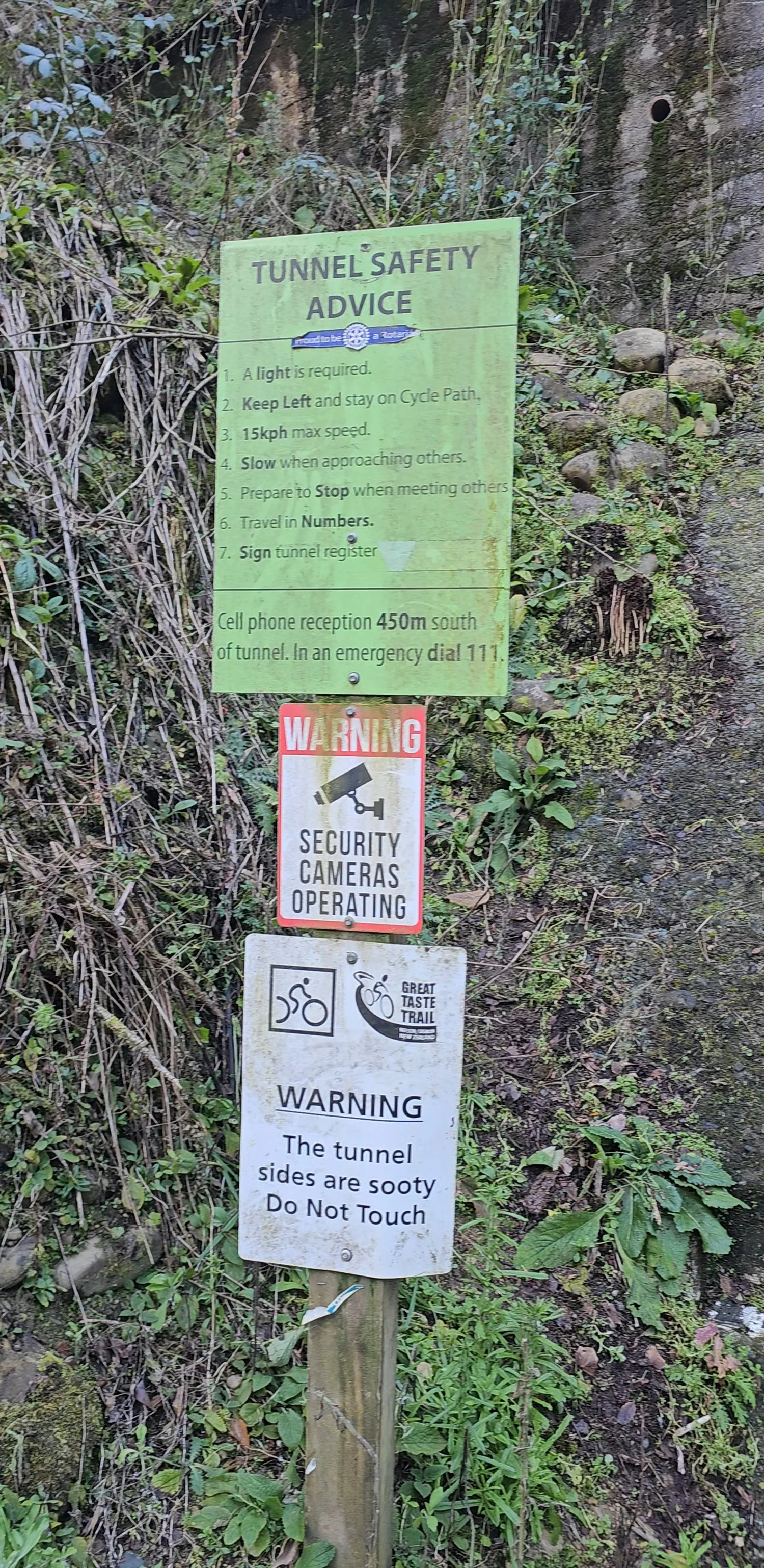
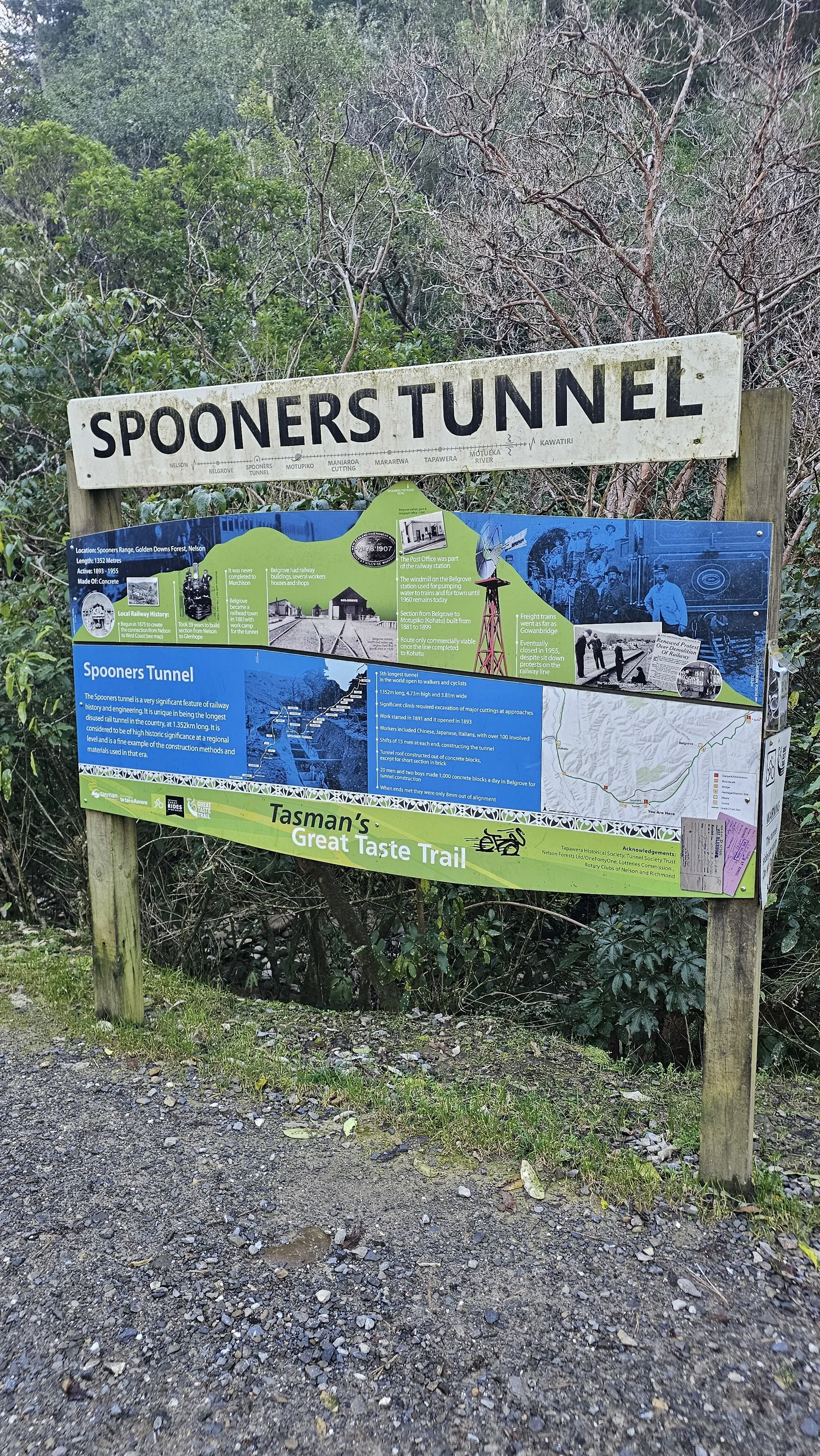
It is easy to arrive focused on the tunnel entrance and walk straight past the practical information, but this sign has the important basics before you head inside.
It reminds visitors that a light is required, to keep left and stay on the cycle path, slow down around other users and be prepared to stop when meeting people.
It also gives emergency information and identifies where cell reception can be found outside the tunnel.
Spooners Tunnel has no installed lighting.
Current trail guidance describes the tunnel as chilly year-round.
Stay aware of bikes and other people inside the tunnel.
Current Great Taste Trail rule for Spooners Tunnel.
The trail trust lists this as the closest published parking option, 1.7 km along the trail from the tunnel.
Storms and maintenance can affect sections of the Great Taste Trail.
Conditions, maintenance and storm damage can affect different parts of the trail.
Spooners Tunnel FAQ
How long is Spooners Tunnel?
Is Spooners Tunnel the longest railway tunnel in New Zealand?
Are there lights inside Spooners Tunnel?
What are the recesses in the Spooners Tunnel walls?
Can you walk through Spooners Tunnel?
Is it cold inside Spooners Tunnel?
Are dogs allowed in Spooners Tunnel?
When was Spooners Tunnel built?
Why do different parts of the tunnel walls look different?
Where can I park for Spooners Tunnel?
Is Kawatiri part of the same old railway?
Current Spooners Tunnel length, lighting guidance, dog restrictions, trail use and parking information were checked with Nelson Tasman and the Nelson Tasman Cycle Trail Trust. Tunnel construction and lining history were checked with railway heritage sources. Current Kawatiri walk information was checked with DOC. Family reactions, observations inside the tunnel and walking experience are from our own visit.
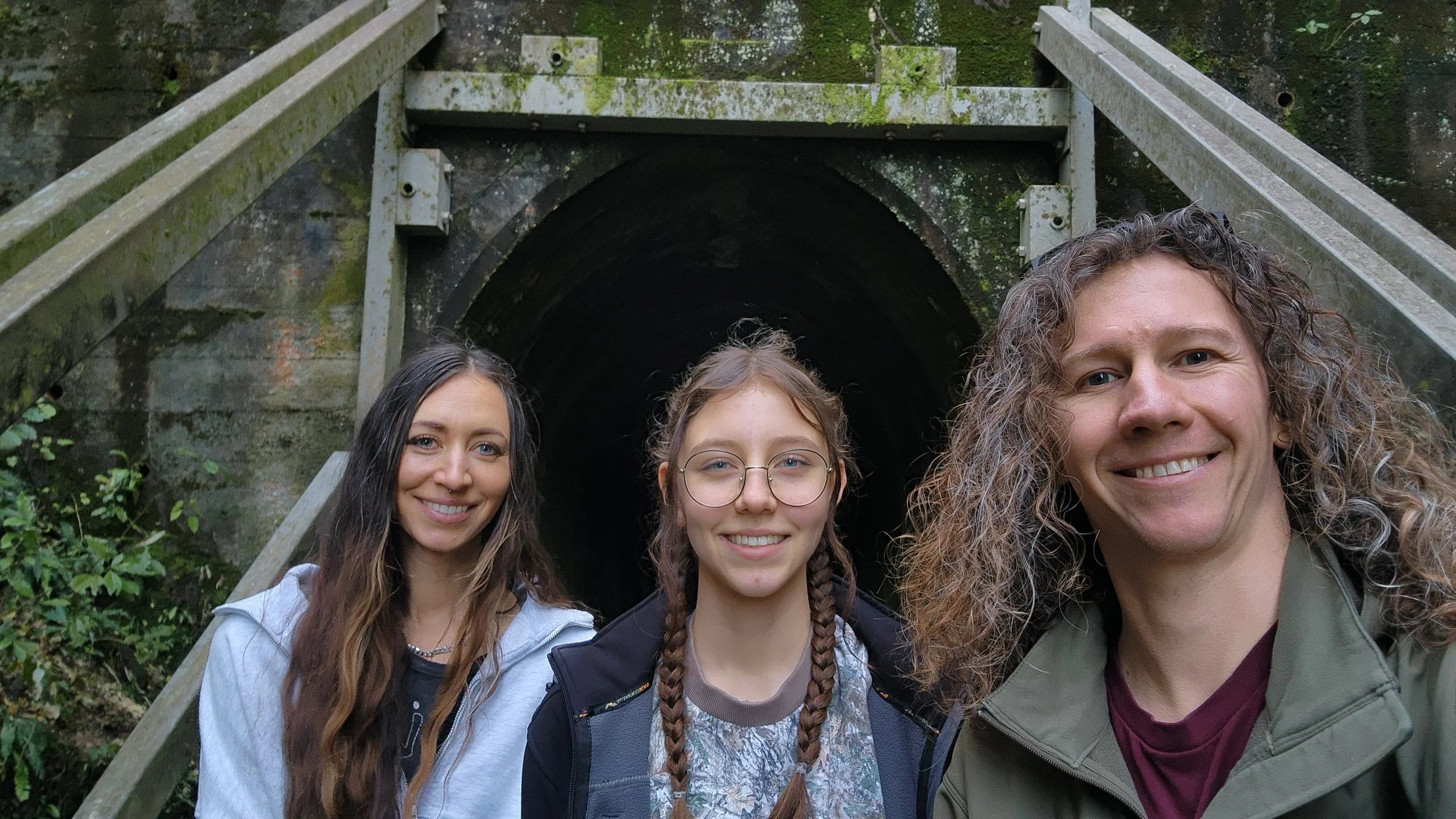
Yes. With better lights.
Spooners started as “let's walk through a really long dark tunnel” and turned into one of the most interesting railway-history stops of the whole Nelson Tasman trip.
Then Kawatiri gave us one more piece of the same unfinished railway story. The website can give you the history. The episode gives you the darkness, reactions and everything we found along the way.