Tākaka Hill Via Ferrata. We thought the climbing would be the hard part.
Steel cable, climbing holds and a very open cliff above the road into Golden Bay. We came here with almost no via ferrata experience to find out how far our family could actually get.
Cliff Traverse ✓
Cliff Conqueror attempted
The official grades only tell part of the story.
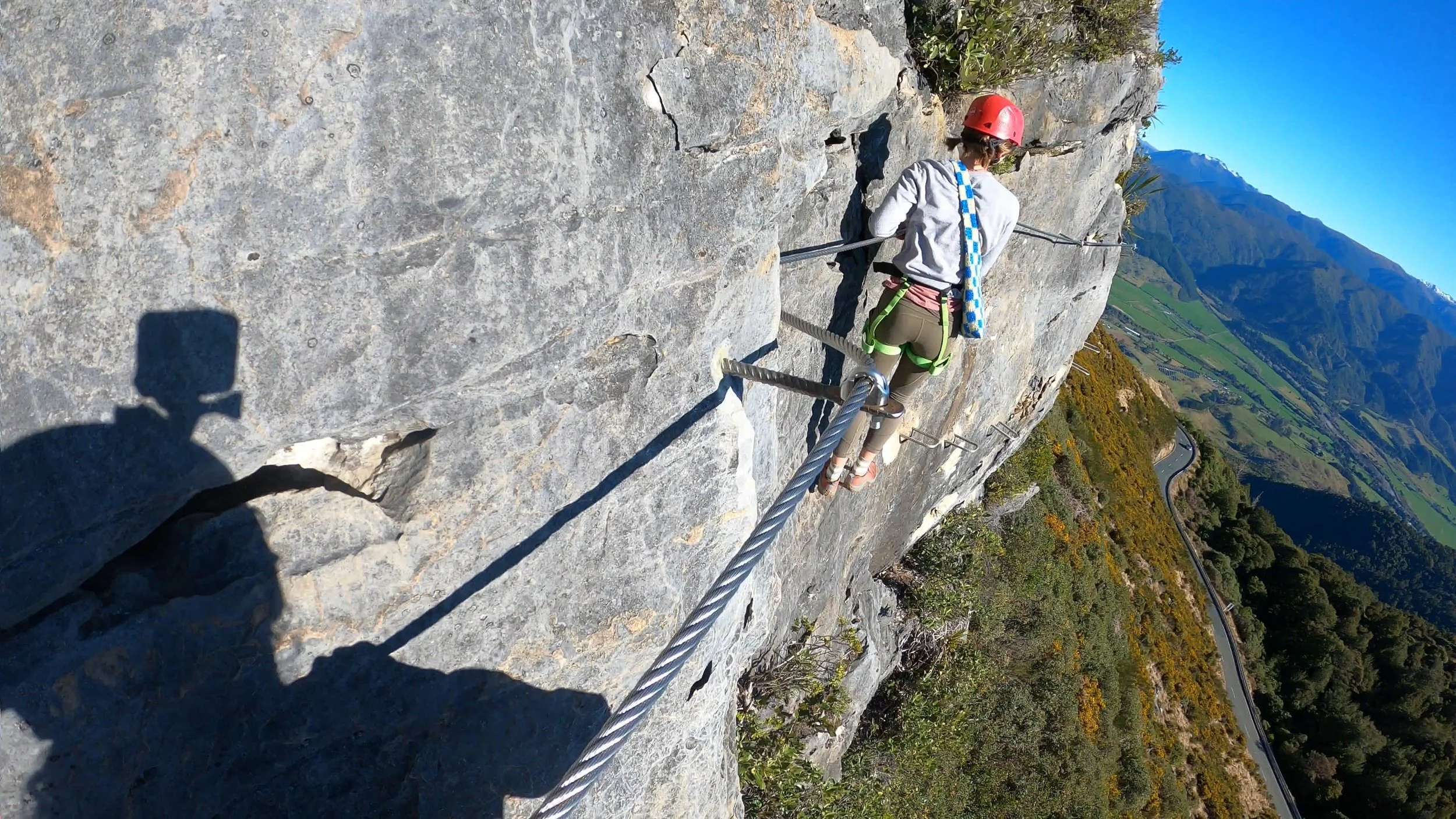
The exposure surprised us more than the climbing.
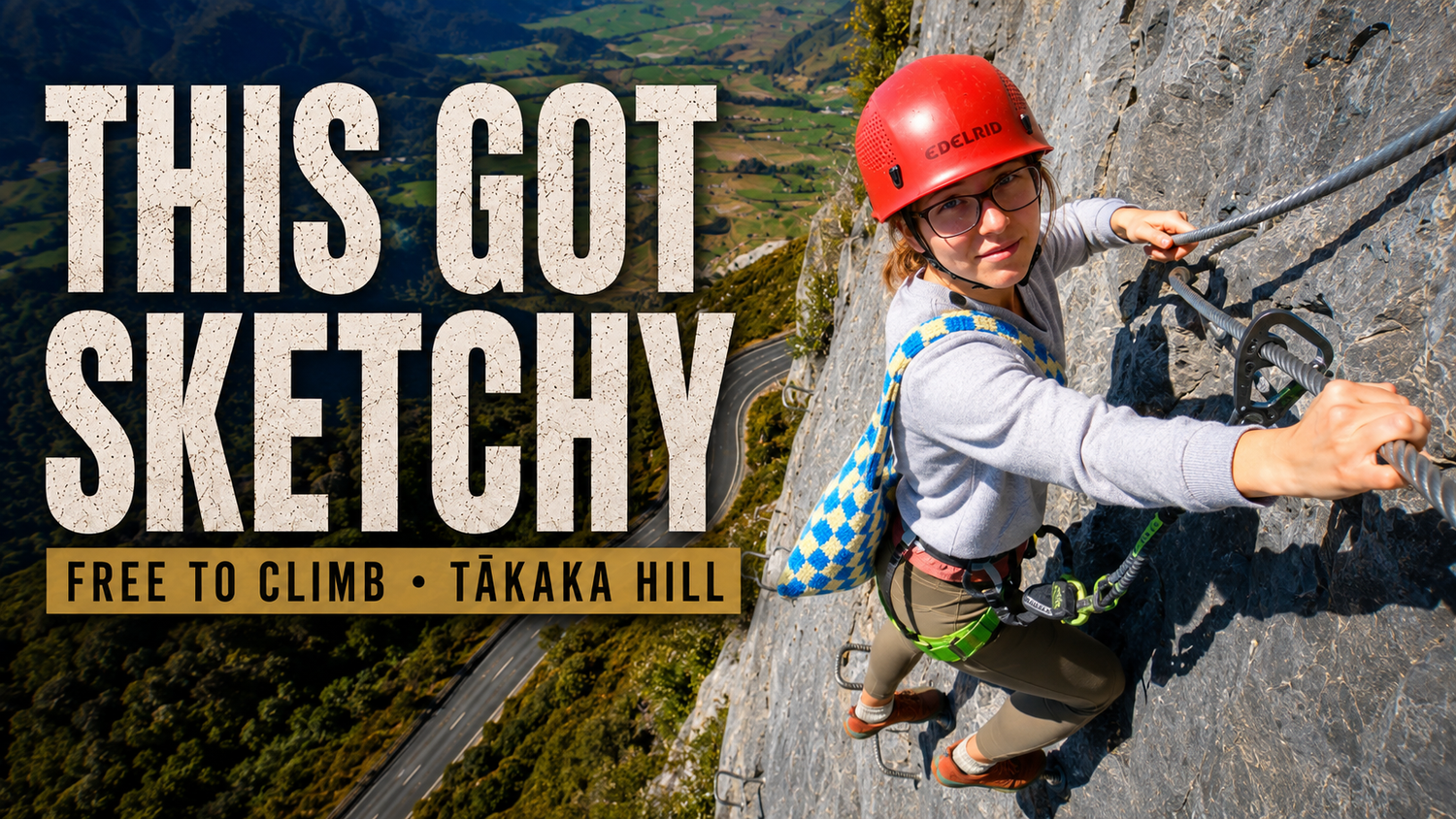
Four people, very different climbing experience, and one very exposed wall of rock.
Kristine and I have only climbed a handful of times. Angelina and Malaya had considerably more climbing experience, so the girls were probably the more technically comfortable climbers in our family.
But climbing ability and comfort with exposure are not the same thing. Once the road and valley opened below us, height became a major part of the challenge.
We completed the Skill Zone and Cliff Traverse, then tested ourselves on the harder Cliff Conqueror. The video keeps the full story, reactions and decision-making where they belong.
Tākaka Hill Via Ferrata: the useful stuff first.
Near the high point of State Highway 60.
Officially described as near the highest point of Tākaka Hill Highway.
Proper via ferrata safety equipment is still required.
Official guidance for training, both routes and walking.
Cliff Traverse first, then Cliff Conqueror if comfortable.
The lanyard must be a proper shock-absorbing via ferrata setup.
Flushing toilets are available at nearby Ngārua Caves.
Wet rock becomes slippery and gear hire may be suspended.
An iron way up the cliff.
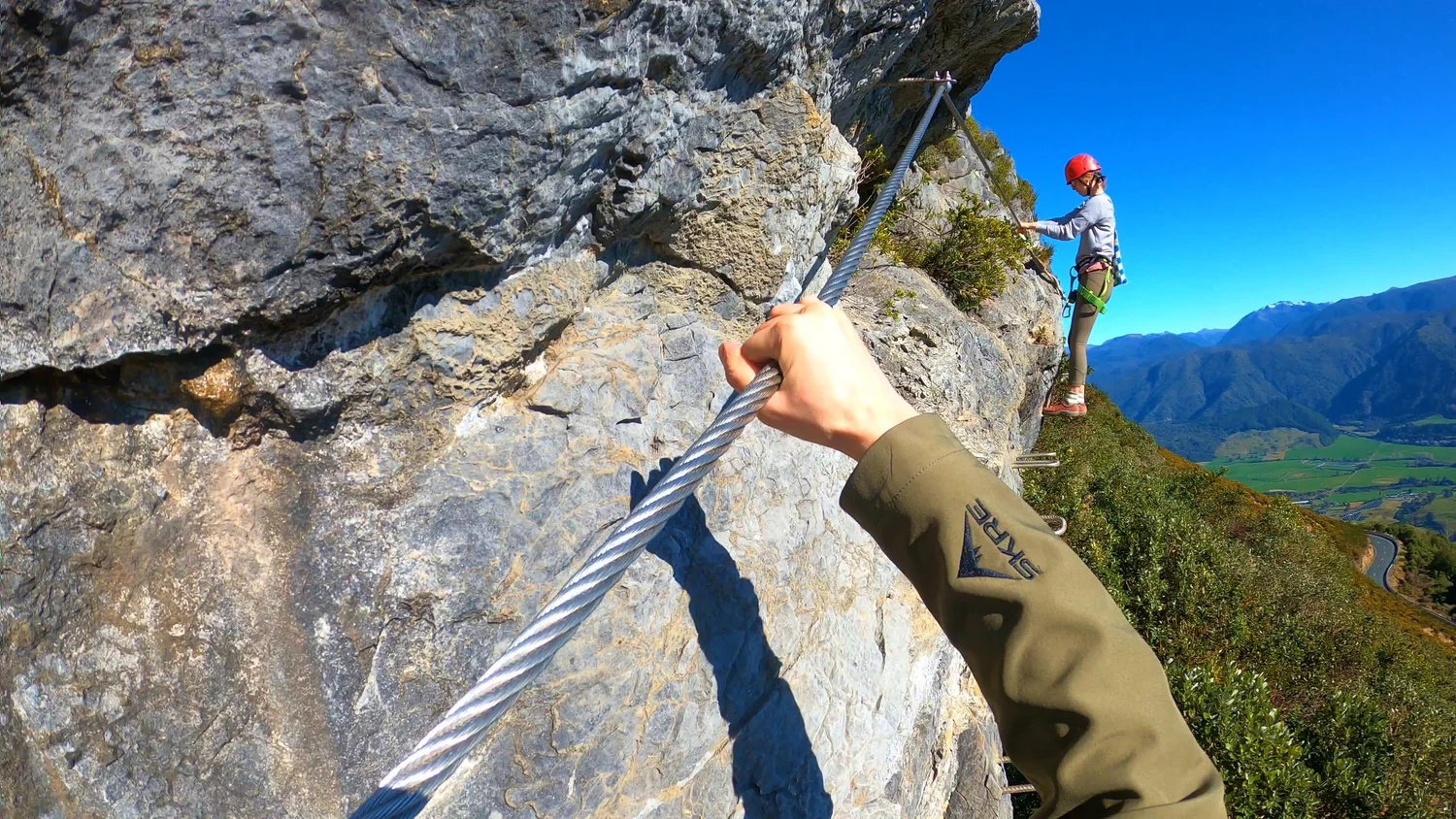
Via ferrata combines fixed steel cable, rock, steps and climbing holds to make exposed terrain accessible without requiring traditional rock-climbing experience.
The name comes from Italian and means "iron way". Climbers remain attached to the fixed safety cable using a specialised shock-absorbing lanyard.
Tākaka Hill is especially unusual because Via Ferrata Aotearoa created it as New Zealand's first free, non-commercial and publicly accessible via ferrata climbing park.
Three stages. A very noticeable jump between them.
The official grades matter, but the route design gives you opportunities to test yourself before committing to the harder climb.
Skill Zone
The short training route lets you learn the clipping system and find out how comfortable you feel before reaching the main cliff.
Cliff Traverse
The easier of the two main routes, although "easier" does not mean easy if exposure bothers you.
Cliff Conqueror
Steeper, more sustained and much more exposed. Via Ferrata Aotearoa recommends completing Cliff Traverse first.
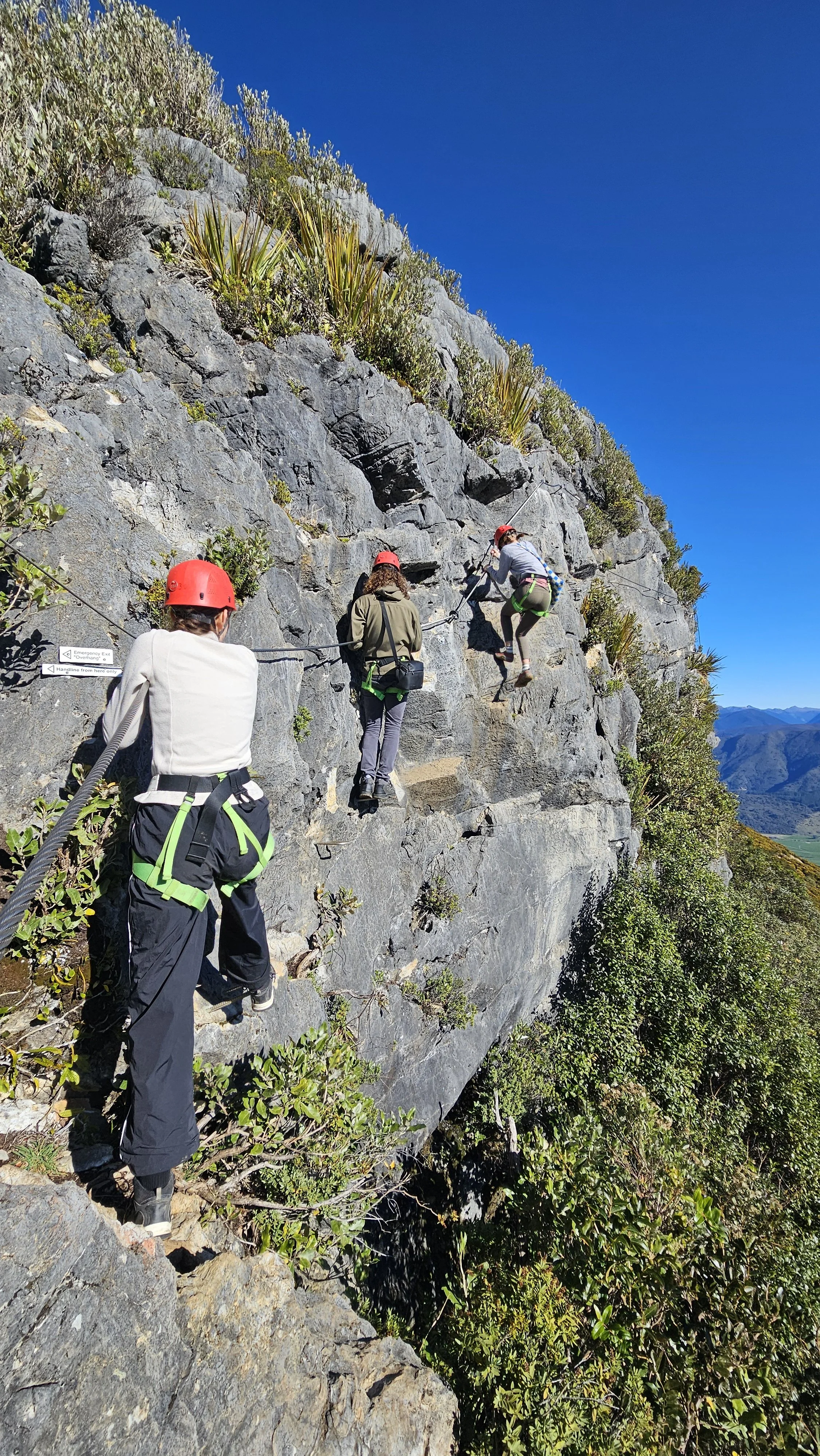
The exposure is part of the difficulty.
A photograph makes the road below look distant. Standing on the cliff made it feel very present.
You need proper via ferrata gear.
We did not own it, so we hired ours from Ngārua Caves.
The official setup requires a helmet, basic climbing harness and a Y-shaped shock-absorbing via ferrata lanyard. Standard climbing slings and carabiners are not a safe substitute.
The official gear-hire point is roughly five minutes by car from the Via Ferrata car park.
Under-18s currently receive free gear hire.
Via Ferrata Aotearoa says demand can be high. Opening days and reservation times vary seasonally.
They are recommended for the steel cable and rock. Simple gloves are usually sold at Ngārua Caves for about NZ$5.
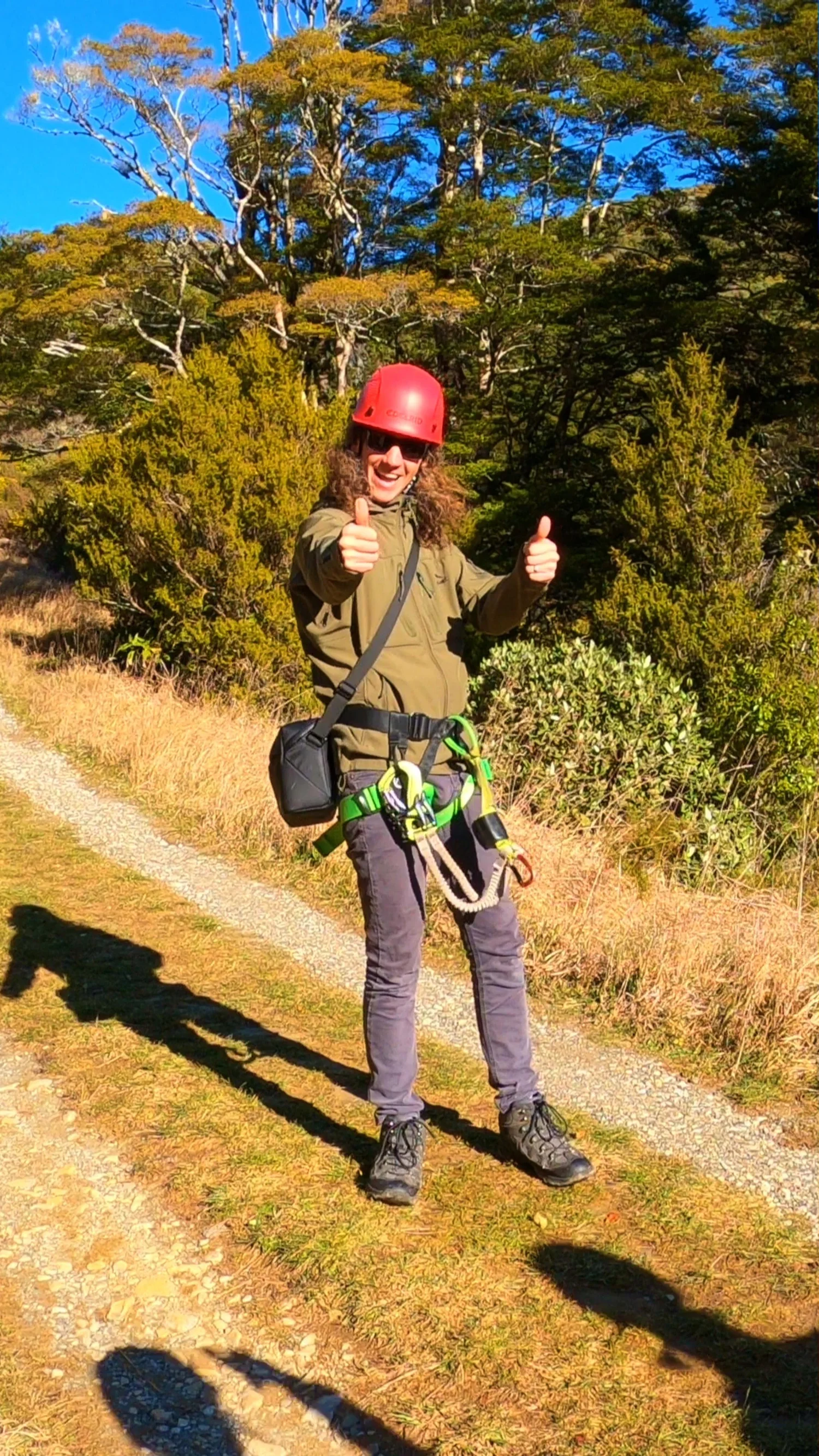
Difficulty is more than climbing technique.
Fitness, height, confidence and exposure all change how this experience can feel.
What Via Ferrata Aotearoa says.
Cliff Traverse is Difficulty C and is the easier main route.
Cliff Conqueror is Difficulty C-D and significantly more exposed.
Vertigo can be a real hazard on both main routes.
Climbers should remain secured to the cable at all times.
Cliff Traverse should be completed comfortably before attempting Cliff Conqueror.
What surprised us.
The Skill Zone felt extremely easy to us.
The opening section of Cliff Traverse felt much harder than we expected.
Descending while looking into open space sometimes felt more awkward than climbing upward.
More climbing experience did not automatically mean greater comfort with height.
Cliff Conqueror felt like a very noticeable jump in physical demand.
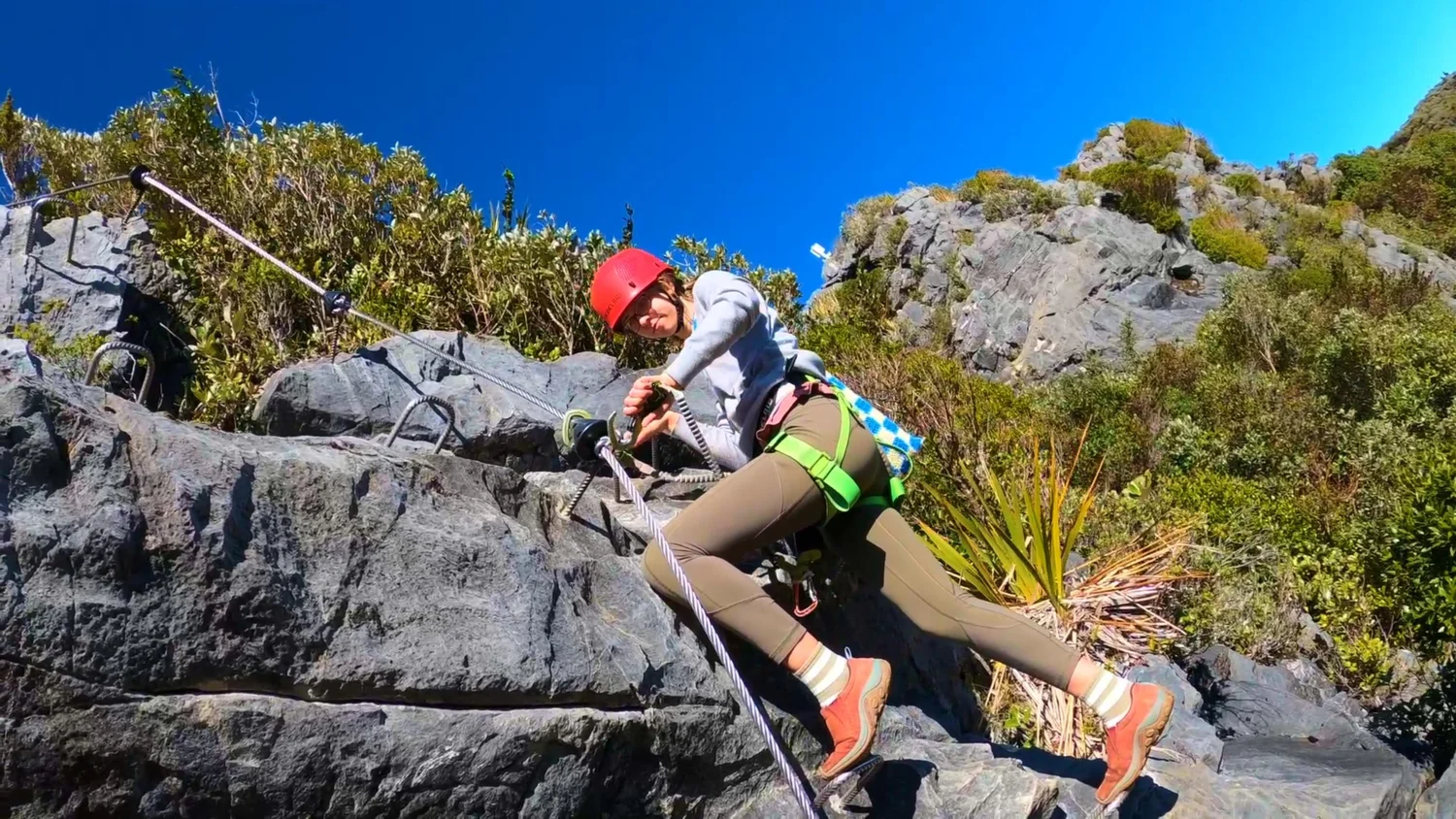
Is the Tākaka Hill Via Ferrata family-friendly?
It worked for our family, but age alone is not the best way to judge readiness.
Via Ferrata Aotearoa has no formal minimum age, but it says children from around age 12 often have a great time on the routes. Younger children may also climb when properly accompanied.
Reach can become a problem below roughly 140 cm.
The Ngārua Caves hire equipment is designed for climbers weighing at least 40 kg.
The official advice recommends an additional belay from a skilled caregiver for children younger than 10.
Ask how comfortable someone is with height, not only whether they can physically climb.
What we would know before climbing Tākaka Hill.
Do the Skill Zone first.
It gives you a chance to understand the gear before committing to the exposed main routes.
Treat it as the test.
Official guidance recommends completing Cliff Traverse comfortably before considering Cliff Conqueror.
Dry is better.
Wet rock can become slippery and gear hire is suspended when conditions are visibly wet.
Allow more than climbing time.
The official three-to-four-hour recommendation includes walking, training and both main routes.
Go before you arrive.
There are no toilets at the Via Ferrata site. Ngārua Caves has flushing toilets.
Recheck before the drive.
Gear availability, hire hours and conditions can change, so check Via Ferrata Aotearoa before leaving.
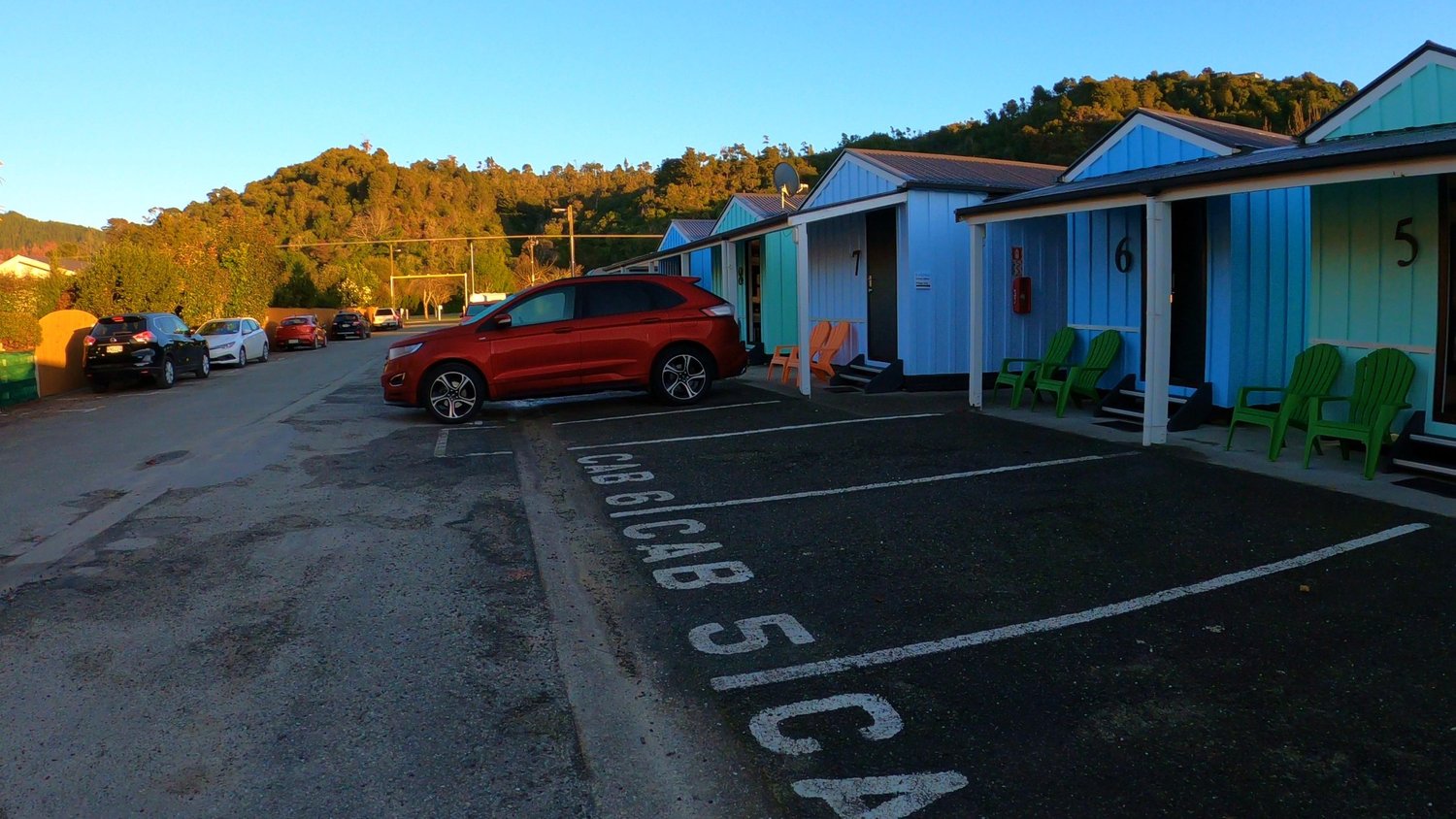
Kaiteriteri was our base.
We stayed in a small cabin at Kaiteriteri Recreation Reserve before heading over Tākaka Hill.
It was simple, warm and gave us access to the campground's shared kitchen and bathroom facilities. At the time we booked, it was the best-value option we found for our family.
We paid NZ$135 per night in July 2026. That is our historical price from the trip, not a current advertised rate.
Cost, routes, gear, kids and weather.
Is the Tākaka Hill Via Ferrata free?
Do I need climbing experience?
What gear is required?
How much is gear hire?
How hard is Cliff Traverse?
How hard is Cliff Conqueror?
How long should I allow?
Is the Tākaka Hill Via Ferrata suitable for children?
Can you climb it in the rain?
Are there toilets at the Via Ferrata?
Did our family complete the routes?
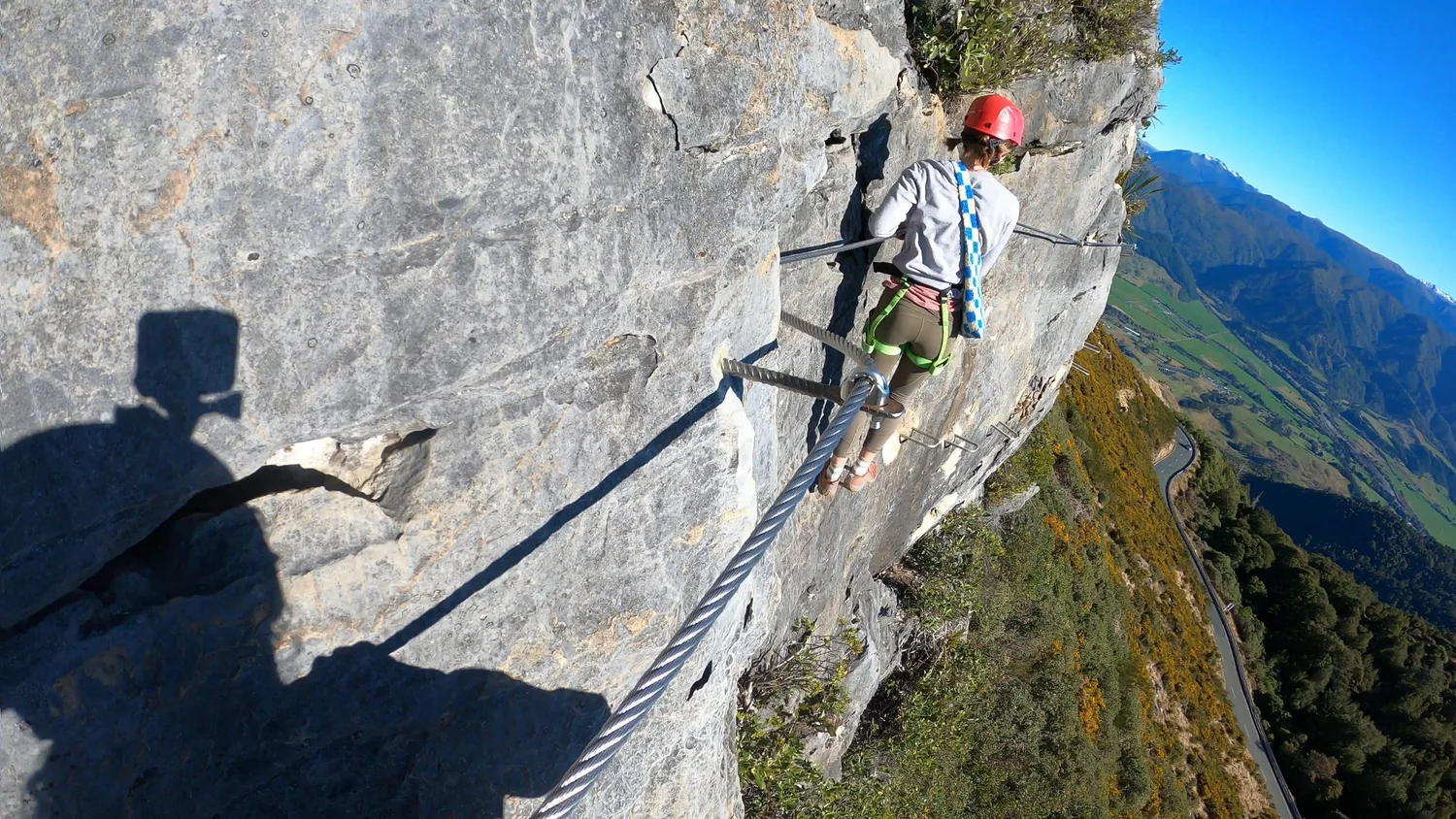
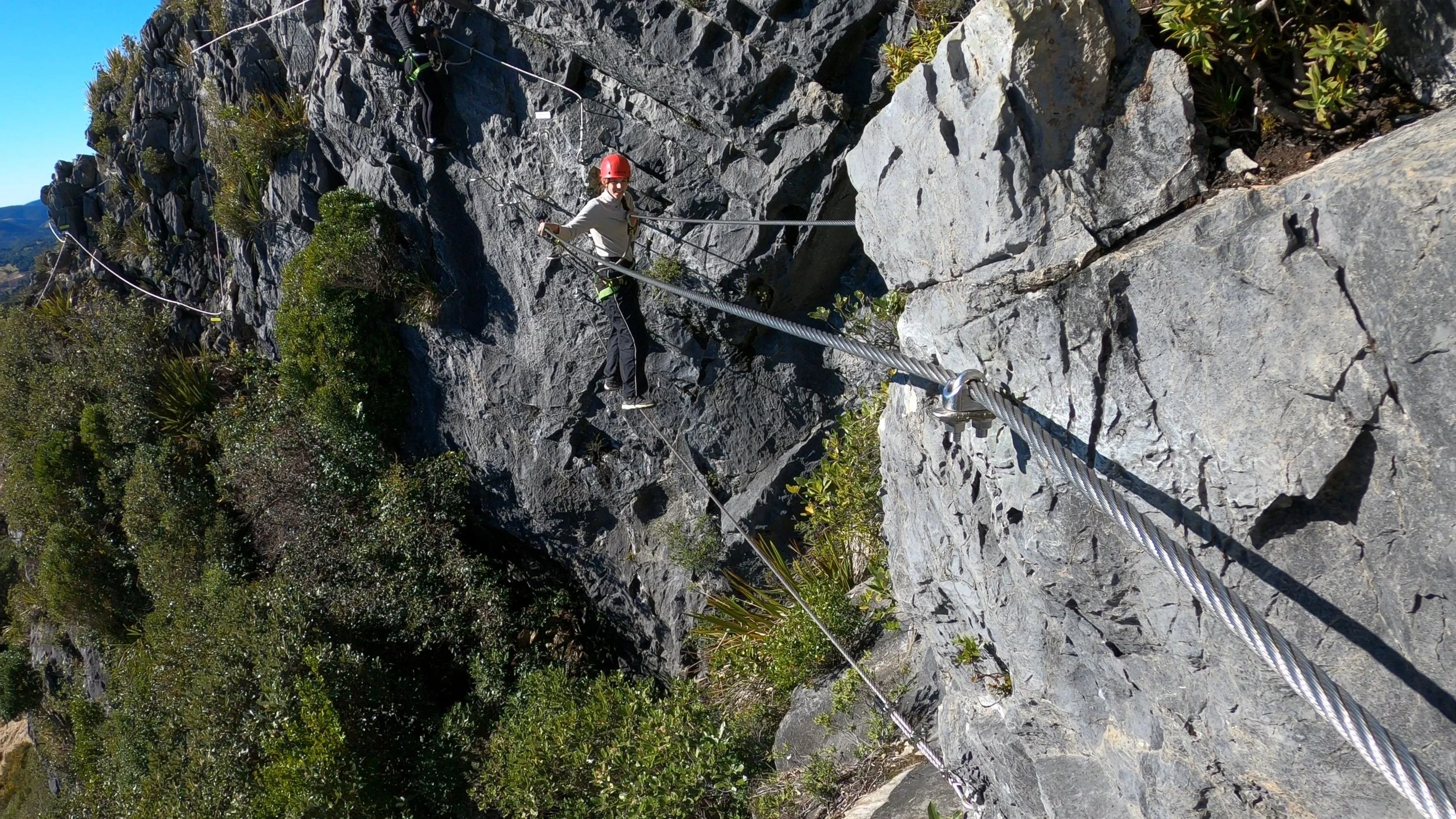
The camera still does not show how exposed it felt.
The climbing, changing confidence levels, three-wire bridge and the moment we had to decide how far we were actually willing to push are in the episode.