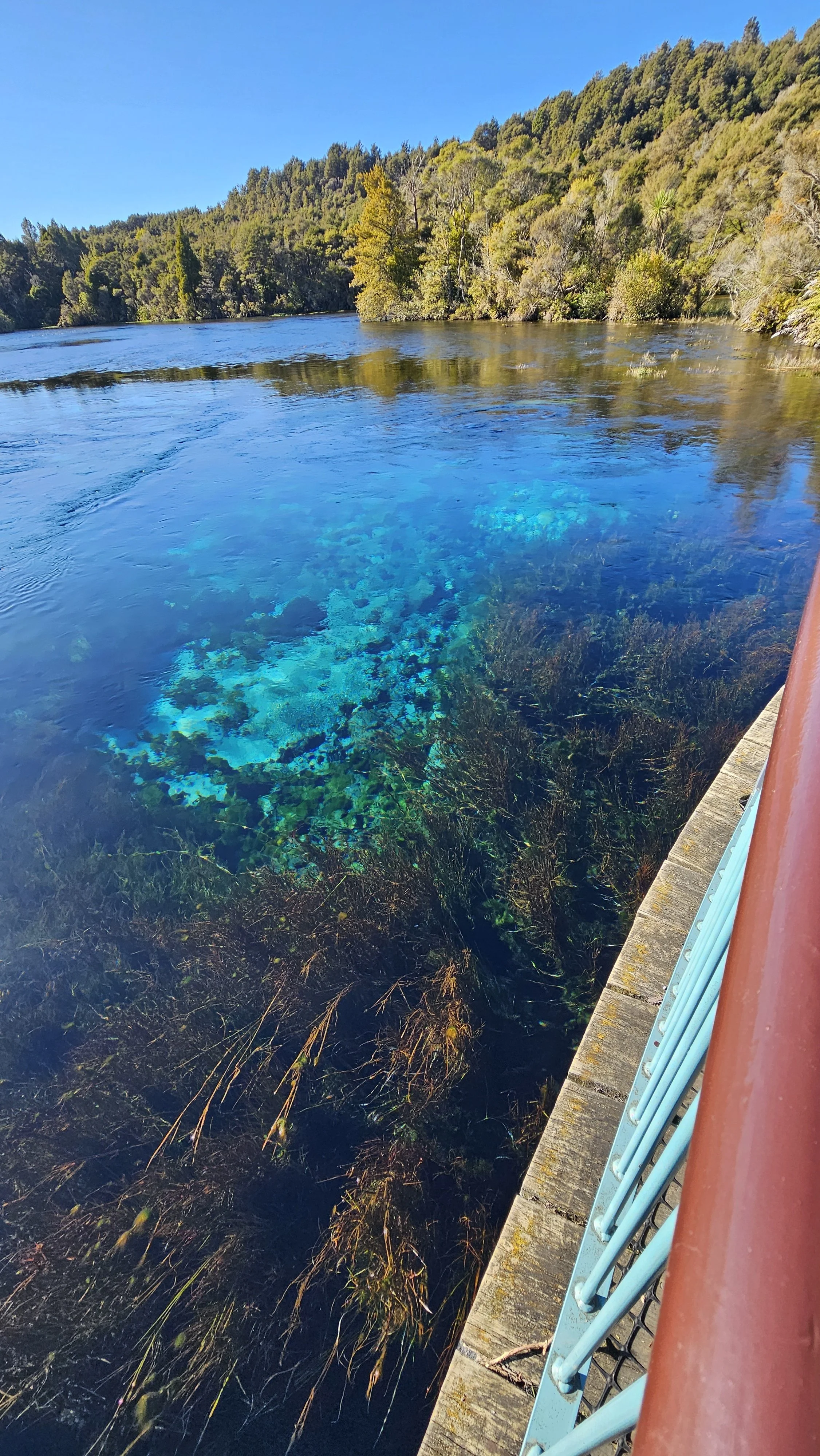

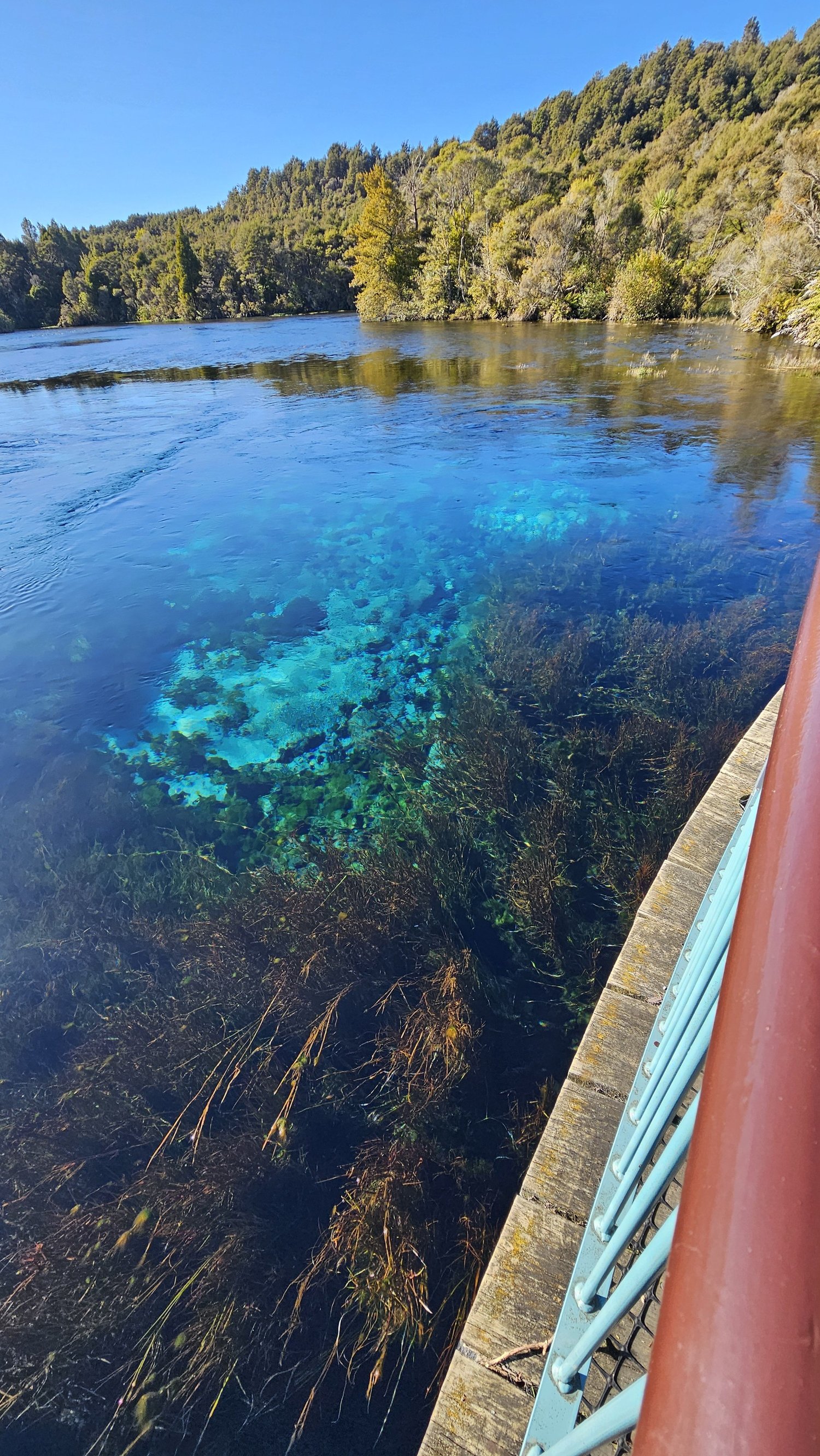
Te Waikoropupū Springs. The water was so clear our eyes stopped making sense of the depth.
One of the easiest walks of our Golden Bay trip led us to New Zealand's largest freshwater springs, and water that almost looked like it was not there.
Tasman District Council monitoring from October 2024 to January 2025.
It almost looked like the water was missing.
The walk was easy. Understanding what we were looking at was harder.
We followed the maintained route through bush and forest, crossed bridges and boardwalks, and gradually started seeing more water beside the track.
Then the main springs opened in front of us. Rocks, plants and pale patches on the bottom looked much closer than they actually were because the water was doing almost nothing to hide them.
That was the part that stuck with us. There was no difficult climb or huge physical challenge. The surprise was simply trying to understand the depth of water that barely looked like water.
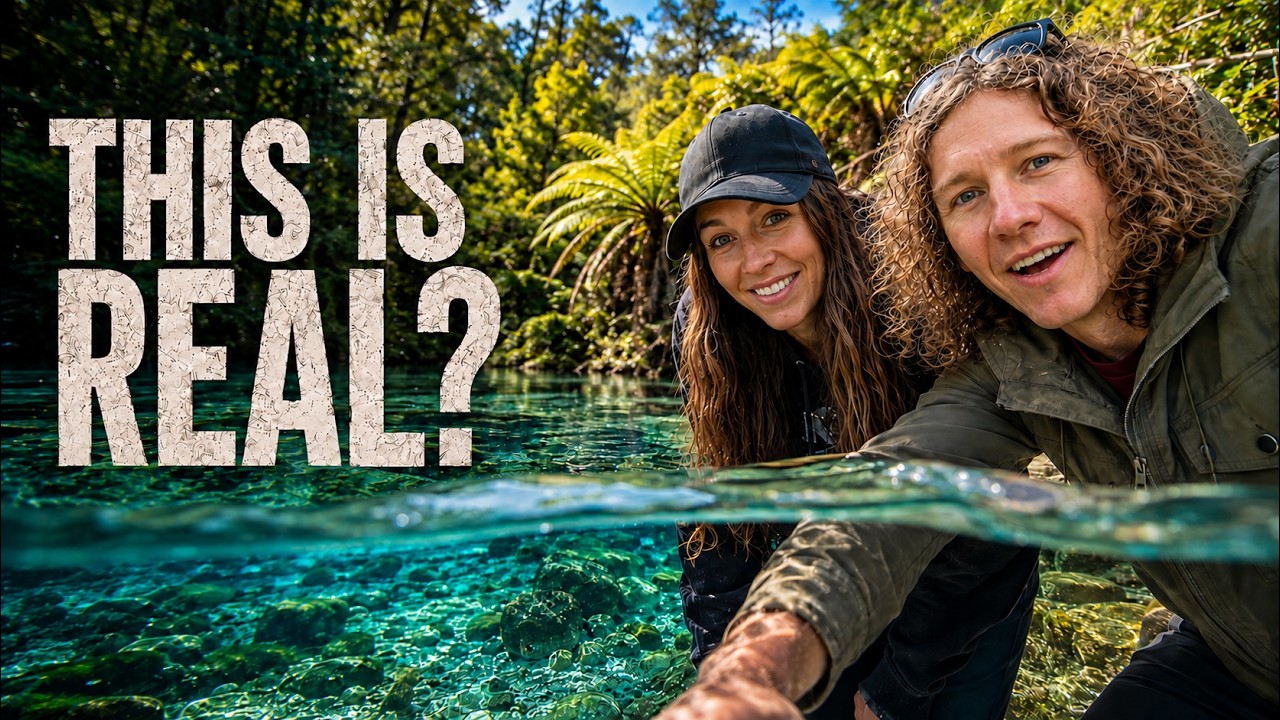
Very little effort. A ridiculous amount to understand.
DOC places the springs around 7 km from Tākaka.
DOC describes it as a short, fully accessible loop.
Official DOC visitor material recommends allowing about 45 minutes.
DOC currently lists the loop as fully accessible.
Approximate average discharge stated by DOC.
All contact with the springs, Fish Creek and Springs River is prohibited.
DOC currently lists no dog access.
Flat, maintained and easy for our family when we visited.
DOC warns that some boardwalk and viewing-platform sections are unfenced. The water is cold and swift, so children need close supervision.
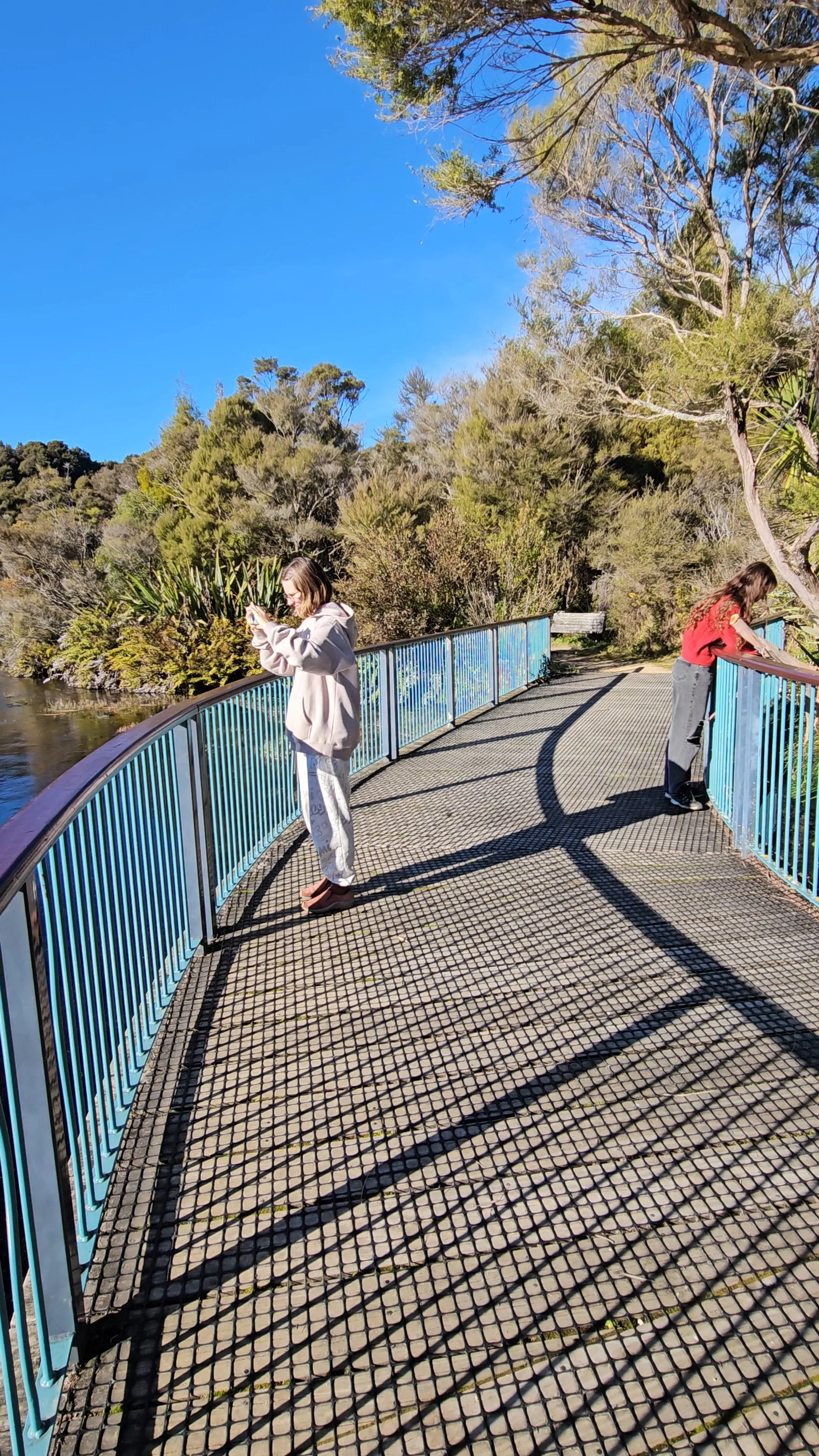
The track gives the springs time to sneak up on you.
We liked that it does not start with the big reveal.
The beginning feels more like a quiet bush walk than a famous spring.
The maintained route crosses waterways and gradually brings you closer to the main spring basin.
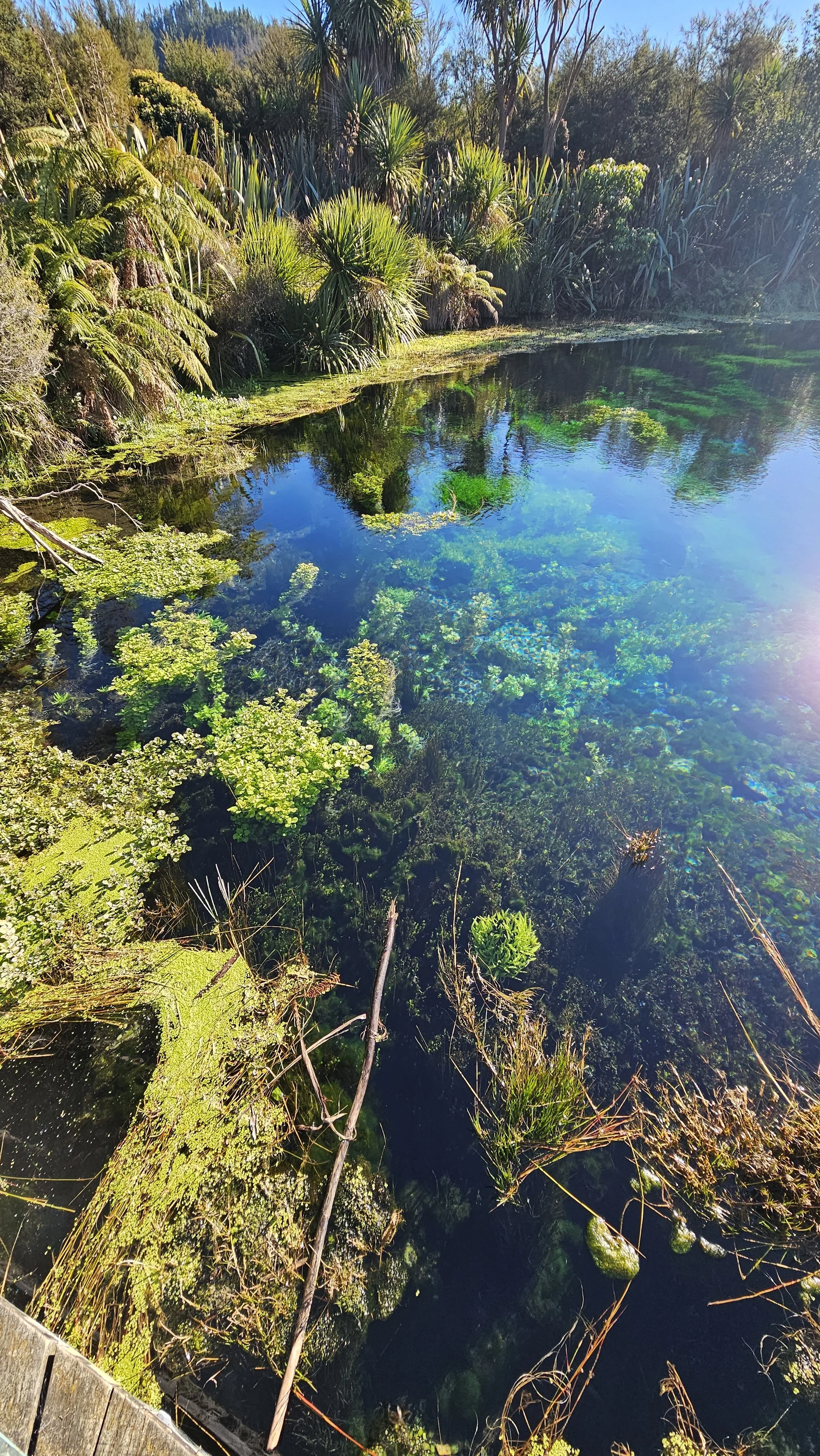
The forest opens and suddenly the water becomes the entire story.
The numbers finally explain why your eyes struggle with the depth.
Tasman District Council's 2024 to 2025 monitoring found a median visual clarity of 78.5 metres and a mean of 78.0 metres. At times, clarity approached the theoretical maximum for pure water.
The famous 63-metre number was only the beginning.
Different methods and newer monitoring have given scientists a much better picture of just how clear the springs can be.
Direct diver measurement
DOC still references the historic measurement that helped establish the springs' reputation for extraordinary clarity.
Instrument-based monitoring
NIWA's three-month deployment estimated median visual clarity at roughly 77 metres.
Latest published median
Tasman District Council says the newest data shows no evidence that clarity has deteriorated compared with earlier studies.
The spring is only the part of the system you can see.
Beneath the Tākaka Valley is the Wharepapa Arthur Marble Aquifer, a huge karst groundwater system that stores, filters and eventually returns water to the surface at Te Waikoropupū.
Rain and river water feed the recharge area above the marble aquifer.
Water travels through a complex network of underground fractures, cavities and channels.
Council currently estimates average travel time through the aquifer to the springs at around eight years.
Around two thirds of the aquifer's flow is estimated to emerge at Te Waikoropupū Springs.
about 50 m above sea level
The springs rise and fall with the tides.
This might be the strangest part of the whole system.
DOC says the spring flow fluctuates twice every day in step with local marine tides, even though the springs sit roughly 50 metres above sea level.
Research attributes the effect to ocean-loading tides and Earth tides, which slightly deform the Earth's crust. Chemical measurements have also detected seawater in the spring discharge.
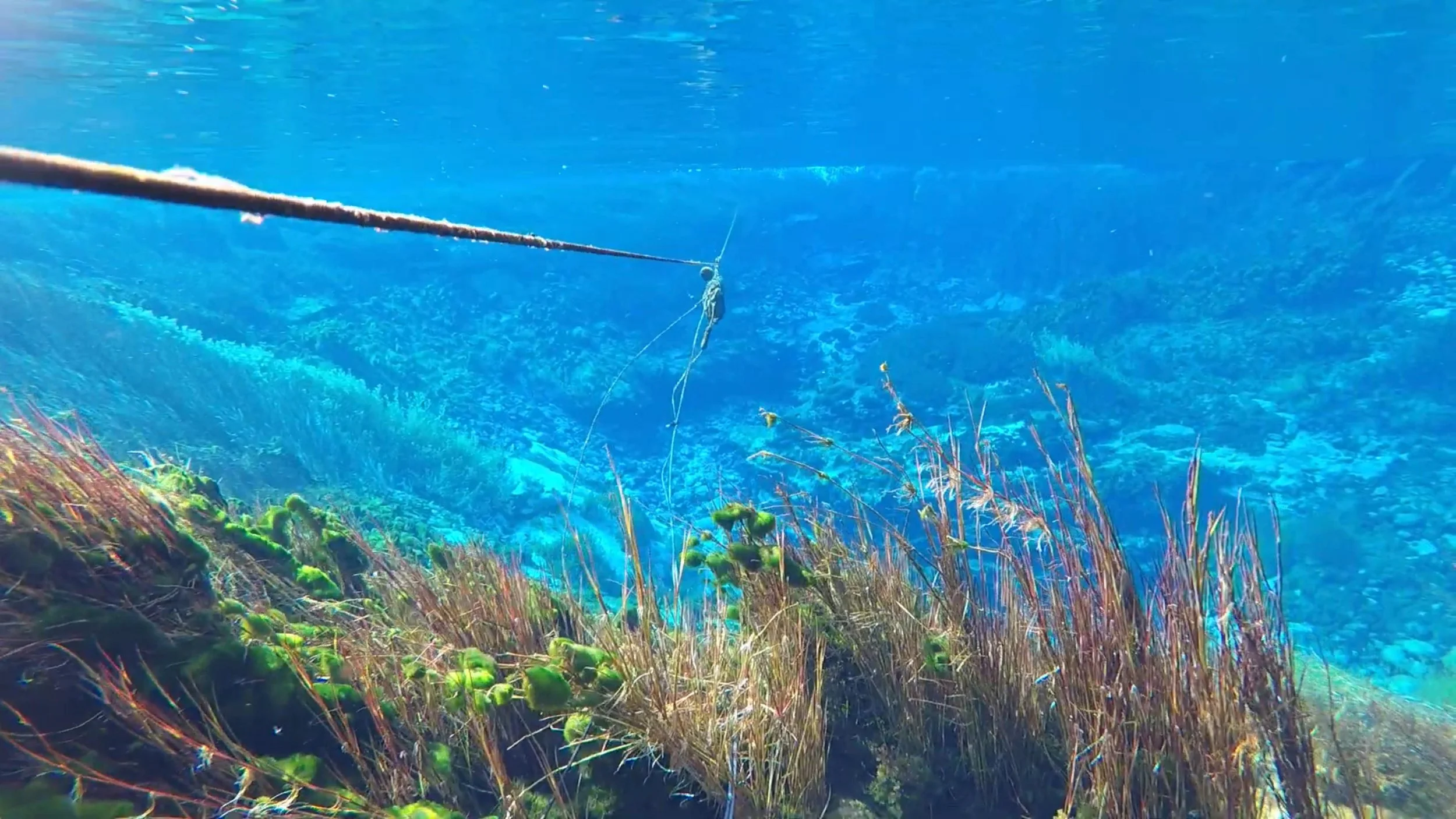
Do not touch.
Te Waikoropupū is a taonga and wāhi tapu.
DOC describes Te Waikoropupū as a place of deep cultural and spiritual significance to local Māori.
The waters of Te Waikoropupū Springs, Fish Creek and Springs River are closed to every form of physical contact. The rule protects the exceptional water quality and respects the cultural values of the place.
We stayed on the track, boardwalks and viewing areas throughout our visit and never touched the water.

One of the easiest big payoffs in Golden Bay.
There was no big climb, long approach or serious physical challenge for us.
That makes Te Waikoropupū quite different from a lot of the adventures we usually write about. The experience here is not about conquering a track. It is about slowing down enough to actually look at what is happening beneath you.
For families, the accessibility is a major advantage. The one thing we would keep firmly in mind is the unfenced water beside parts of the boardwalk and viewing areas.
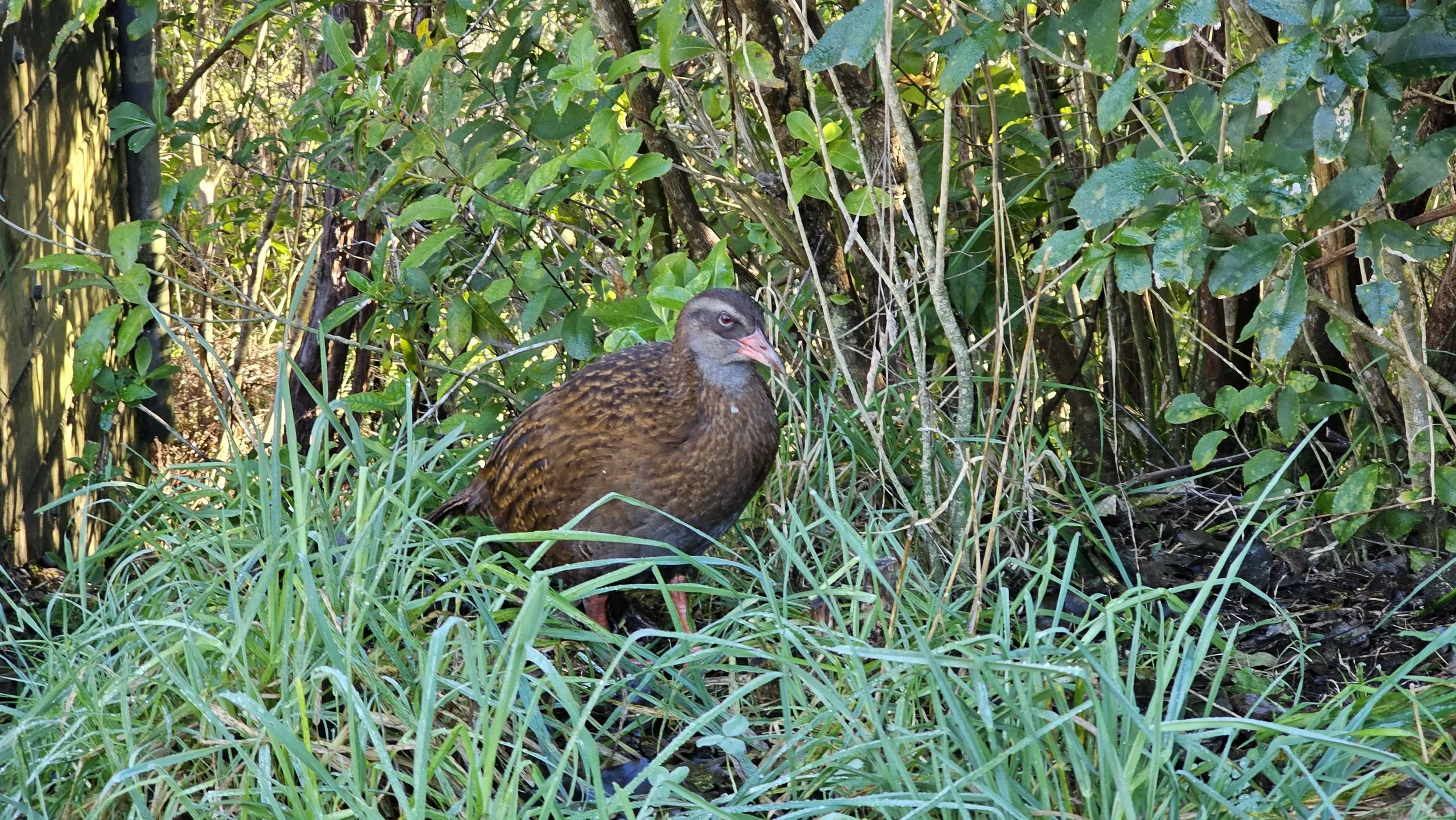
A weka showed up around the parking area before we headed onto the track. Those random wildlife moments keep sneaking into our road trips whether we plan them or not.
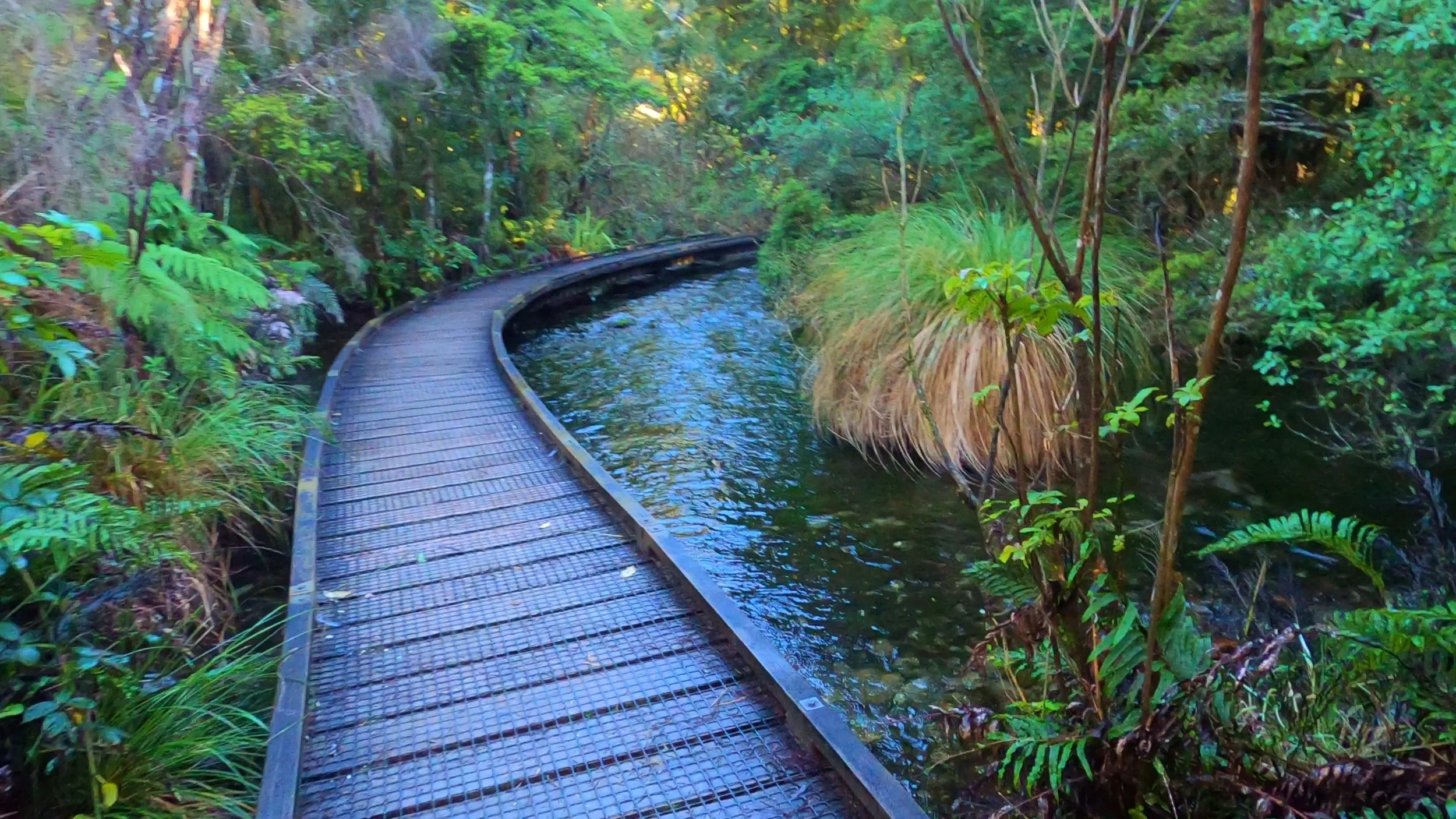
This one is refreshingly easy to plan.
Allow around 45 minutes.
The walk itself is short, but we would allow time to stop at the platforms and actually look at the water.
Wheelchairs and buggies.
DOC currently describes the loop as fully accessible.
Do not touch it.
No swimming, wading, diving, fishing, boating or filling drinking-water containers.
Watch the unfenced sections.
Some boardwalks and viewing areas sit beside cold, swift water without full fencing.
Leave them at home.
Dogs are not permitted at Te Waikoropupū Springs.
Check DOC before leaving.
Rules, access and facilities can change, so recheck the current DOC page before your visit.
The questions we would have wanted answered.
How long does the Te Waikoropupū Springs walk take?
Is Te Waikoropupū Springs family-friendly?
Can you swim at Te Waikoropupū Springs?
How clear is the water?
What was the famous 63-metre clarity measurement?
How much water comes out of the springs?
Where does the spring water come from?
Why does the flow change with the ocean tides?
Are dogs allowed?
How far is Te Waikoropupū Springs from Tākaka?
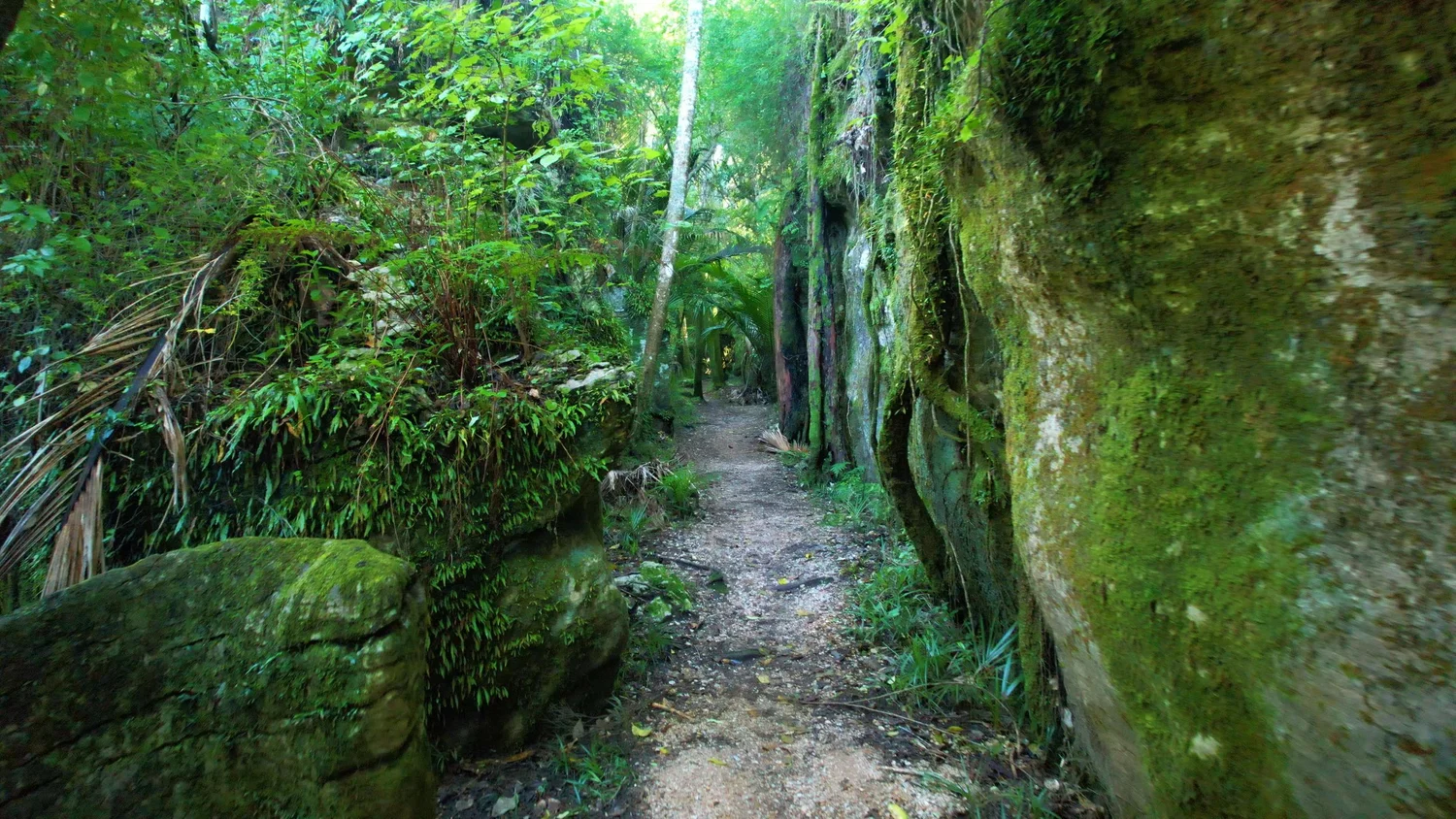
The numbers are impressive. Standing beside it is stranger.
Episode 3 begins at The Grove before following the limestone and groundwater story to Te Waikoropupū. The video has the reactions, Dancing Sands and everything that happened around the visit.