
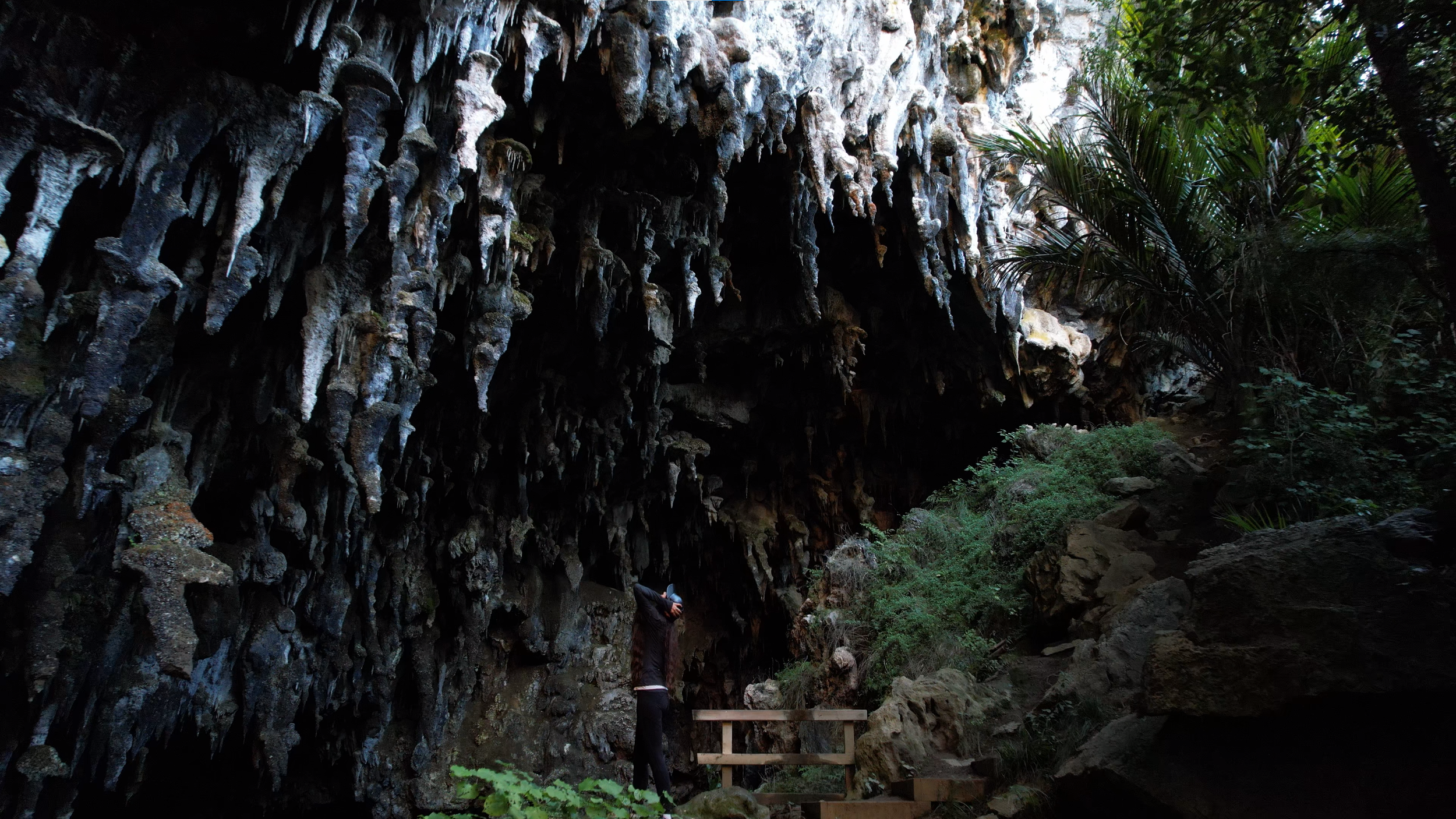
Rawhiti
Cave
The track gets steeper before the cave gets stranger. At the top, thousands of formations seem to reach outward toward the sunlight.
Roughly 30 minutes along the valley, then about 30 minutes on the steeper final section.
We thought the hard part of the day was already behind us.
We arrived at the Rawhiti Cave Track after spending the first part of the day on Tākaka Hill. Four of us started the track. Two of us continued all the way to the cave.
The beginning did not feel particularly intimidating. For roughly the first half, we followed the valley before the track changed completely and started heading uphill.
Angelina happened to have a sore knee that day. About halfway up the steep section it was hurting enough that continuing did not make sense. Malaya turned around with her while Kristine and I continued toward the cave.
When the entrance finally appeared, the tired legs stopped being the interesting part.
Rawhiti Cave Track, Motupipi 7183.
DOC's current estimate to the informal carpark.
Approximately 30 minutes valley walking and 30 minutes climbing.
Current Nelson Tasman visitor information.
Follow signage and leave gates as you find them.
Reasonable fitness and tramping experience are required.
DOC warns of falling rock and slippery surfaces.
Do not cross when flooding follows heavy rain.
Official information rechecked 7 September 2026. On our July 2026 visit, Brad and Kristine reached the cave in about 45 minutes while moving at a decent pace. Angelina's sore knee changed our family plan that day, and Malaya turned back with her.
The first half does not prepare you for the second.
DOC's description almost divides the track perfectly in two. That was pretty close to how it felt for us too.
River crossing and forest track
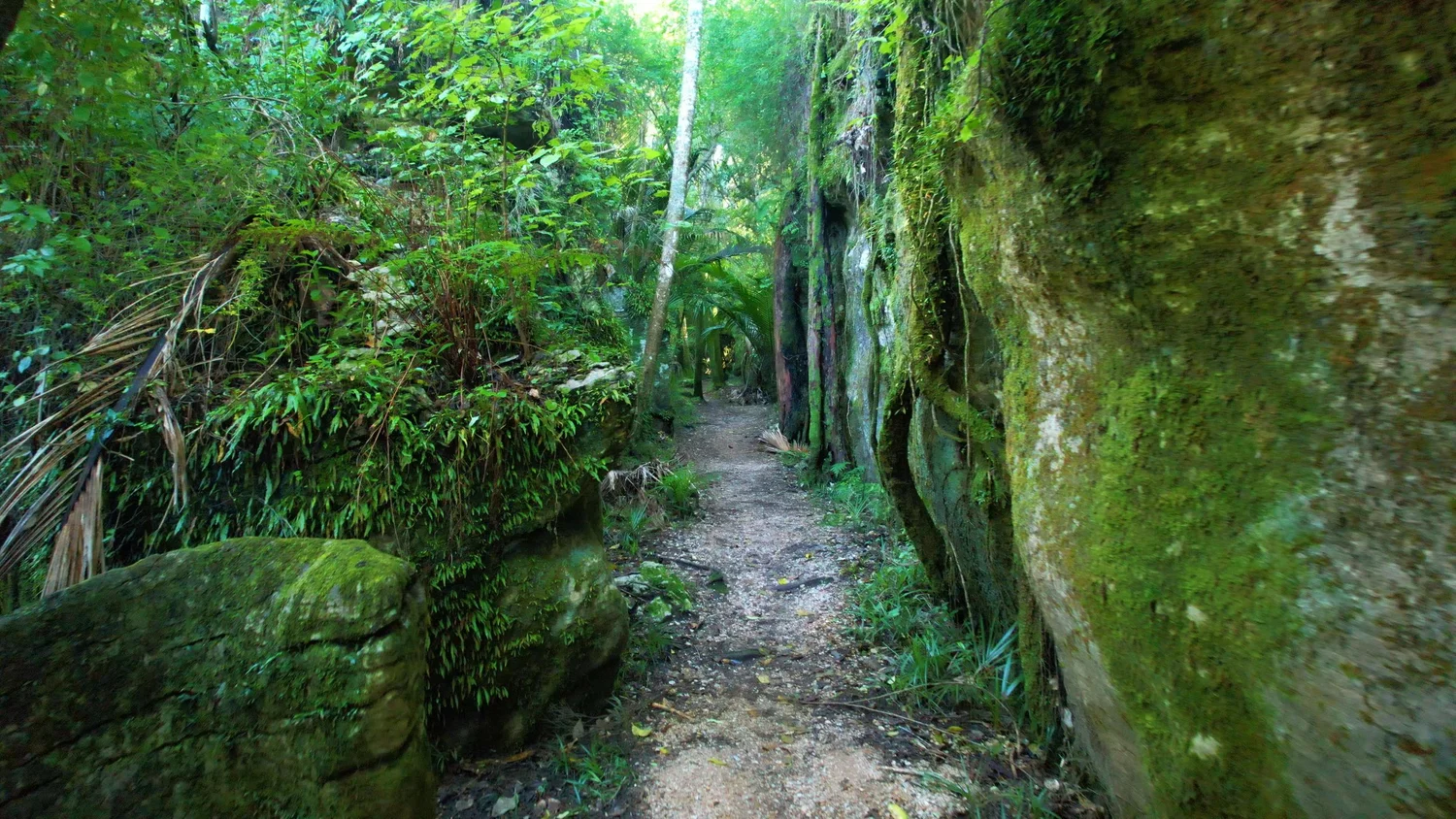
Shortly after leaving the carpark, the track crosses Dry River. From there we followed a lush, jungly pathway winding through trees, dense bush and palms, with the riverbed beside the forest for much of the way.
The track turns uphill
The character changes quickly. Our section was muddy, rocky and considerably more physically demanding than the forest track below.
Cave entrance and viewing platforms
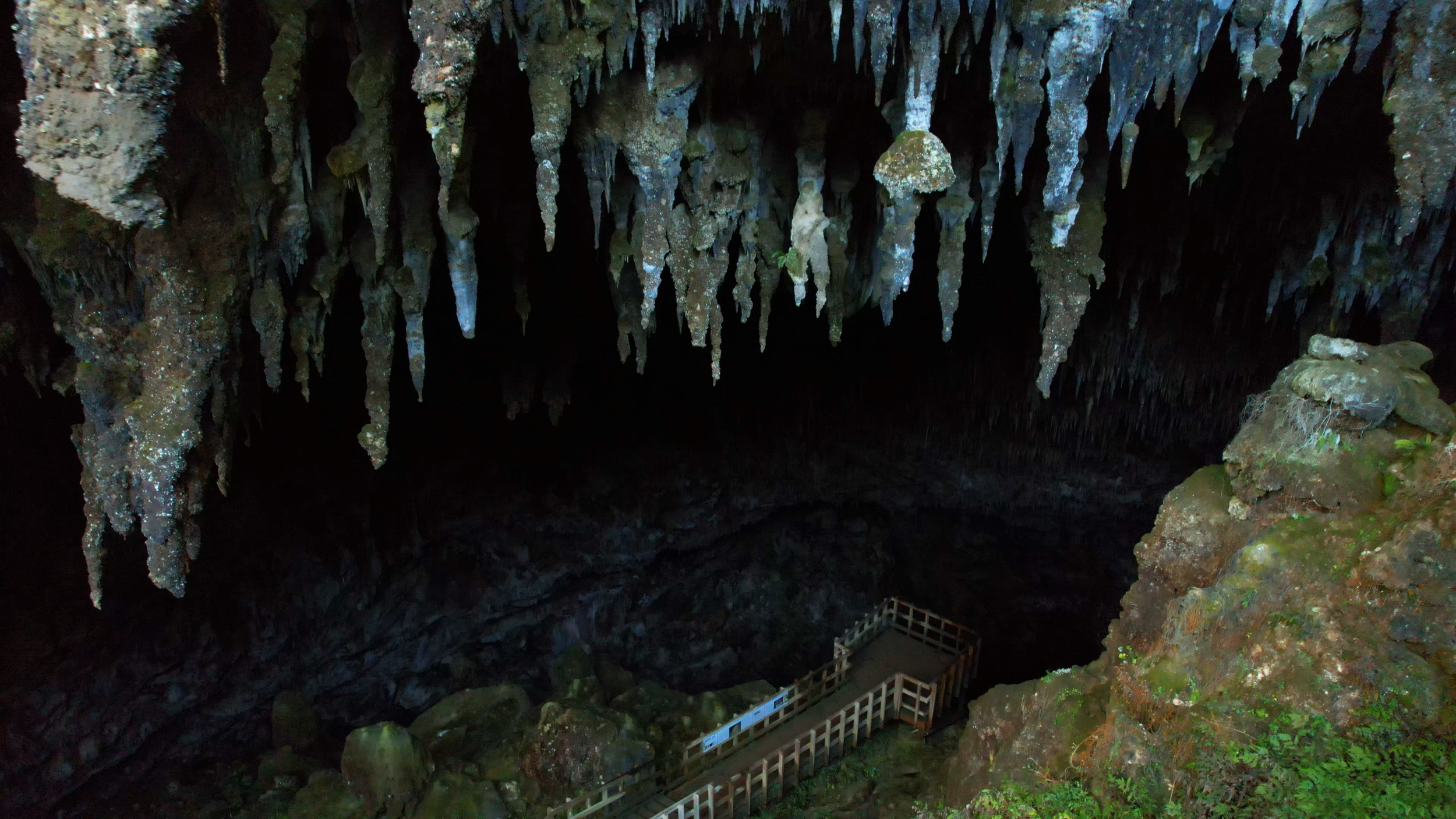
Once we reached the cave, the rough track gave way to well-made stairs and viewing platforms. We also found information diagrams at the bottom of the platforms.
Mud, rock, switchbacks and tired legs.
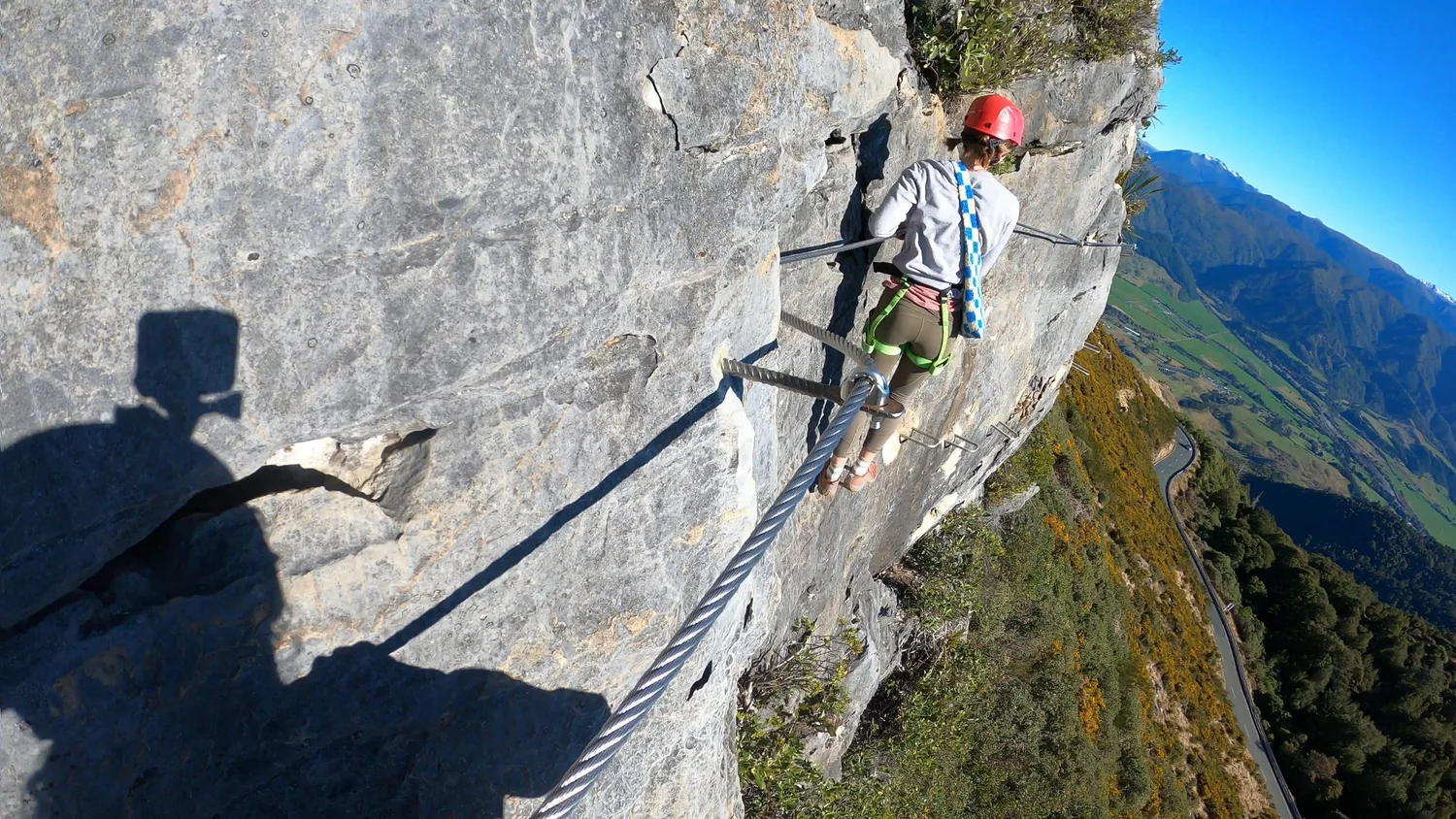
We had already spent hours on the via ferrata before starting this track, so we were not arriving fresh.
Once the track turned uphill, the combination of mud, rocks and slope made it much more demanding than the opening section.
The return down the same steep section also required attention. Muddy sections were slippery during our visit.
Half of it is flat and then half of it is zigzags up a pretty muddy track and rocky.
Our reaction at the caveA sore knee changed our plan that day.
Normally there would be no reason Angelina or Malaya could not make a track like this. This time Angelina happened to be dealing with a sore knee.
Brad
Continued through the steep section with Kristine and reached the cave viewing area.
Kristine
Continued with Brad through the final section and reached the cave entrance.
Angelina
Turned around about halfway up the uphill section because her knee was hurting that day.
Malaya
Stayed with Angelina and returned with her while Brad and Kristine continued toward the cave.
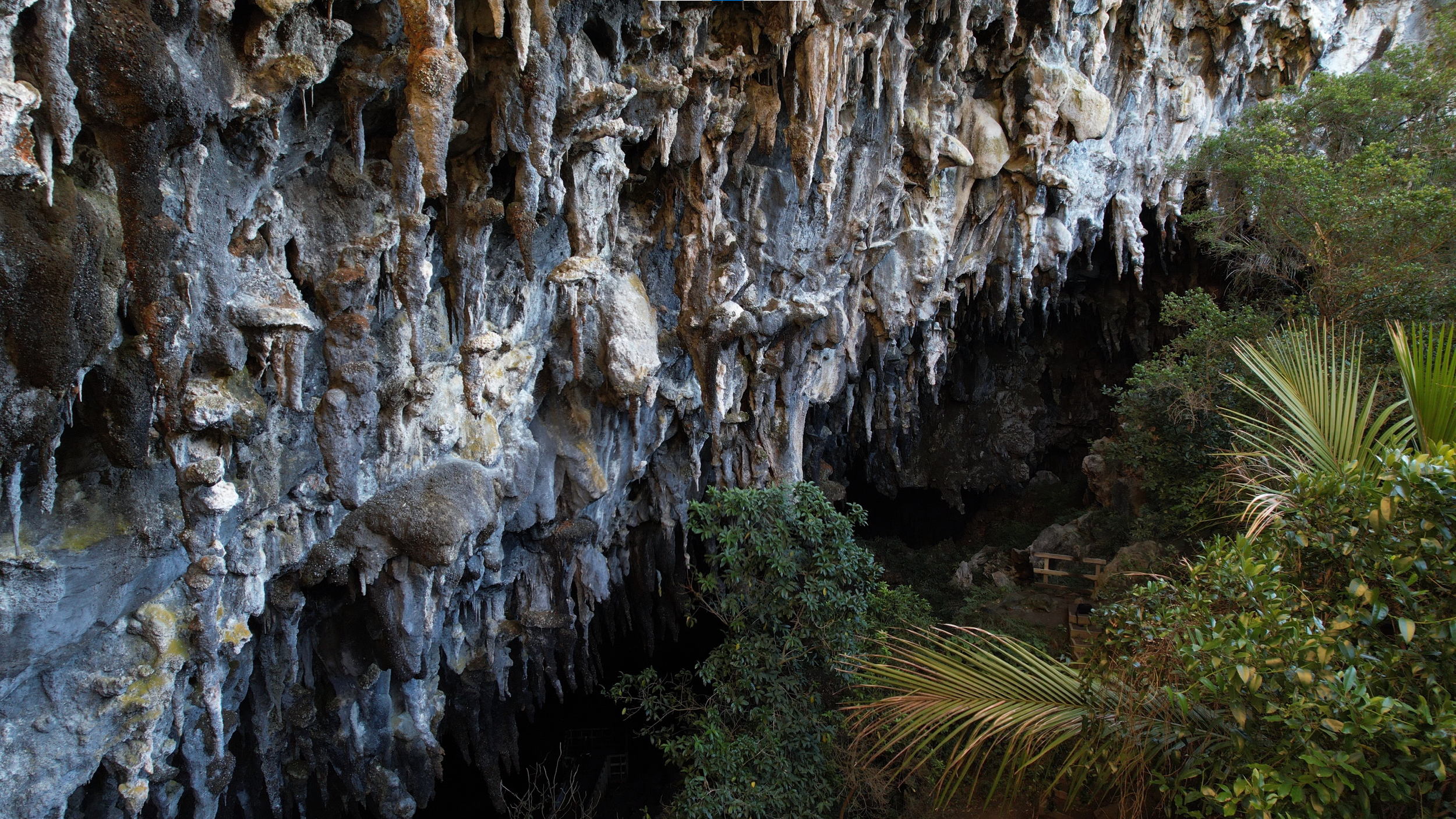
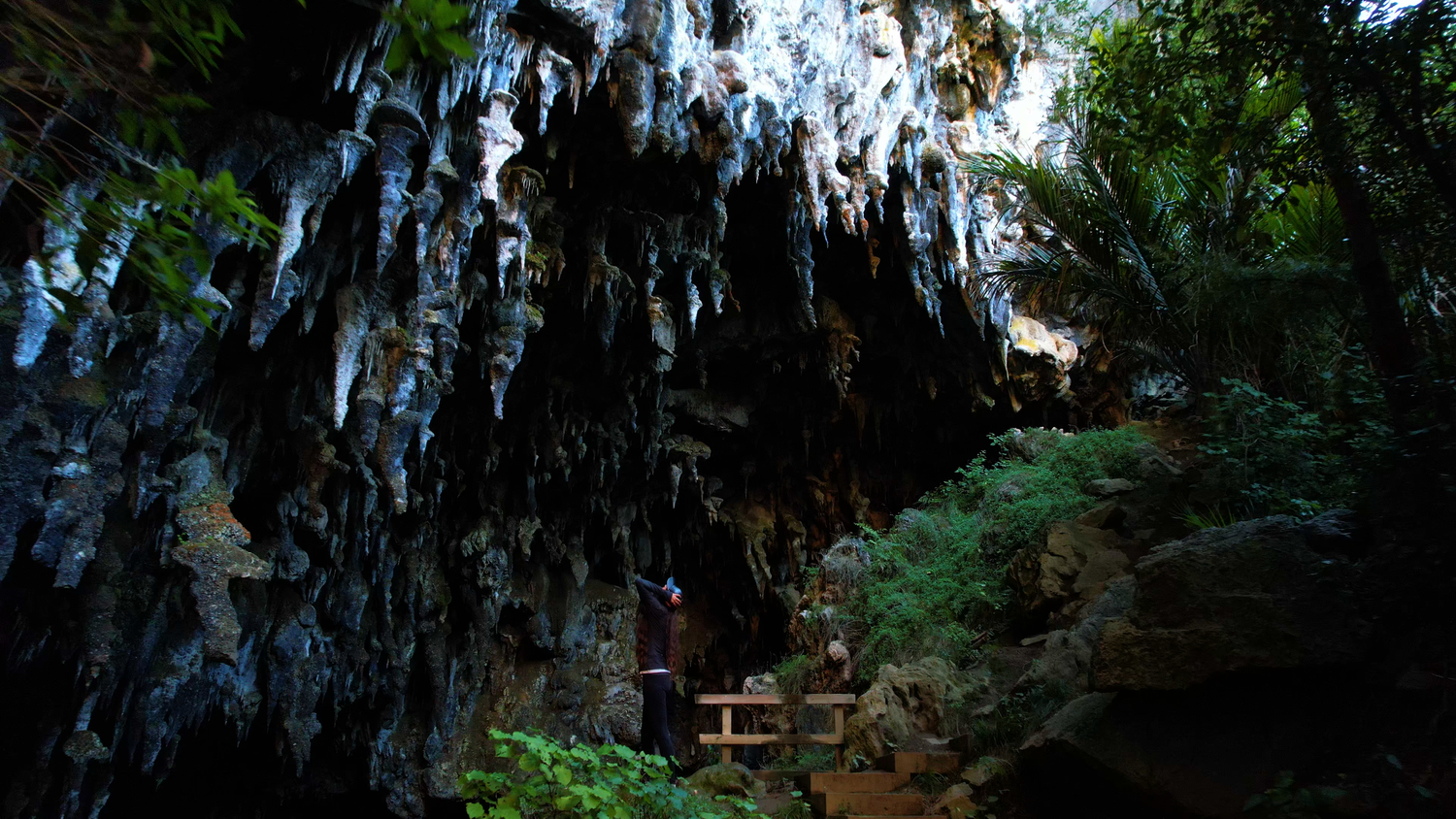
This did not look like any cave we expected.
This cave is featured in Episode 2 of our Golden Bay adventure.
Earlier in the same episode we were on the Tākaka Hill via ferrata, then later we headed here and saw one of the strangest cave entrances we have ever visited.

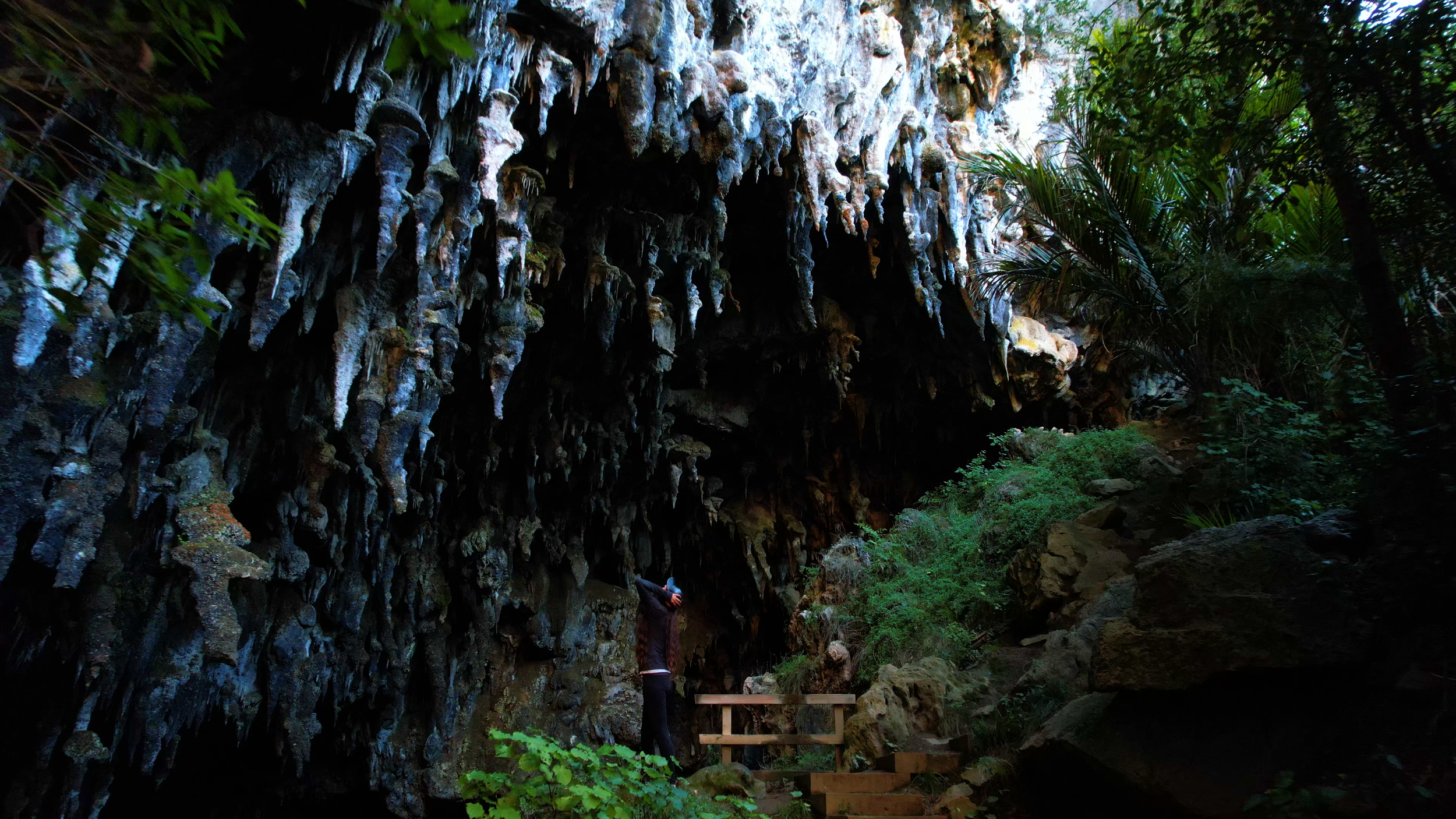
The scale is hard to understand until someone is standing beneath it.
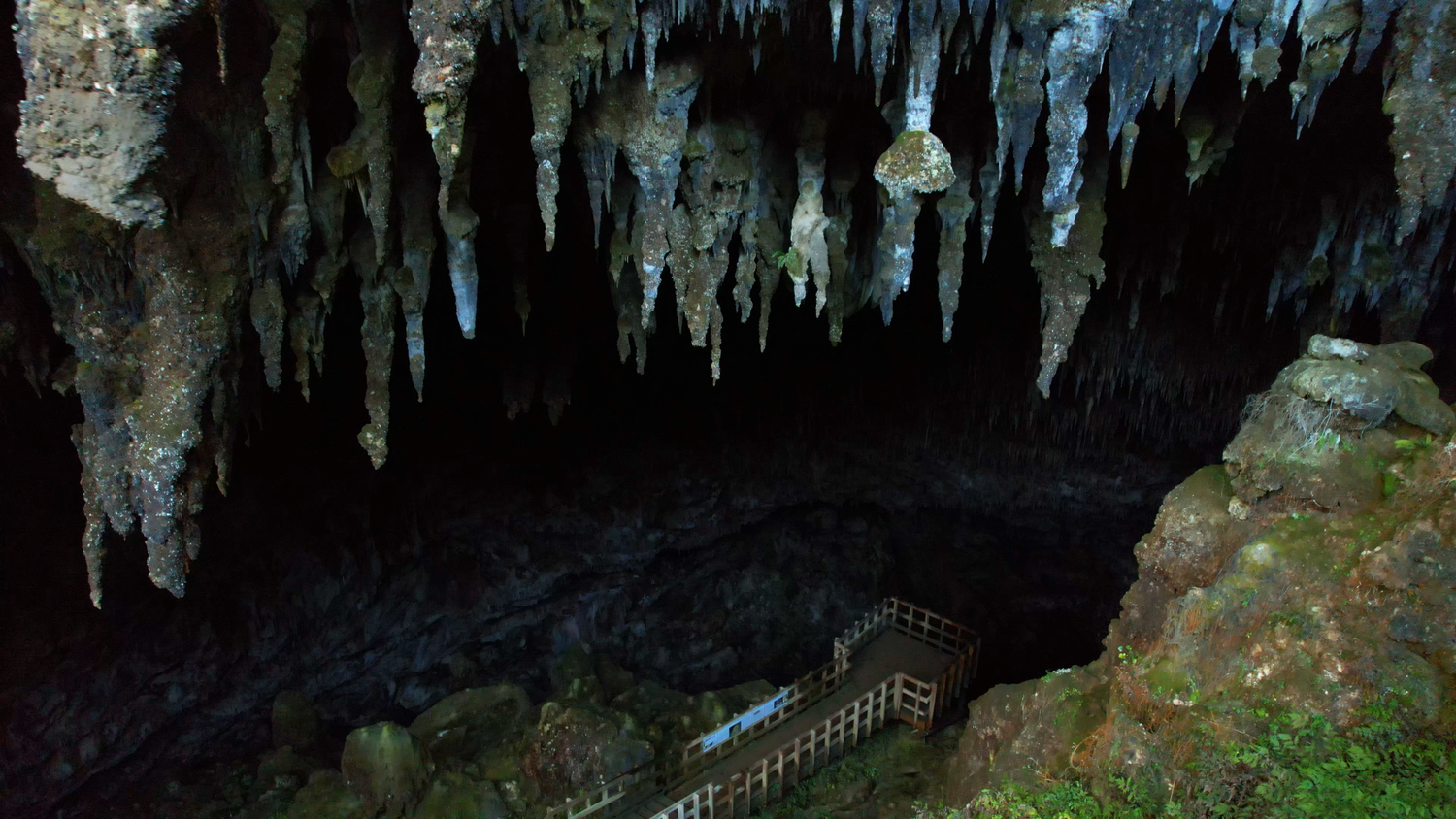
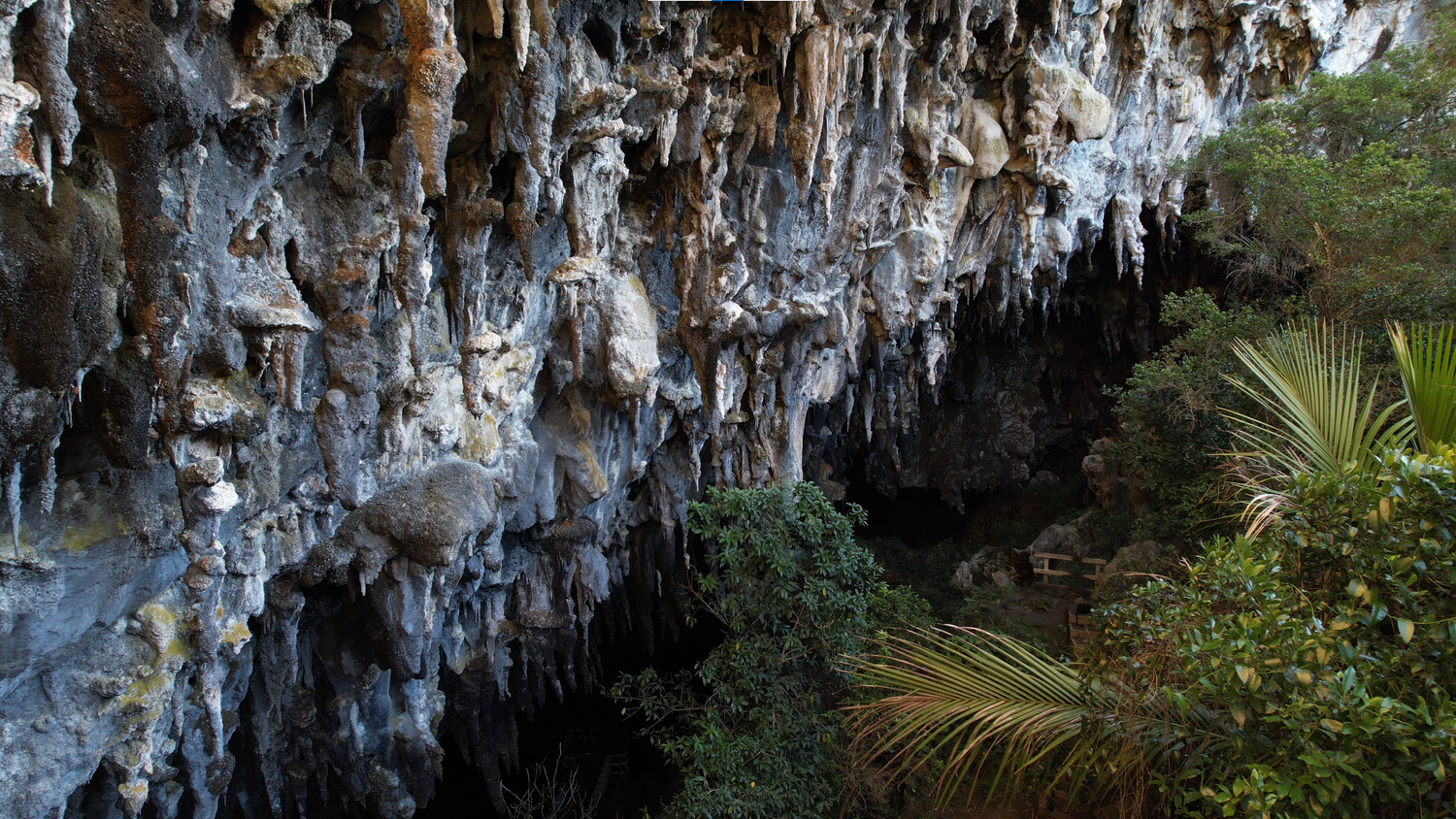
The entrance is enormous, but the stranger part is what hangs above it. Instead of every formation pointing straight toward the ground, many twist and reach outward toward daylight.
Our first reaction was basically: how is this even growing that way?
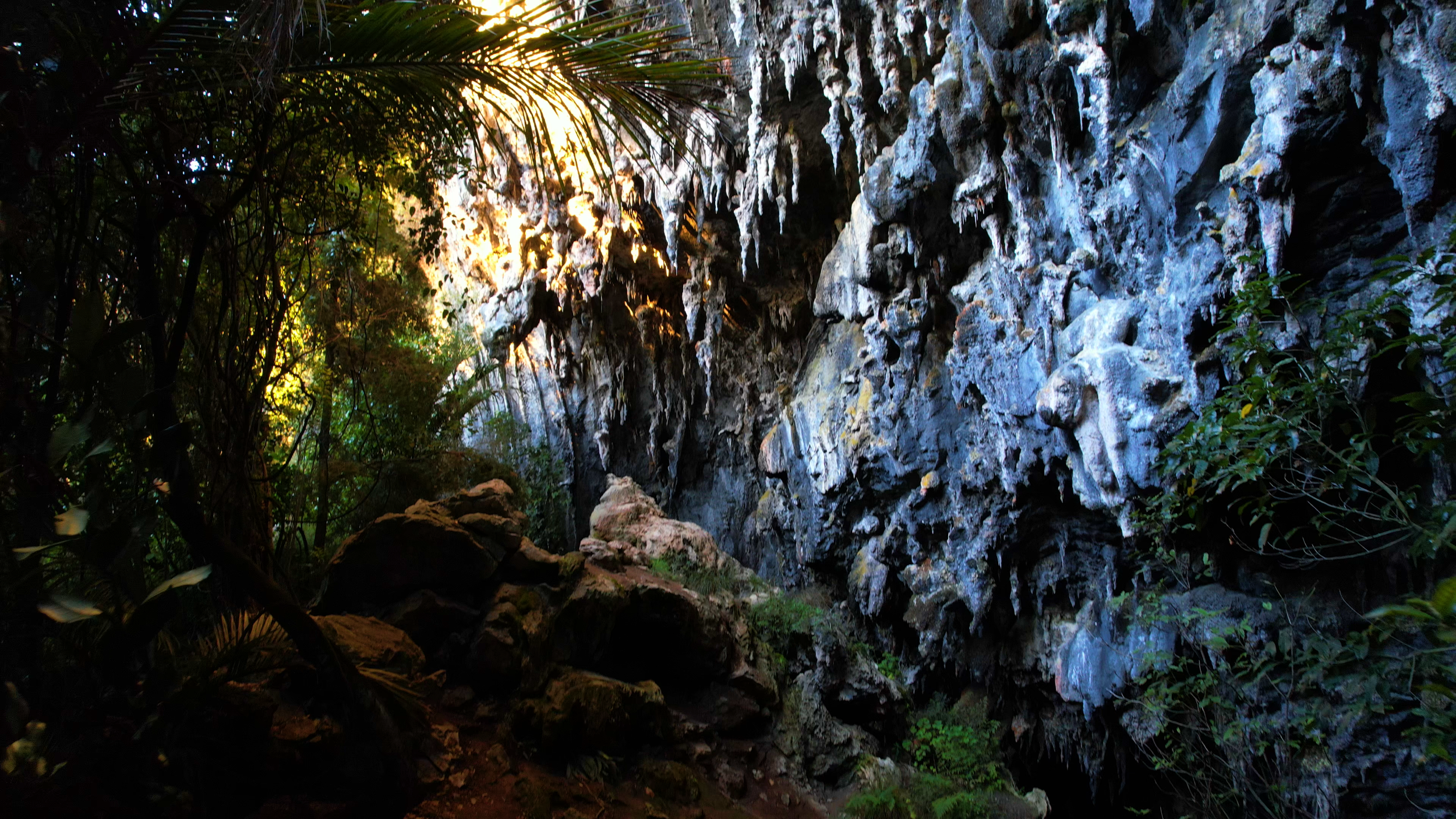
We couldn't see where the darkness ended.
Some parts of the entrance were bright enough to see every formation and plant. Then we would look farther into the cave and everything simply disappeared into black.
From the viewing area we could not tell how far some of those darker sections continued. That made the cave feel much bigger than what the photographs show.
We are not estimating how far the cave extends. This was simply what it felt like standing there looking beyond the daylight.
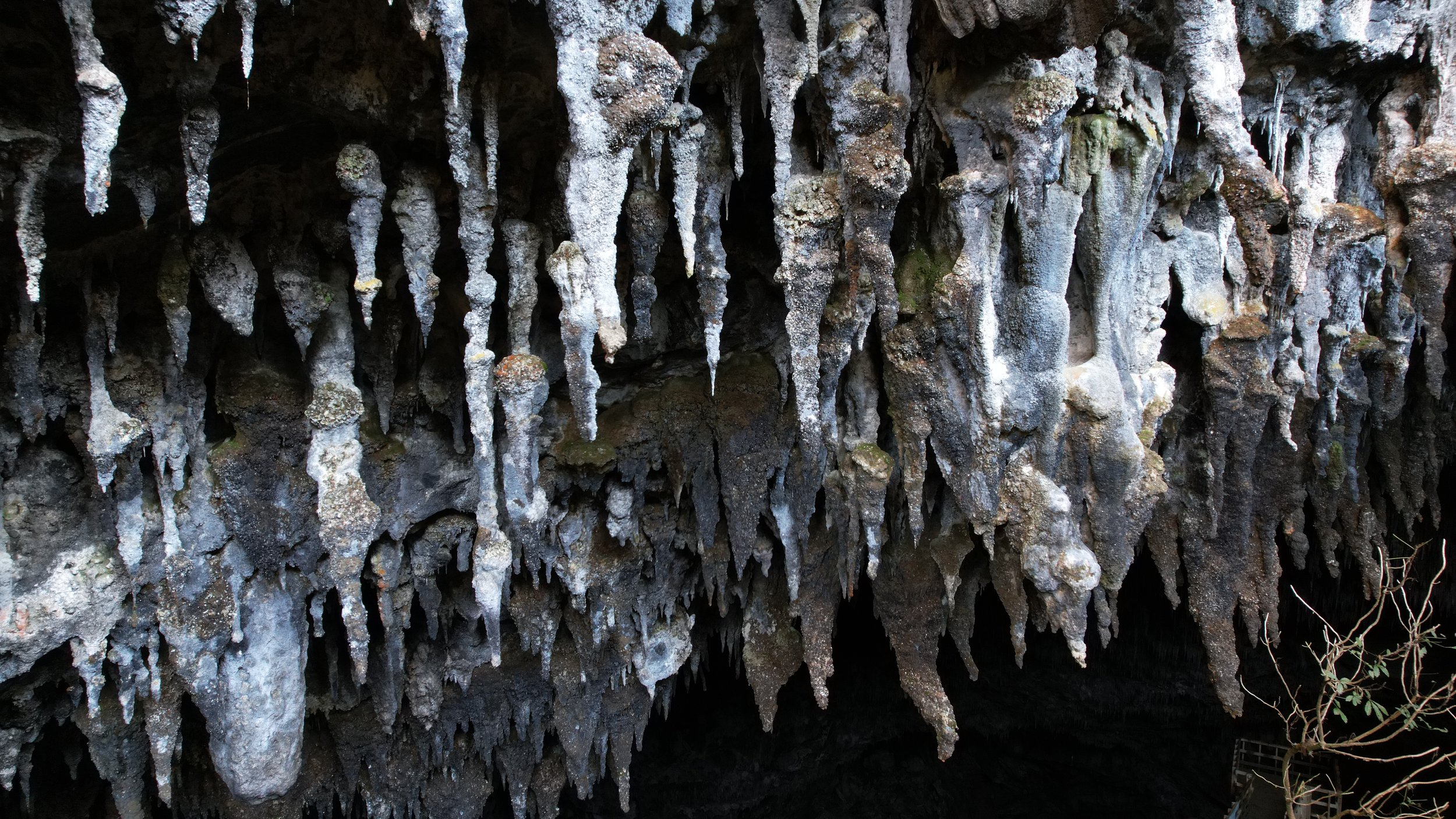
Some of the formations grow toward the light.
Rawhiti Cave is unusual because the plants around its entrance are not simply decoration. They are part of what makes the cave look the way it does.
DOC says Rawhiti Cave may have the most diverse and extensive entrance and twilight-zone flora of any cave in New Zealand.
DOC explains that this living environment influences the growth of calcium-based formations within the cave.
Some stalactites on the cave ceiling grow outward toward sunlight, creating the strange curved shapes around the entrance.
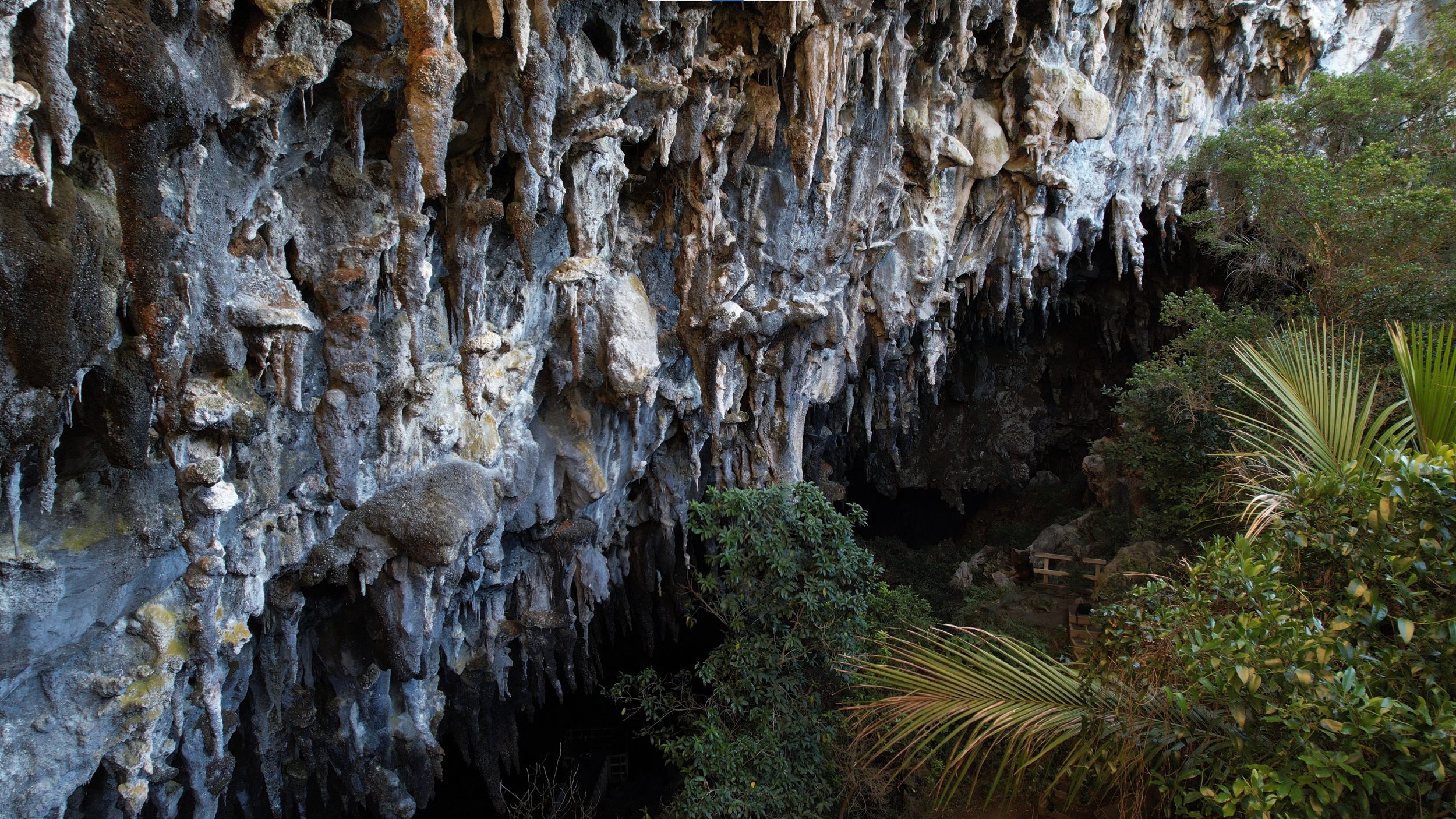
Some important cave features are right under your feet.
Most people naturally arrive looking upward at the huge formations hanging around the entrance. But DOC notes that significant cave features also occur on the entrance slopes and cave floor.
It changed the way we looked around the cave. The ceiling grabs your attention first, but some of the details worth protecting are much closer to where you are standing.
Once you reach the entrance, the setup is surprisingly good.
The rough track does not continue through the viewing area. On our July 2026 visit, well-made stairs and platforms gave us different places to look across the cave entrance.
The stairs connect the different viewing levels around the entrance and make the transition from the steep track easier.
They give visitors places to stop and take in the formations without wandering across the cave floor.
We also found information diagrams explaining more about the cave and unusual features around the entrance.
What we'd know next time.
Do not judge the whole track by the beginning.
The forest section felt much more relaxed to us. The steep uphill section was where the character changed.
Track conditions matter.
We encountered mud and slippery footing. DOC also warns that Dry River can flood after heavy rain.
There is no reason to push an injury.
Angelina would normally have no problem with a track like this. Her knee happened to be sore that day, so turning around was simply the sensible decision.
The cave deserves time once you get there.
Between the viewing platforms, strange formations, vegetation, information diagrams and dark areas beyond the entrance, there is more to notice than we expected.
Check current track conditions before you go.
Conditions and access can change. DOC should be the final source for current track and safety information.
Allow about 15 minutes from Tākaka.
From Tākaka, DOC directs visitors east toward Pohara Beach, then through Motupipi via Glenview Road and Packard Road. The signposted approach crosses private property to an informal carpark.
Heavy rain can change the plan.
Dry River is prone to flooding after heavy rain. DOC says not to attempt the crossing in those conditions.
Stay on the formed viewing route.
DOC asks visitors to stay on the formed track and viewing structure, and warns of falling rocks and slippery surfaces.
The questions we would have wanted answered.
How long does the Rawhiti Cave Track take?
Is Rawhiti Cave free to visit?
How difficult is the Rawhiti Cave Track?
Why did two members of your family turn around?
Are there stairs and viewing platforms at Rawhiti Cave?
Why do some Rawhiti Cave formations grow toward the light?
Why are cave features near the ground important?
How far does Rawhiti Cave continue into the darkness?
What happens after heavy rain?
We combine our July 2026 experience with current official information rather than treating one visit as a guarantee of what someone else will find.
Rawhiti Cave. The climb gets harder before the cave gets stranger.
A quiet valley walk turns into a steep muddy climb, then suddenly opens beneath a huge living cave entrance where formations appear to reach outward toward the daylight.
DOC describes roughly 30 minutes through the valley, followed by about 30 minutes of steep climbing.
We had already spent hours climbing before we even started this track.
That mattered more once the valley disappeared behind us.
We came to Rawhiti Cave after our Tākaka Hill via ferrata adventure. Four of us started the track together and the first part felt fairly relaxed.
Then the route turned uphill. Mud, rocks and switchbacks changed the walk completely, especially with already-tired legs.
Angelina also had a sore knee that day. When it became clear the climb was making it worse, Malaya headed back with her while Kristine and I continued toward the cave.
About 15 minutes by road from Tākaka.
DOC's current estimate.
Current Nelson Tasman visitor information.
Reasonable fitness and tramping experience required.
Do not attempt the crossing when flooded.
Stay on the formed track and viewing structure.
The first half and second half feel like different walks.
DOC's description divides the route almost perfectly in two. That was pretty close to how it felt to us.
Shortly after leaving the informal carpark the route crosses Dry River, then follows the valley beneath dense vegetation.
The route turns sharply uphill for the final section. DOC describes it as steep and narrow. We found it muddy, rocky and considerably harder than the valley below.
The steep bush track suddenly opens beneath a huge cave entrance surrounded by living vegetation and unusual limestone forms.
Do not judge this track by the beginning.
The relaxed valley section does not really prepare you for the climb at the end.
We had already spent several hours on the via ferrata, which meant we were starting the steep part with tired legs.
Mud and rock made footing more awkward during our visit, and the return down the same section required attention too.
Four started. Two reached the cave.
That sounds more dramatic than the reason actually was.
Angelina happened to have a sore knee that day. Once the track became steep, continuing was making it worse.
Malaya headed back with her while Kristine and I continued. Normally both girls would be capable of completing a track like this.
We split up, made sure Angelina was not alone, and adjusted the adventure.
The cave did not look like a cave we understood.
The entrance was huge, but the strange part was above us. Instead of every formation simply hanging downward, many appeared to bend and reach outward toward daylight.
Photos flatten it. Standing underneath does not.
The entrance stretches high above the viewing area.
From below, it felt less like looking into a small cave and more like standing beneath a massive opening cut into the hillside.
The deeper sections were darker again. From the viewing area we could not tell where some of that darkness ended, so we are not putting an unverified cave depth or length on the page.
The plants around the entrance are part of the cave story.
DOC says Rawhiti Cave may have the most diverse and extensive entrance and twilight-zone flora of any cave in New Zealand.
The cave changes again when the sunlight runs out.
Near the entrance we could see plants, rock and individual formations. Farther in, everything disappeared.
We could not tell from the viewing area how far some darker sections continued. That is our observation from standing there, not a measurement of the cave.
The biggest formations pull your eyes upward.
But DOC specifically warns that important cave features also occur close to where visitors are standing.
Those lower features are easier to miss and much easier to damage. DOC says visitors should stay on the formed track and viewing structure to protect the cave's significant kiokarst features.
That changed how we looked at the entrance. The ceiling grabs you first, but the cave is doing interesting things almost everywhere.
The rough track ends at a surprisingly good viewing setup.
On our July 2026 visit, stairs and viewing platforms made it much easier to stop and actually study the cave.
A very different surface from the muddy track immediately below.
They let visitors see different parts of the entrance without walking across vulnerable cave features.
We found interpretation near the platforms explaining some of the unusual geology and cave features.
A few things can completely change this walk.
Current DOC information should be your final check before travelling.
About 15 minutes from Tākaka.
DOC directs visitors through Motupipi via Glenview Road and Packard Road. The signposted approach crosses private property to an informal carpark. Leave gates as you find them.
Dry River can stop the trip.
DOC warns that Dry River is prone to flooding after heavy rain and says not to attempt the crossing in those conditions.
Save something for the final climb.
The last section is officially described as steep and narrow, with reasonable fitness and tramping experience required.
Expect conditions to matter.
We encountered mud and slippery footing. Track conditions will vary with recent weather.
Falling rock is a real hazard.
DOC specifically warns visitors about falling rocks and slippery surfaces at the cave entrance.
Stay on the formed route.
The viewing structure protects important cave features, including formations on the slopes and cave floor.
What we would want to know before doing it.
How long does the Rawhiti Cave Track take?
Is Rawhiti Cave free to visit?
How difficult is the Rawhiti Cave Track?
Why did Angelina and Malaya turn around?
Why do some formations appear to grow toward the light?
Can you walk into Rawhiti Cave?
Are there stairs and viewing platforms?
Is Rawhiti Cave safe after heavy rain?
What are the main hazards at the cave?
How far does Rawhiti Cave continue underground?
The cave was the payoff. Getting there was half the story.
Episode 2 starts high above Golden Bay on the Tākaka Hill Via Ferrata before we head down to Rawhiti Cave. The climb, family decisions, reactions and full cave reveal are in the video.