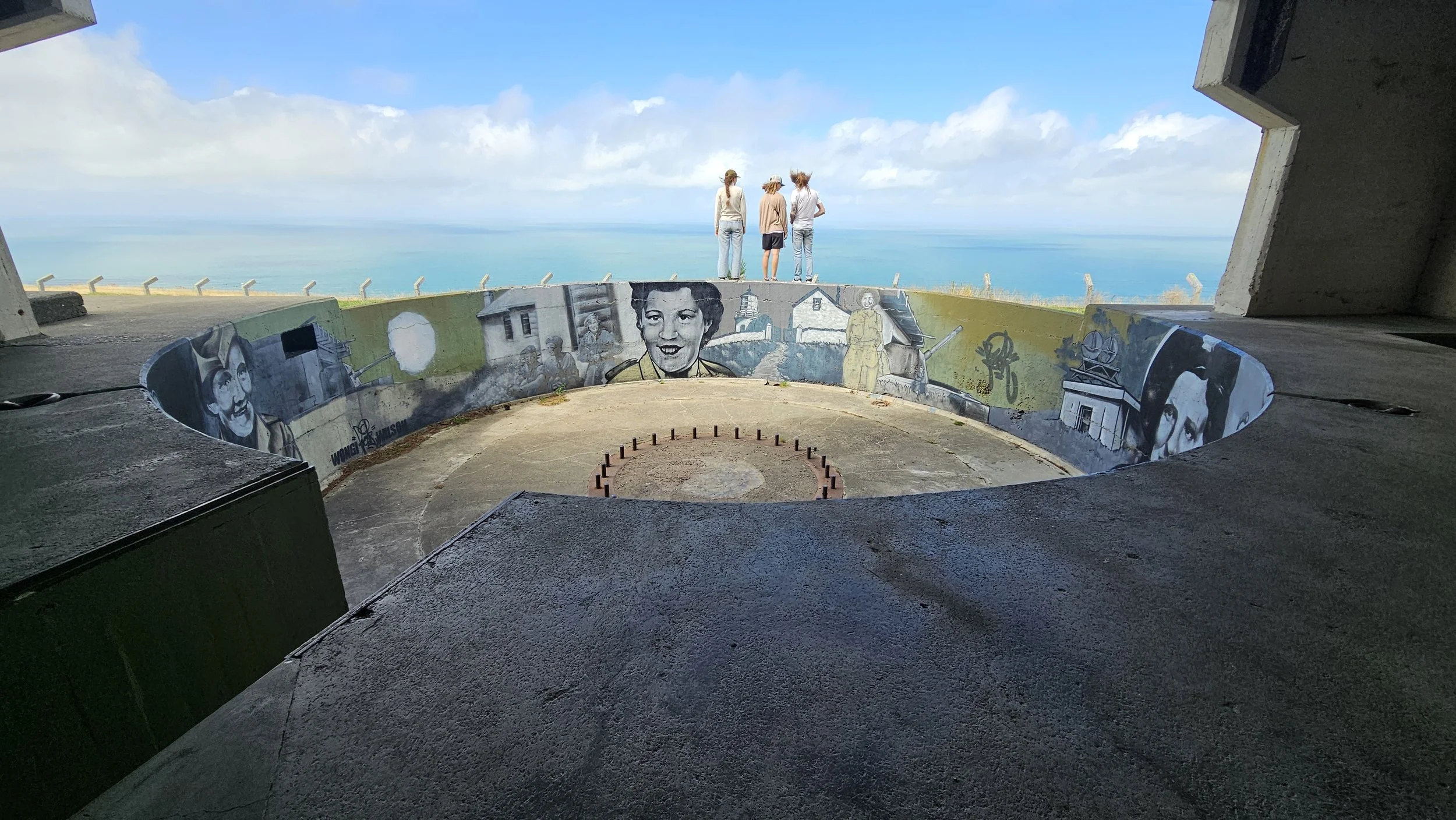

Godley Head A World War II fortress hiding above Christchurch.
Underground magazines, coastal gun emplacements, old military buildings and 120 metre cliffs overlooking the Pacific. We went inside one of Christchurch's most fascinating wartime sites.
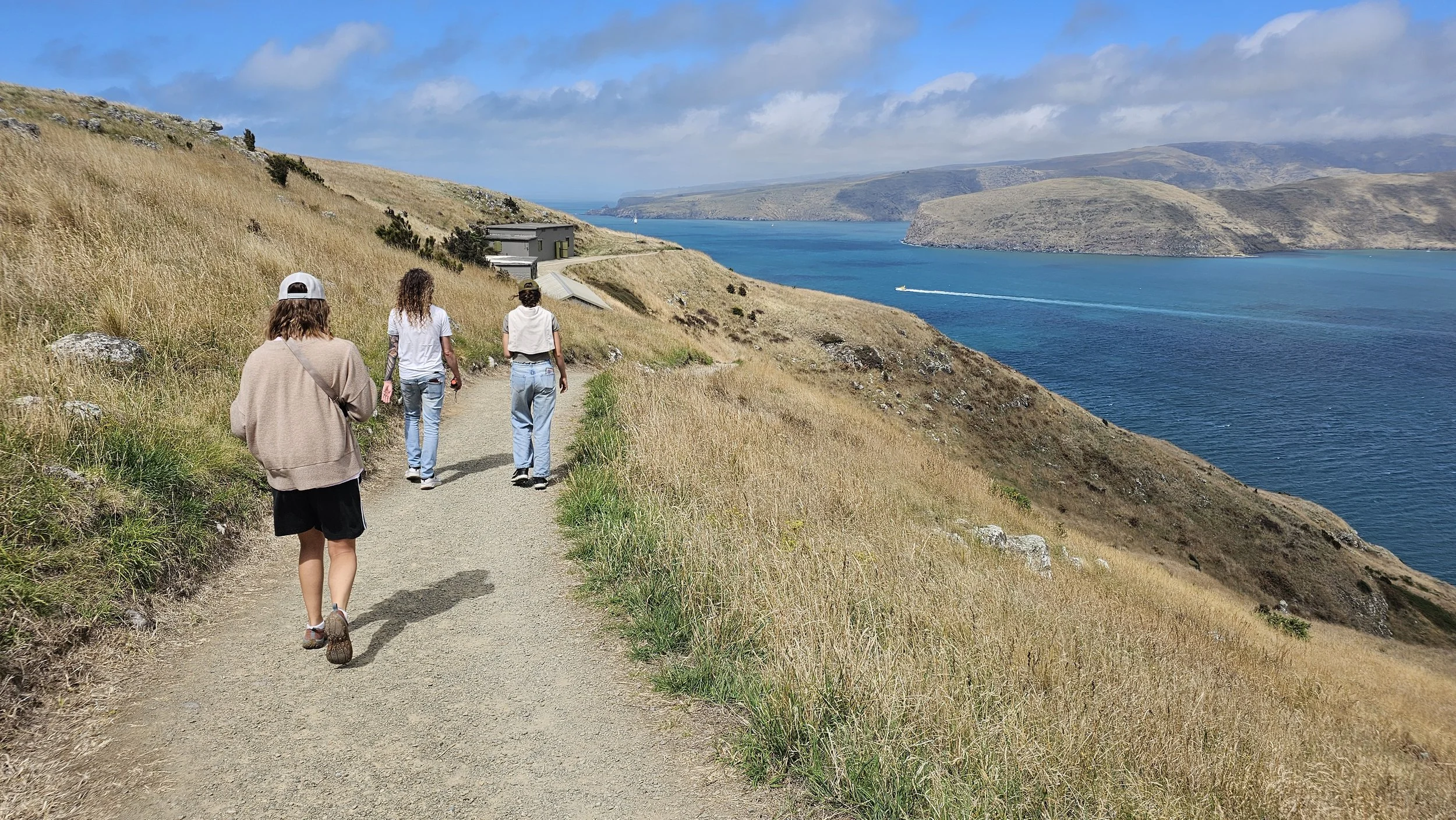
The closer we looked, the more of the fort appeared.
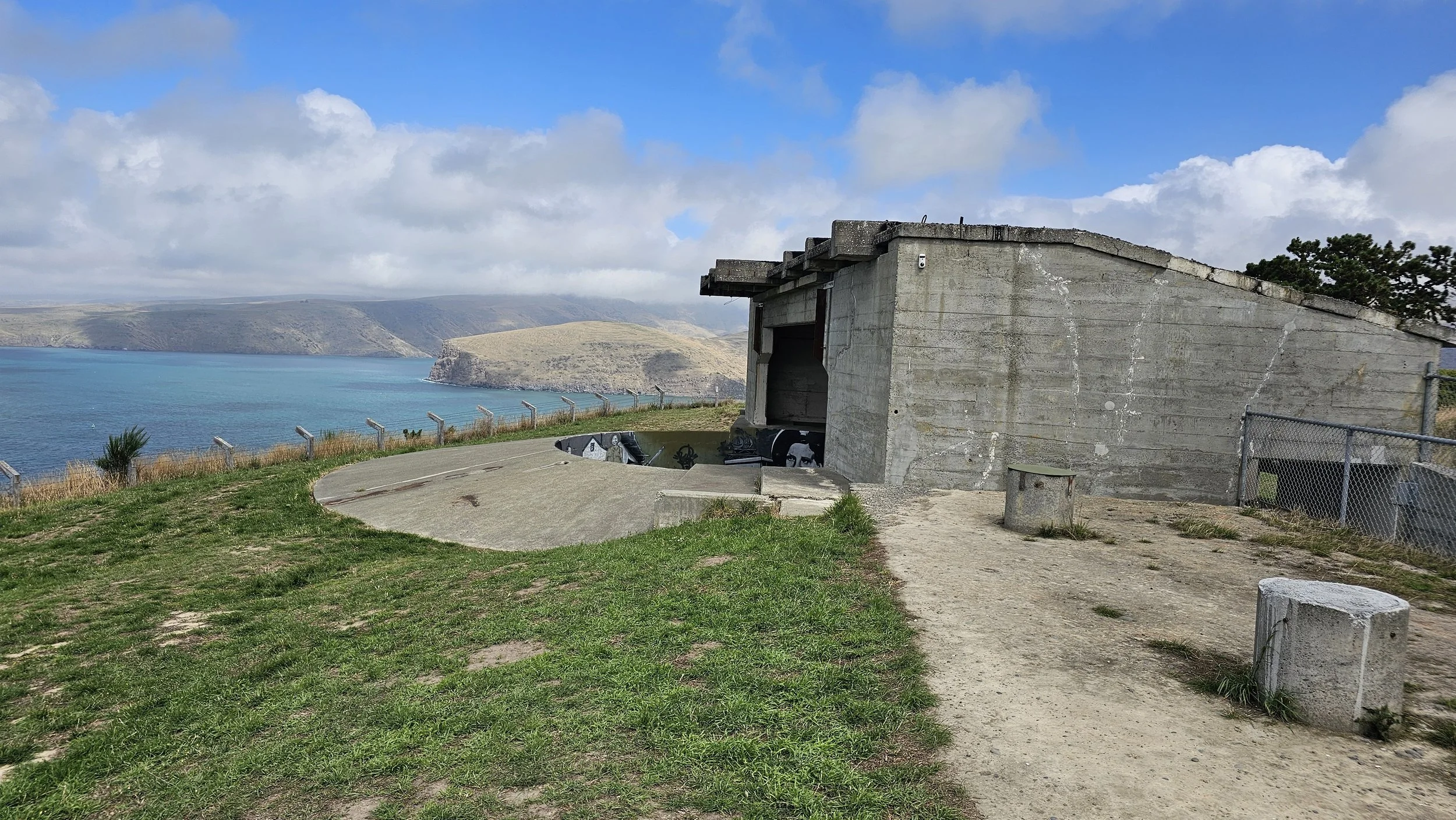
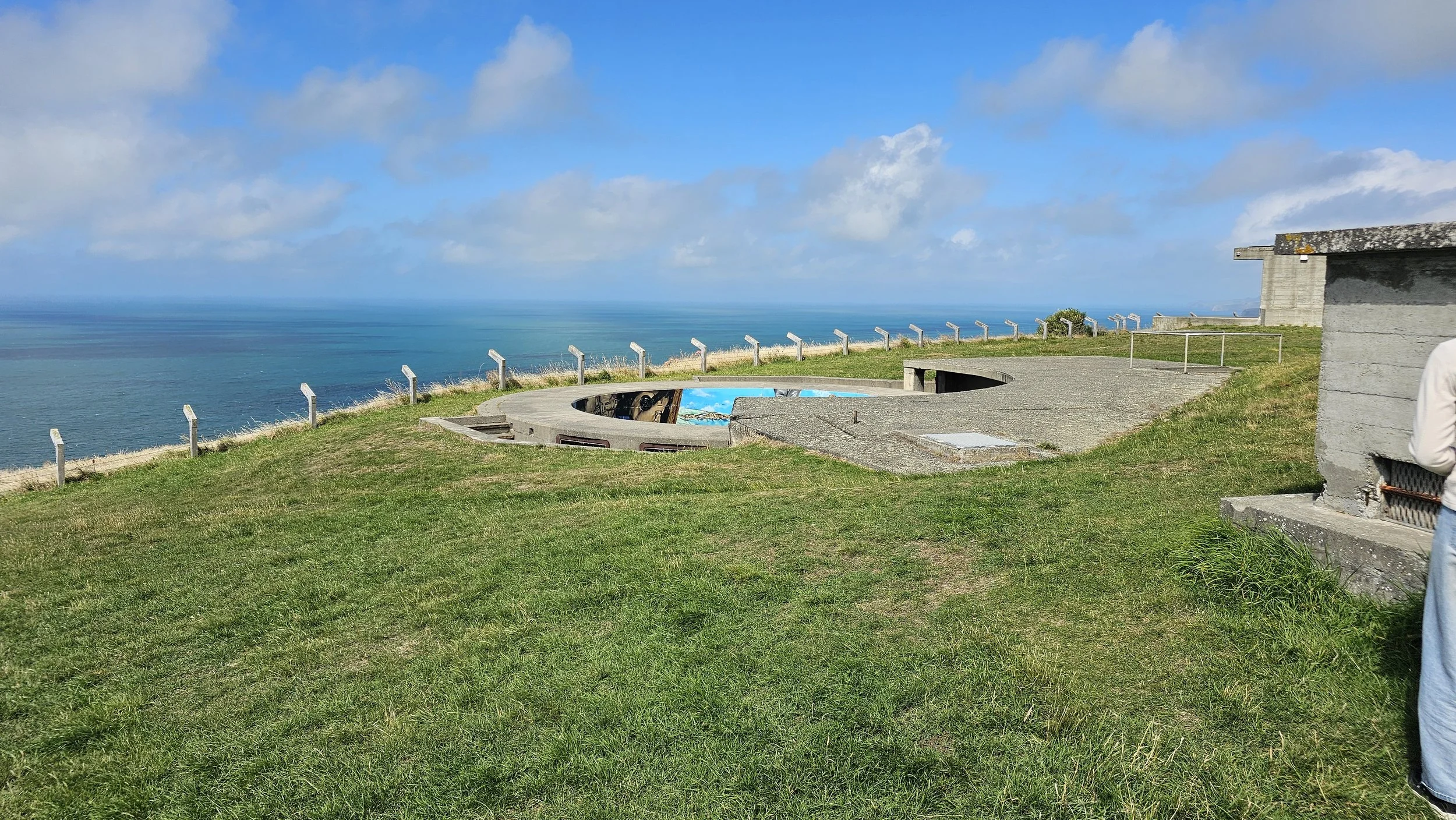
Concrete buildings sit low in the grass. Gun positions face the sea. Stairs disappear underground. From a distance it looks like a scenic coastal reserve. Up close, it becomes a World War II time capsule.
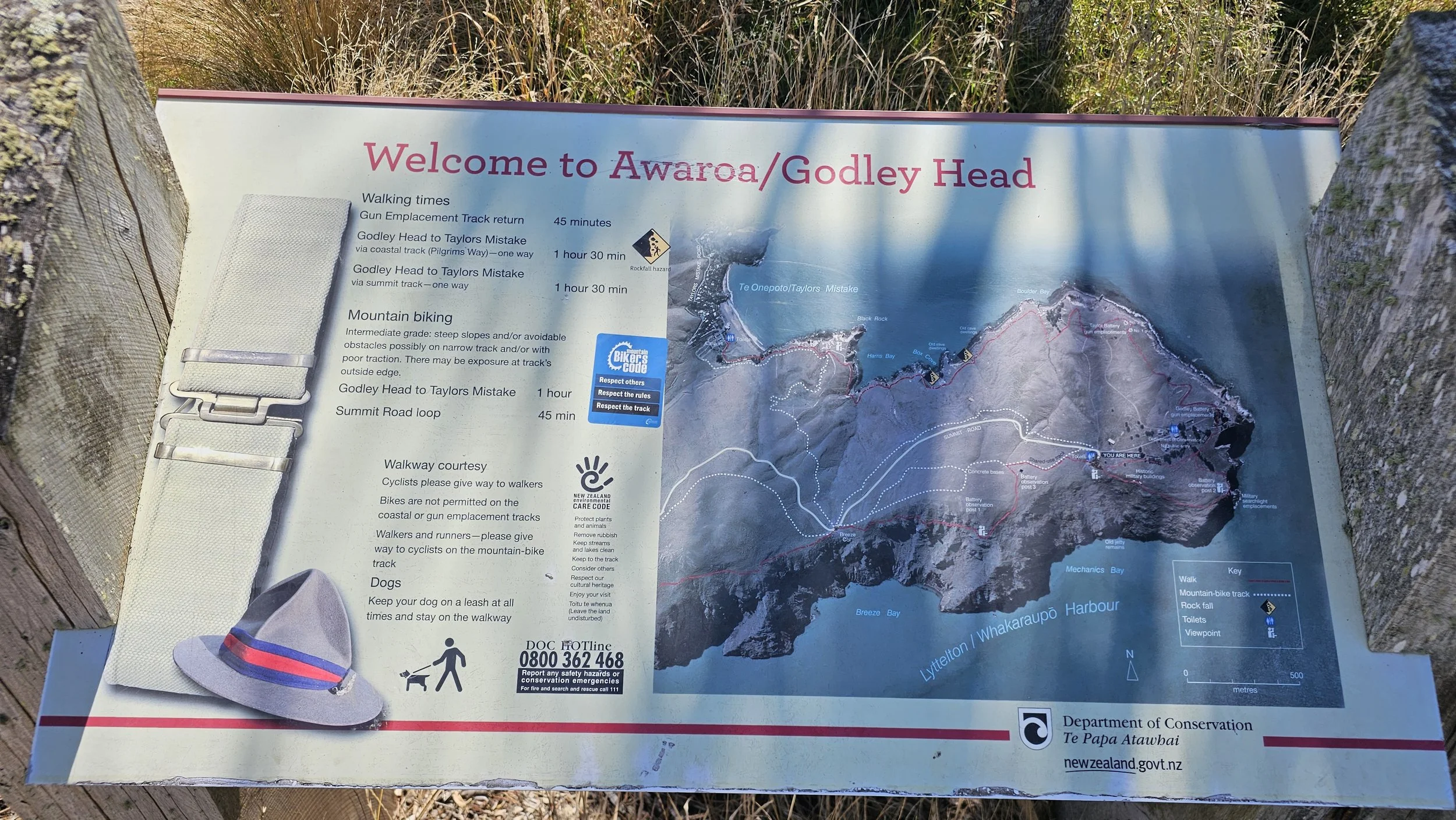
This was an entire defence complex.
Gun positions were only one part of it.
At its wartime peak, Godley Head operated as a self-contained coastal defence battery with gun emplacements, searchlights, radar, plotting rooms, magazines, power generation and accommodation for hundreds of personnel.
Walking the site today means moving between the remains of a system that was designed to watch the approaches to Lyttelton Harbour around the clock.
Awaroa / Godley Head.
The coastal defence battery was established at the beginning of World War II.
The fort sits above sheer coastal cliffs at the entrance to the harbour.
The battery defended the port and harbour approaches from enemy warships.
Hundreds of military personnel were stationed here during the war.
Women of the Women's Auxiliary Army Corps helped keep the battery operating.
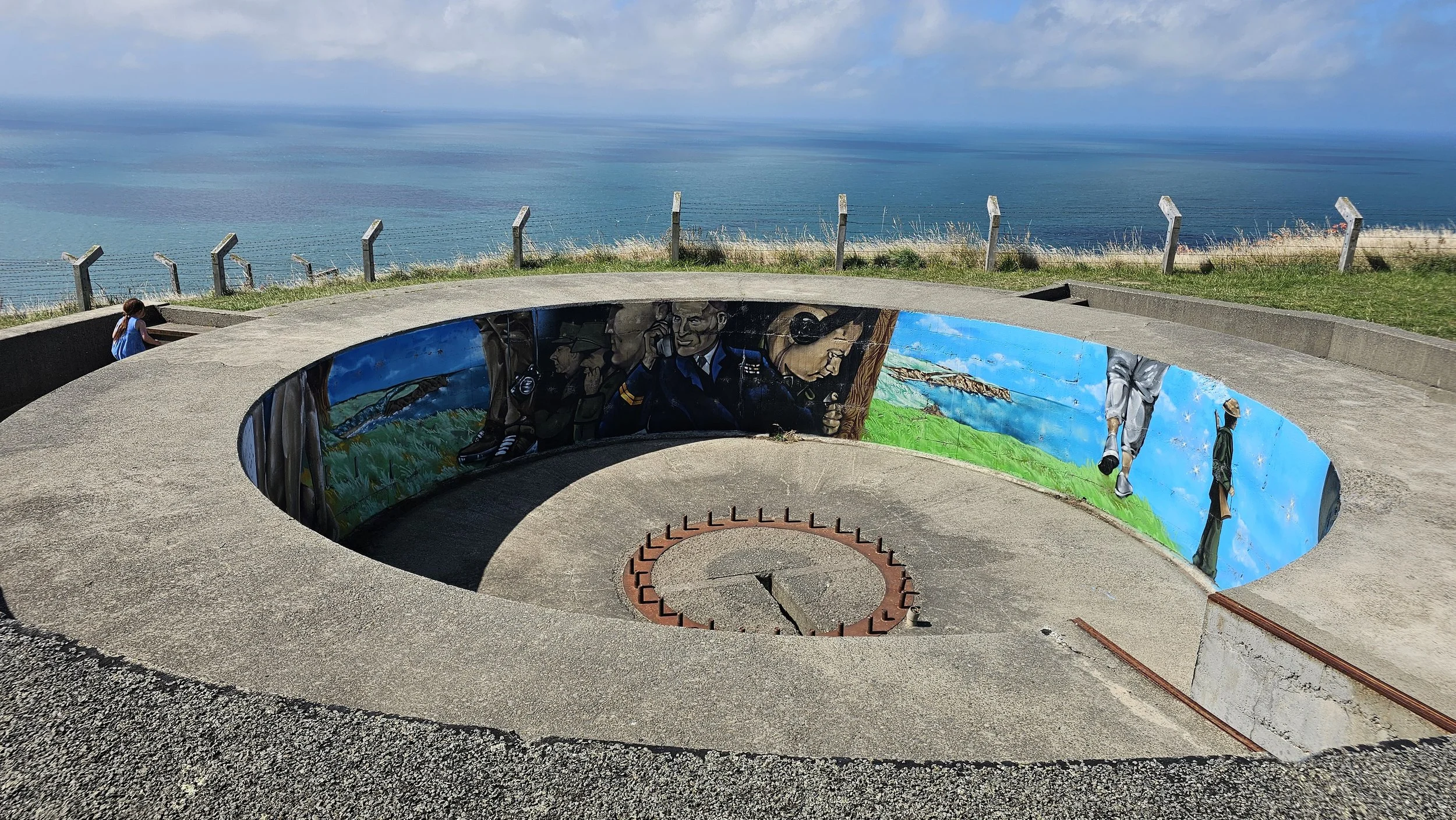
Three major coastal gun emplacements remain at the historic site.
One underground ammunition magazine can be explored by visitors.
Our recorded route, including our wider exploration of the area.
We went underground at Godley Head.
Walk the battery with us, descend into the magazine, explore the gun positions and see what still remains above the Pacific.
 ▶
▶
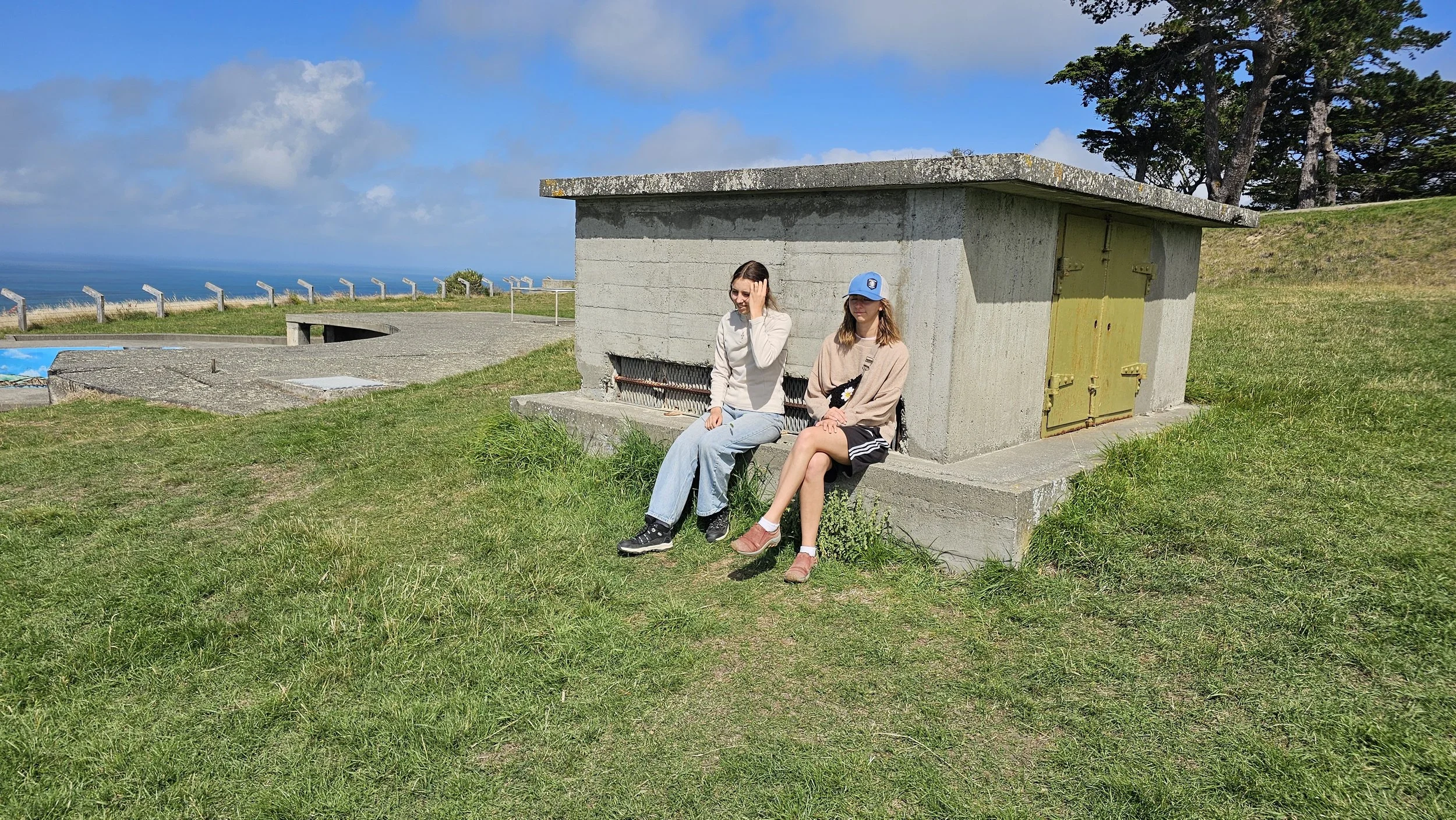
Even the power system had its own building.
This place was designed to function as a working military complex, not just a row of guns.
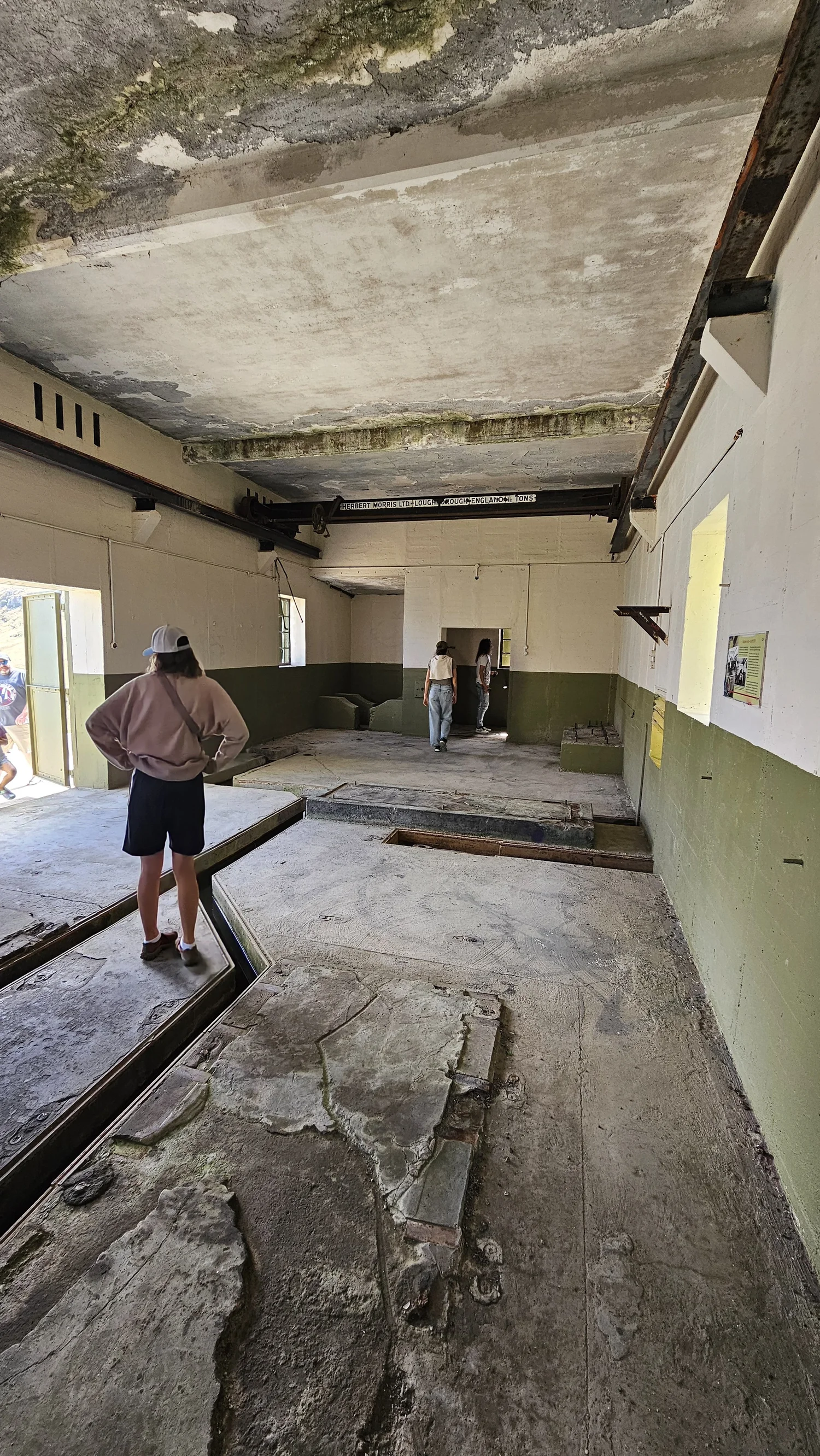
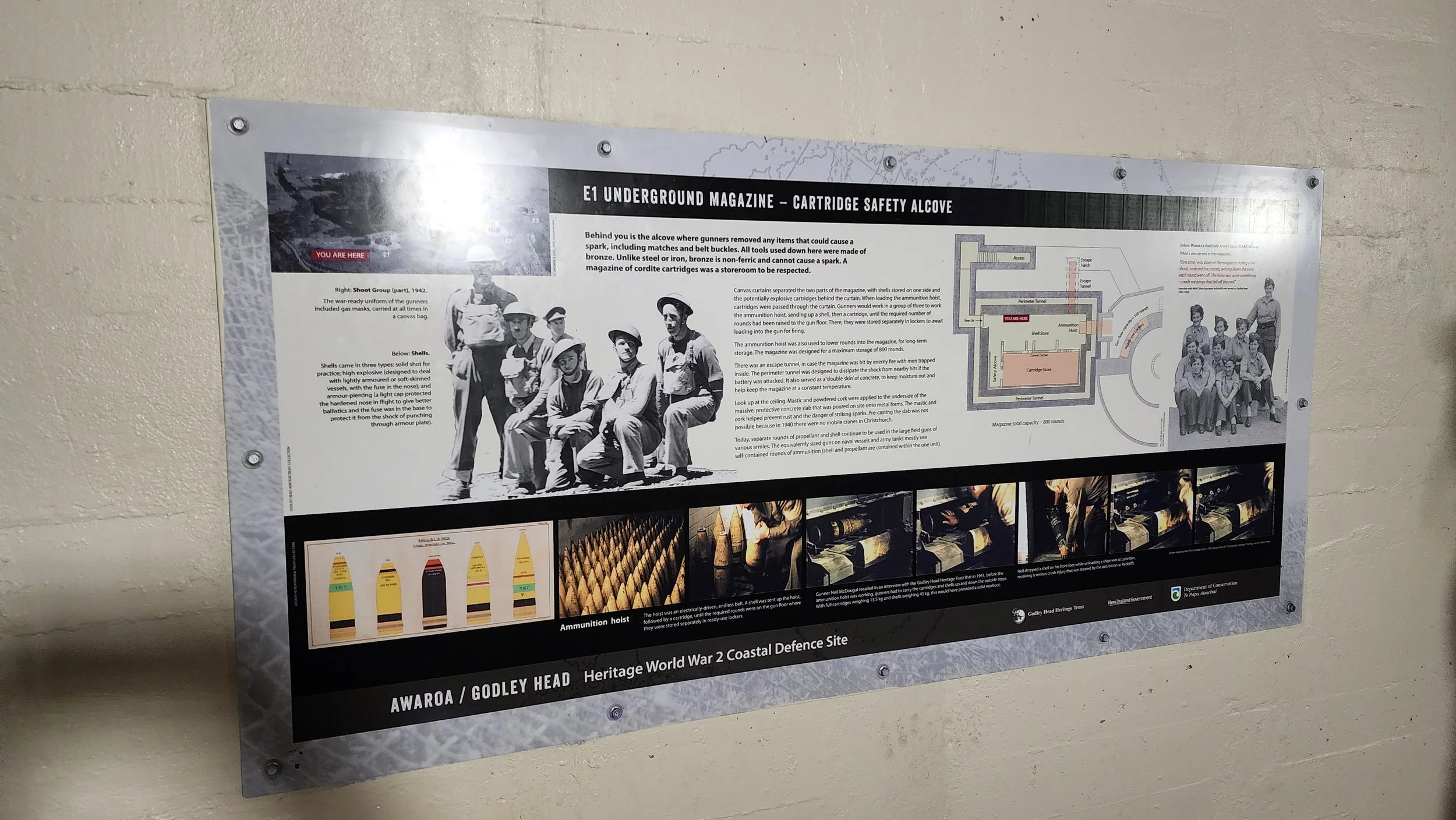
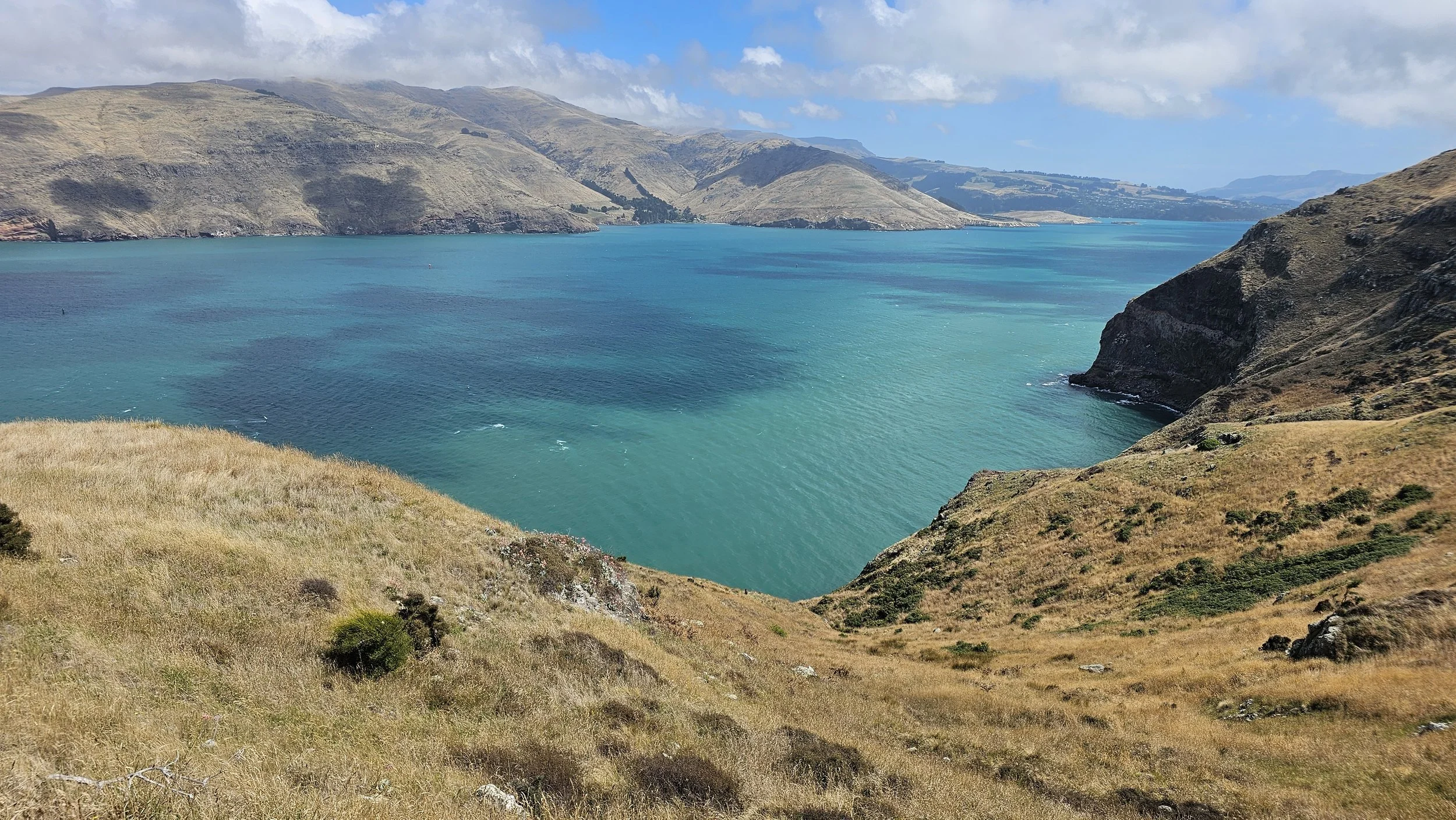
The view explains the location.
From the headland, the battery could watch the sea approaches to Lyttelton Harbour while sitting high above the coastline.
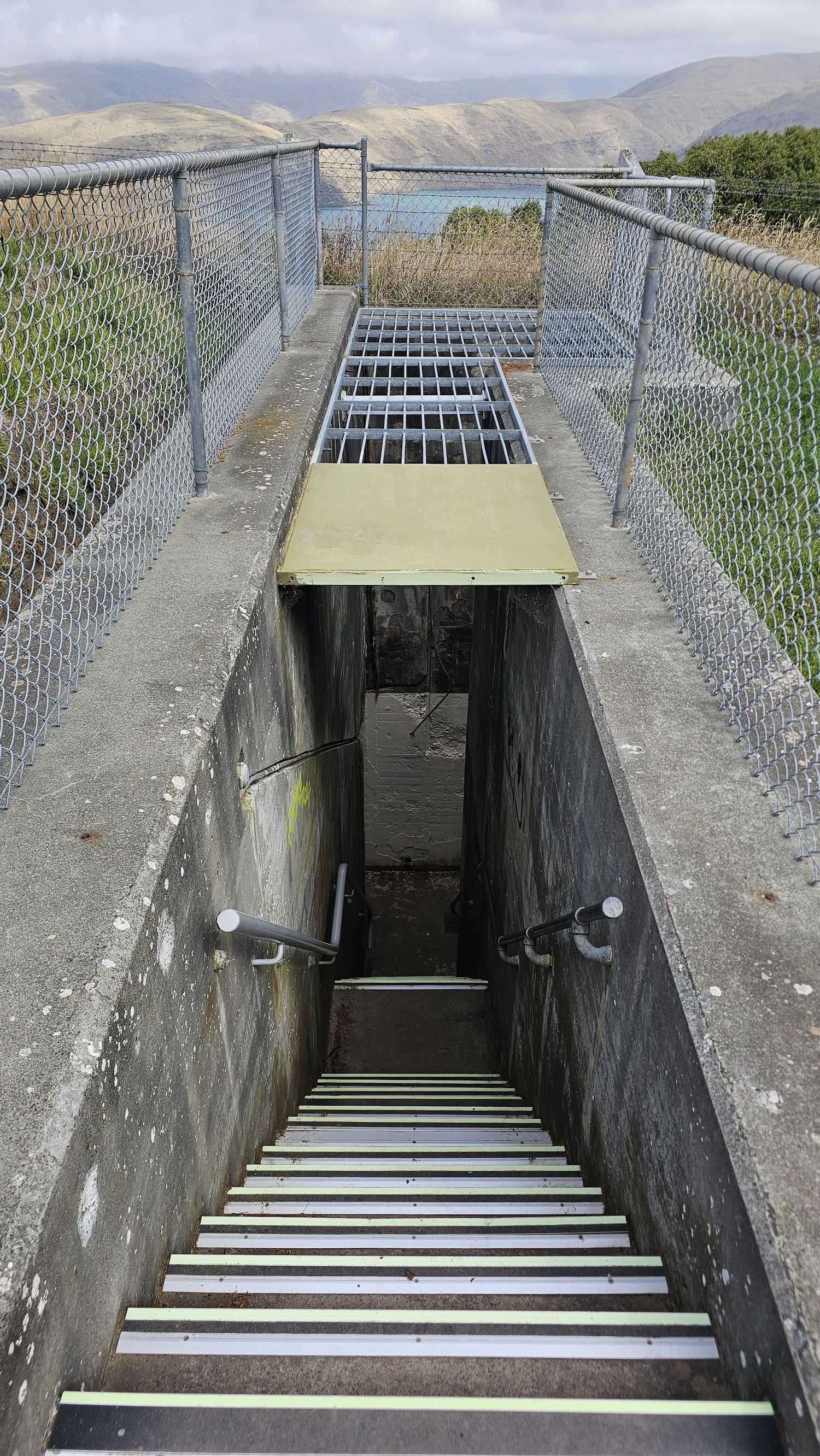
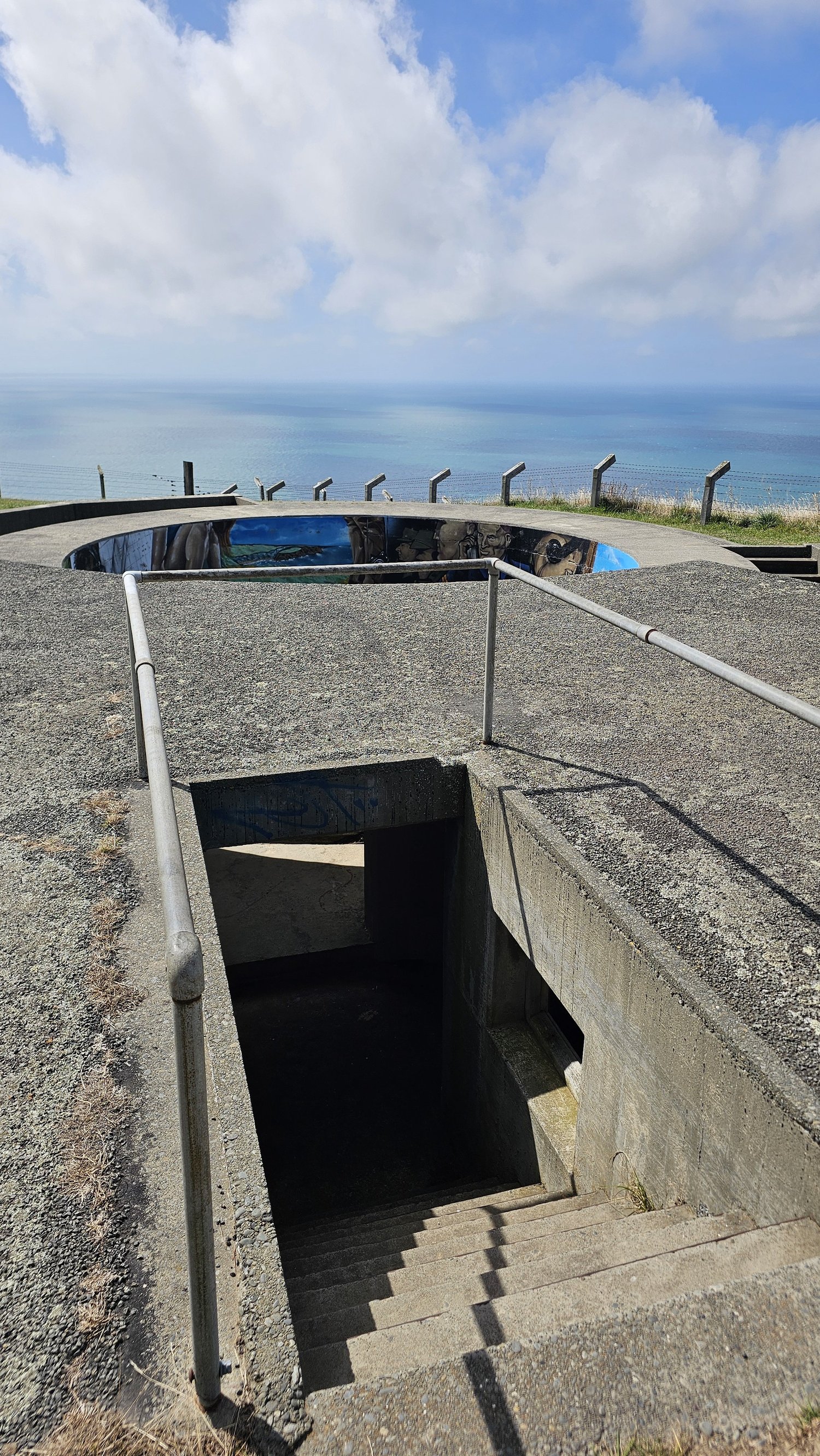
Then the stairs disappear underground.
This was the part that made the fort feel real.
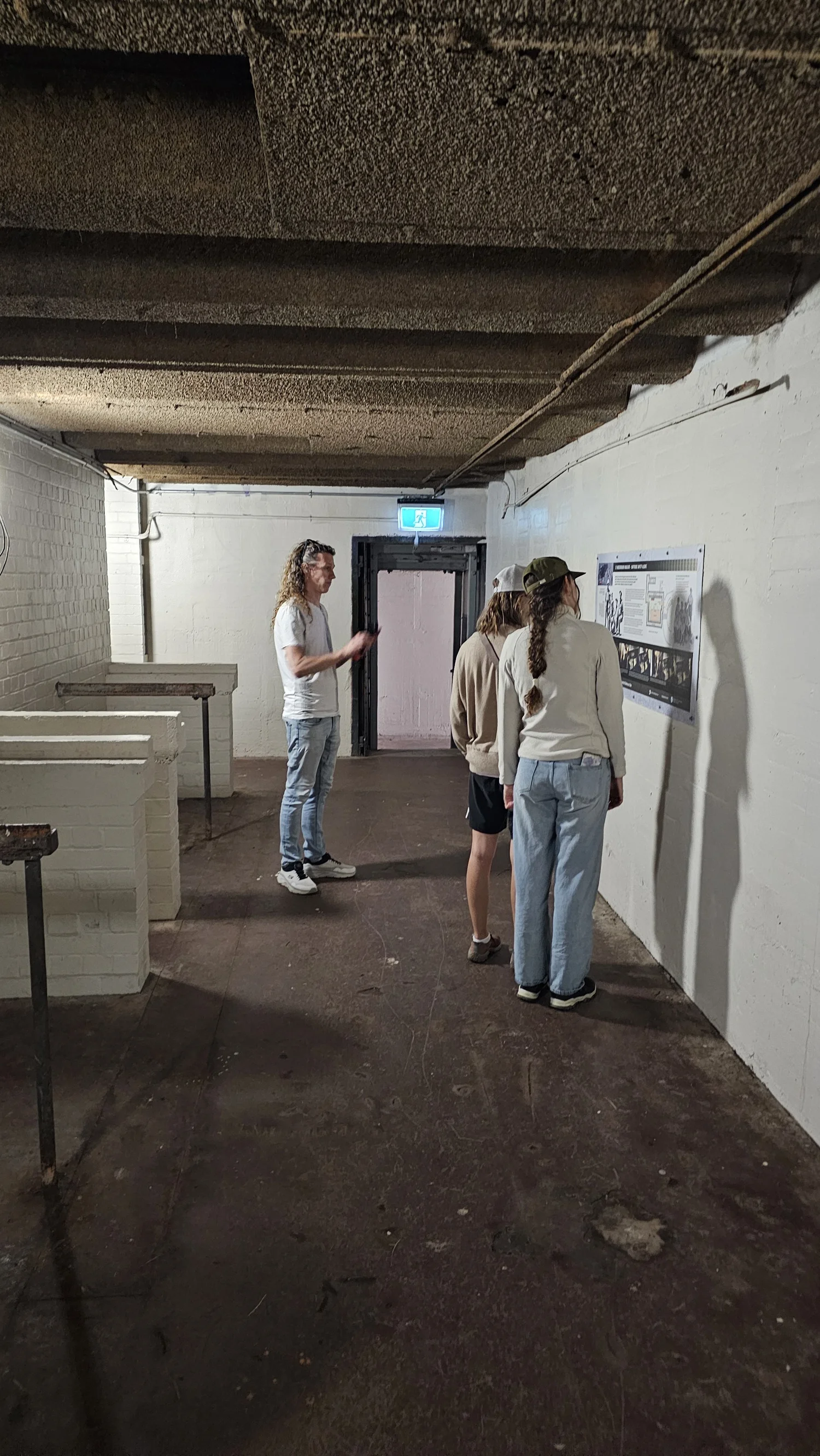
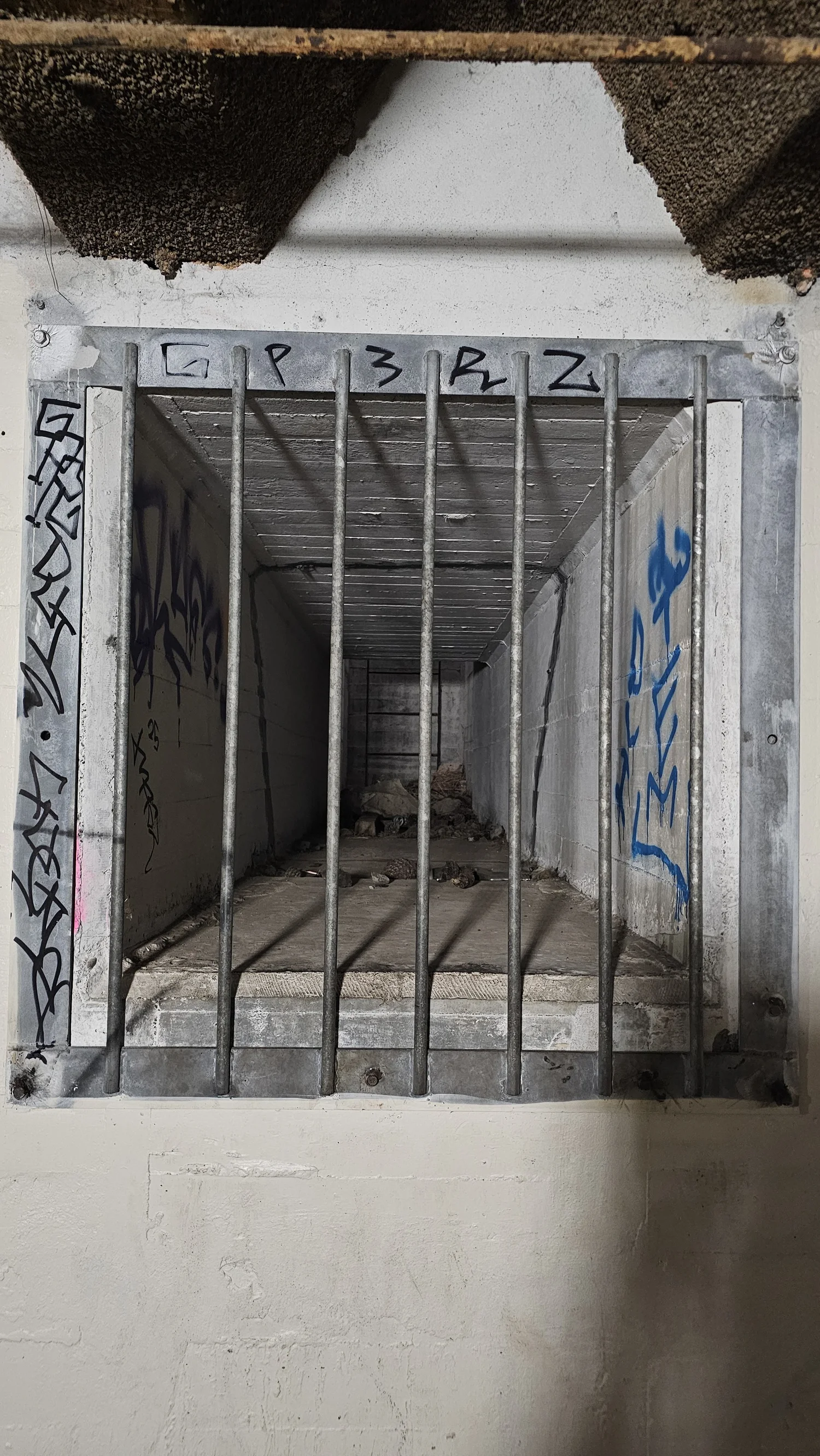
Ammunition magazines and support spaces were protected below ground, allowing shells, cartridges and crews to remain sheltered beneath the gun positions.
DOC now allows visitors into one of the underground magazines, with electric lighting installed inside.
The stairs felt extremely steep, with tight spaces and heavy concrete all around us.
The underground spaces formed part of the ammunition and support system beneath the battery.
The whole headland was built around watching the sea.
Crews trained, calculated ranges and stood ready for an attack that never came.
Concrete, steel and a lot of history.
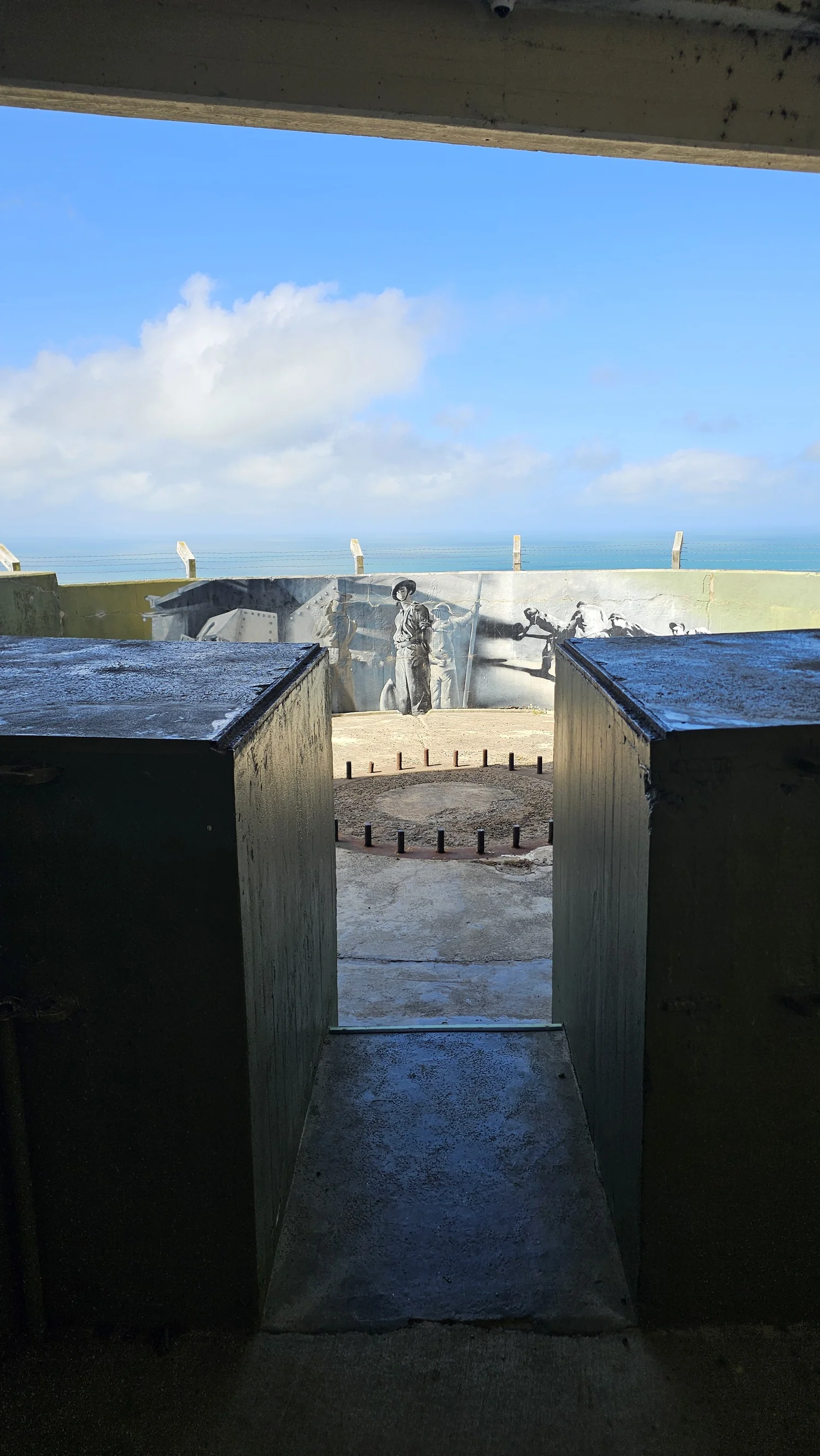
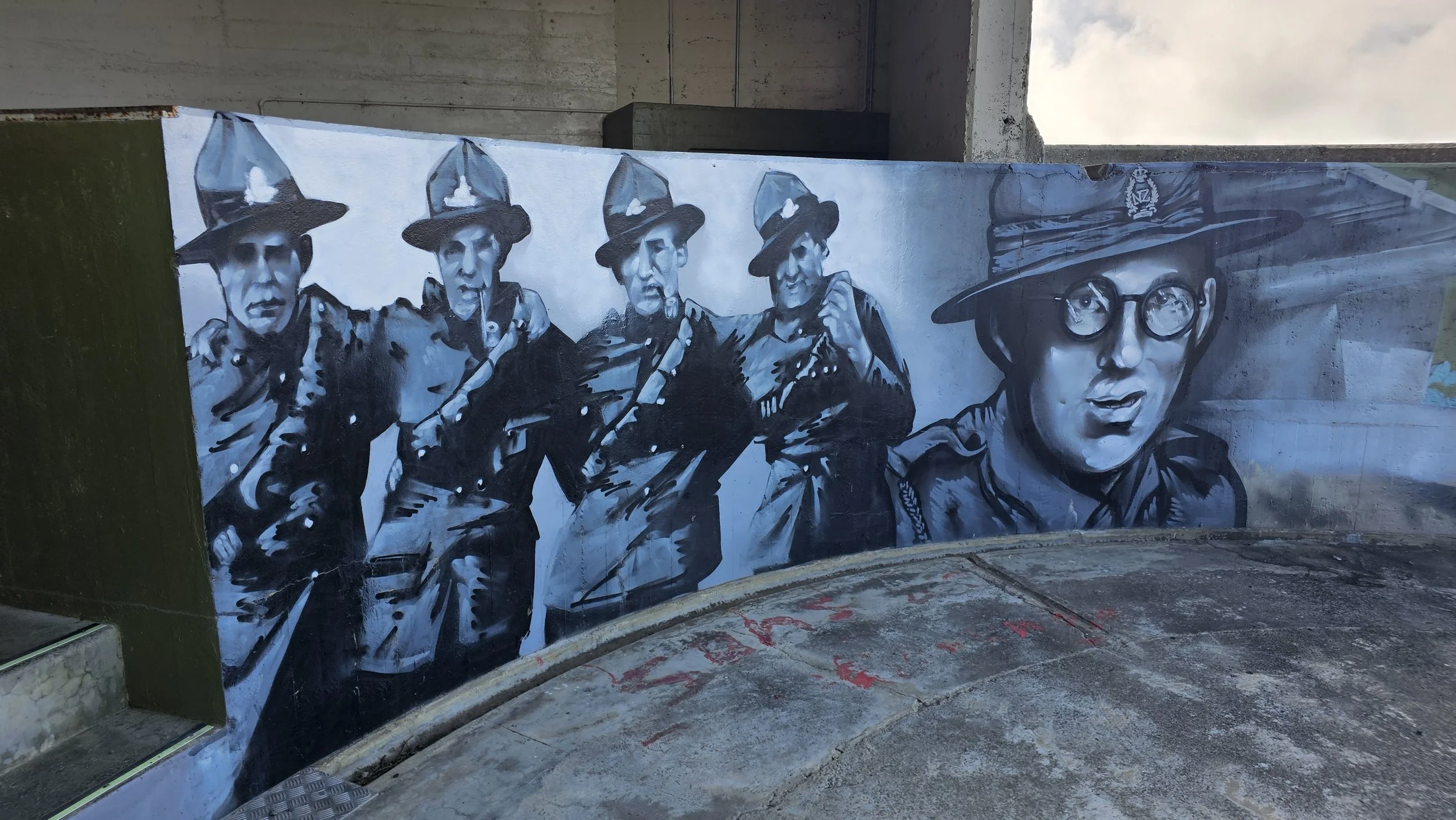
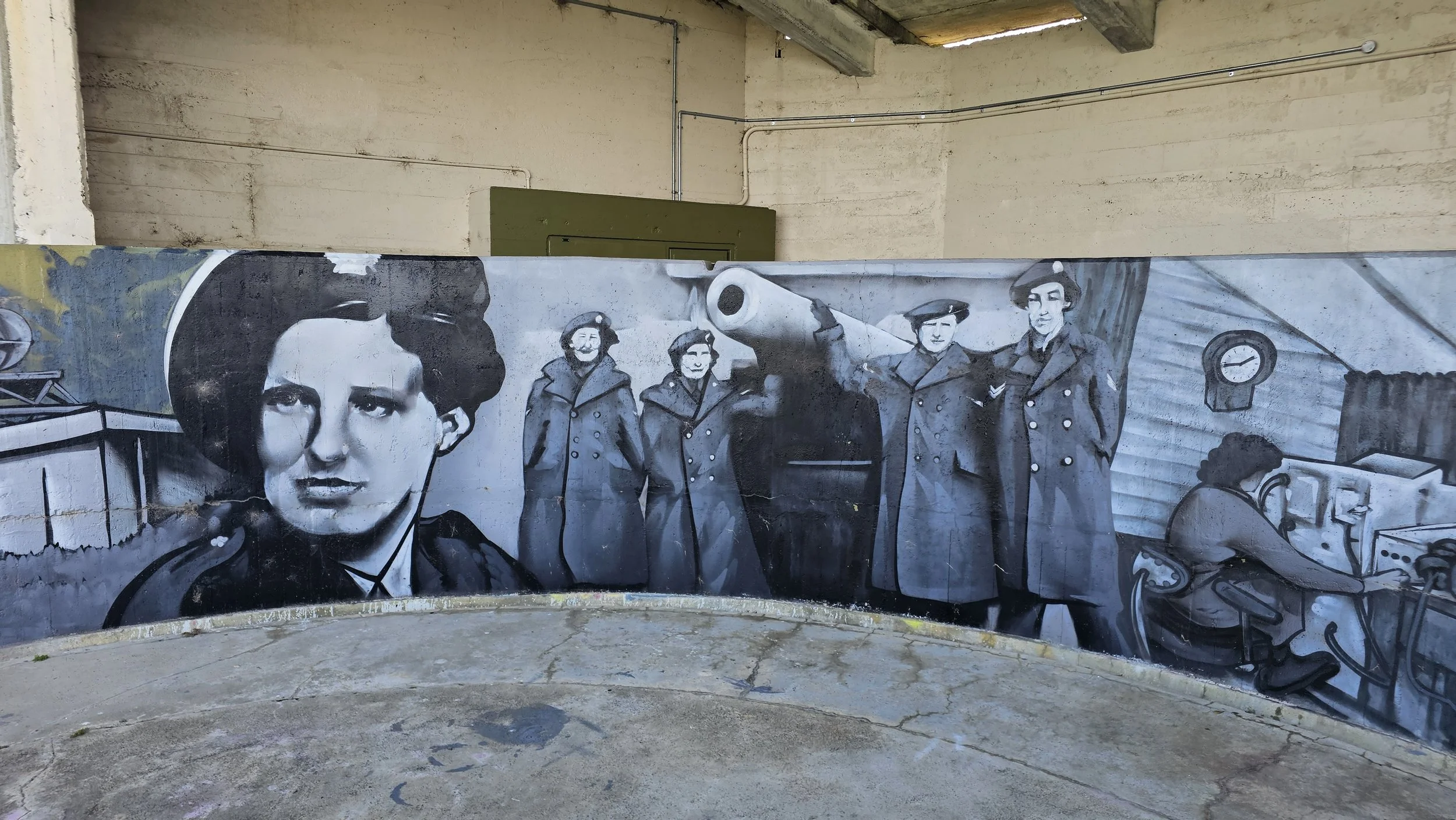
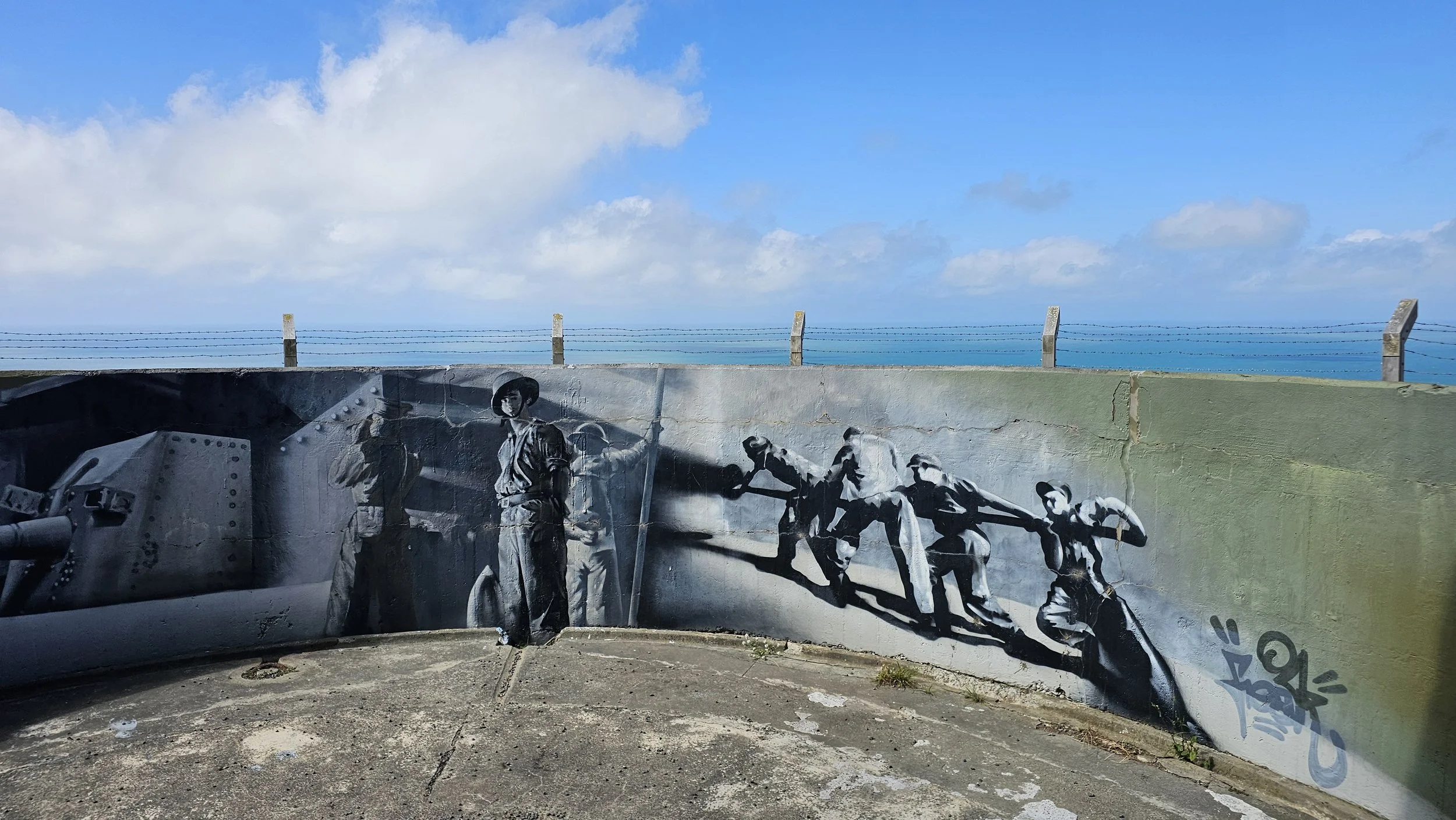

About 150 WAAC members served here.
Godley Head was not simply men standing beside guns.
DOC says around 150 women of the Women's Auxiliary Army Corps were based at Godley Head during the war. The battery was a 24-hour operation involving communications, observation, logistics and the systems needed to keep the fort functioning.
The old structures have become part history site, part outdoor gallery.
New murals now help put people back into a place that can otherwise feel like empty concrete.
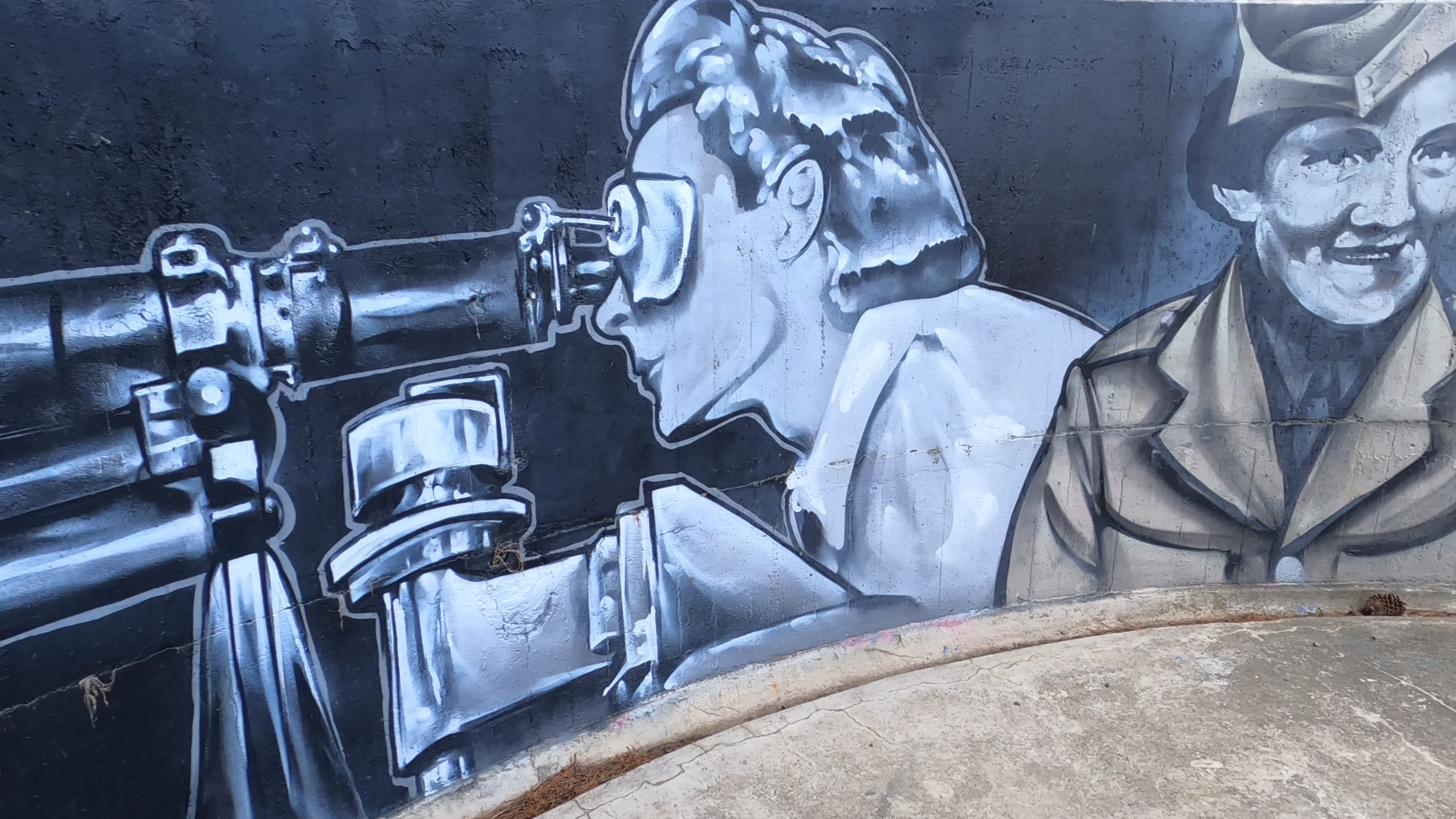
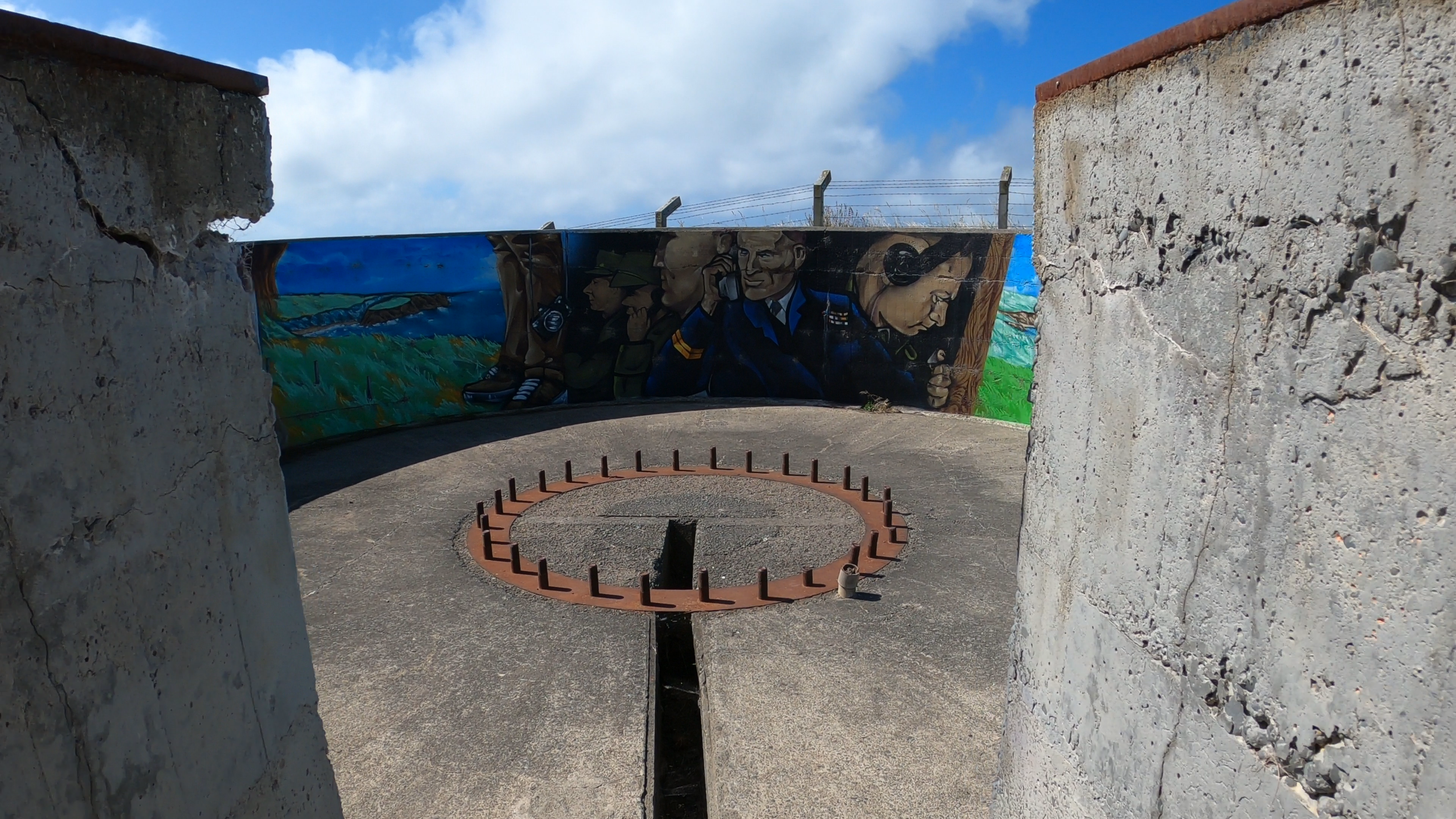
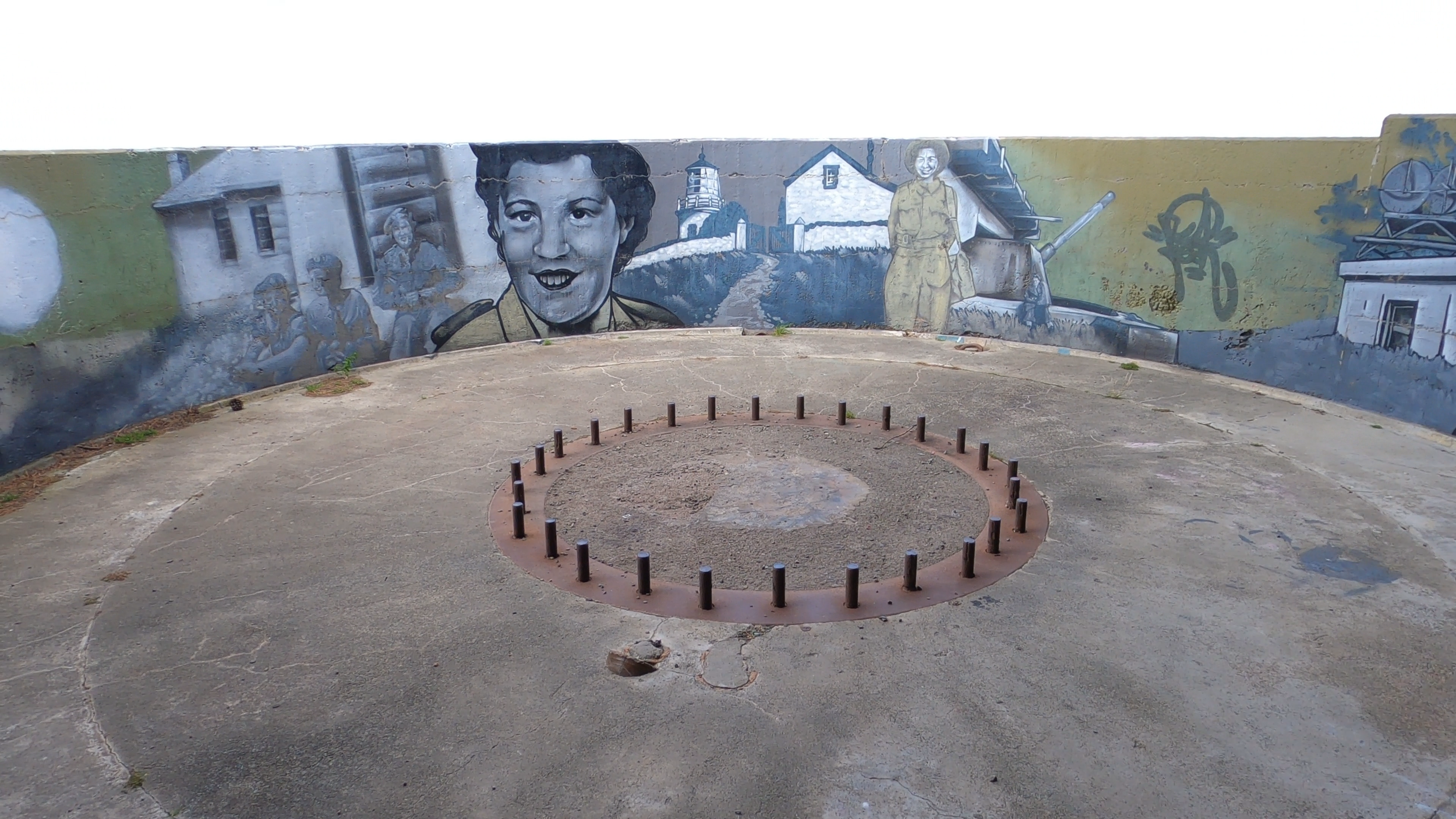
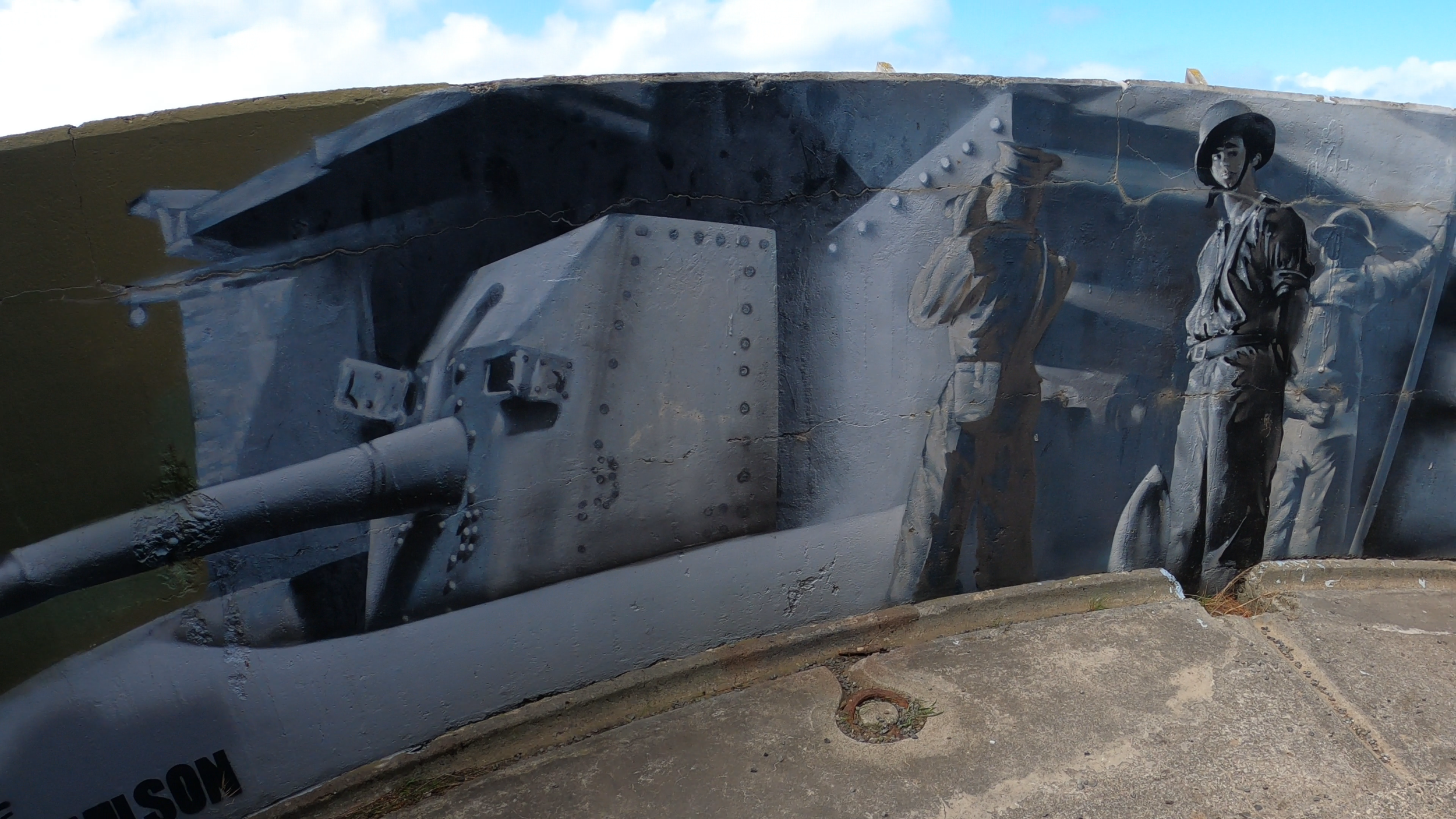
This quiet headland once operated around the clock.
Today you hear wind and waves. During the war, hundreds of people lived and worked here.
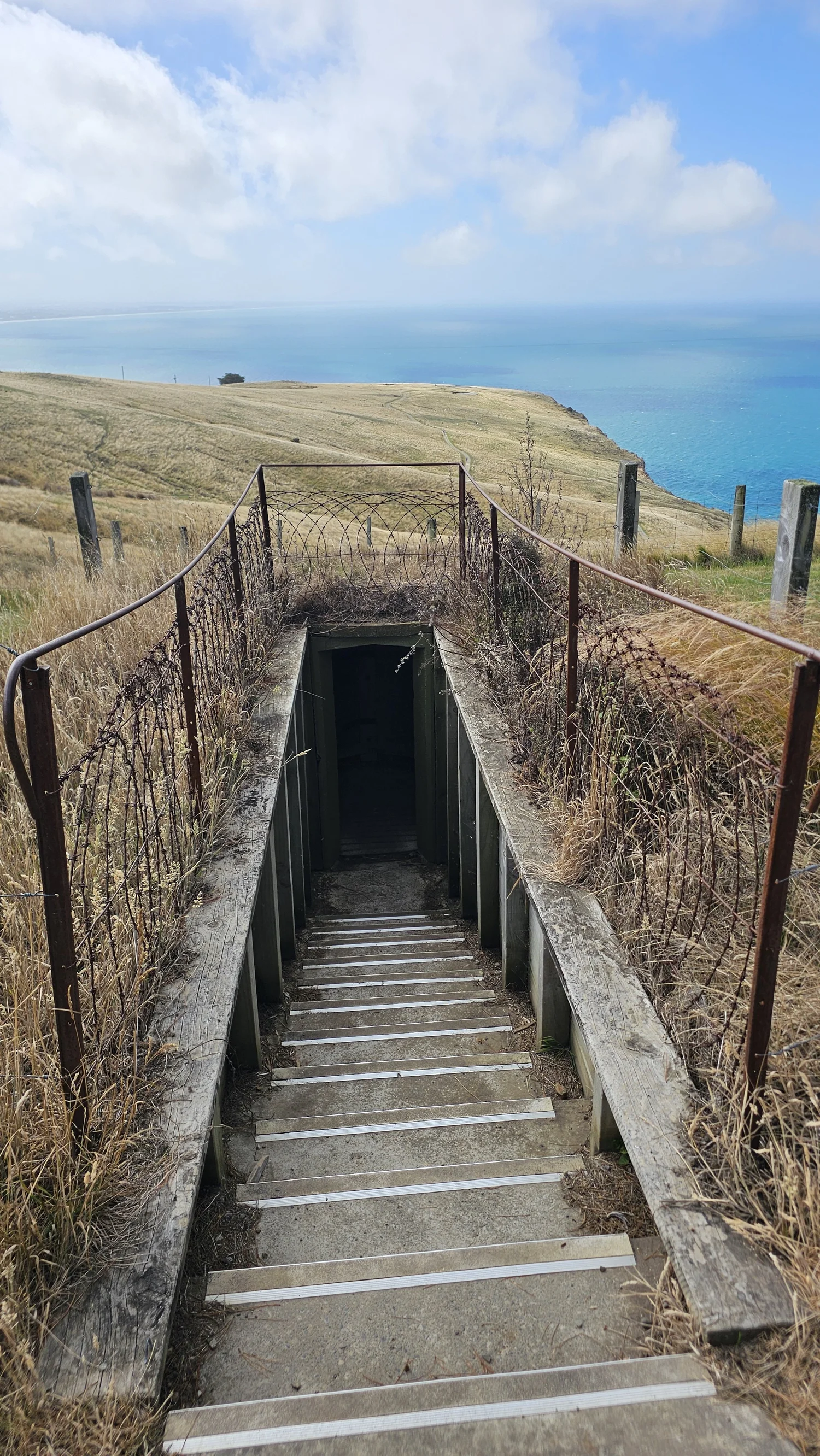
Not every position held one of the big coastal guns.
Smaller observation and defensive positions were also built around the site. Some remain rough, exposed and fenced today.
We treated the barriers as part of the history too. If an area is closed, it is closed for a reason.
Rusted steel still turns up among the concrete.
We found heavy pieces of old equipment that made the scale of the original machinery easier to imagine.
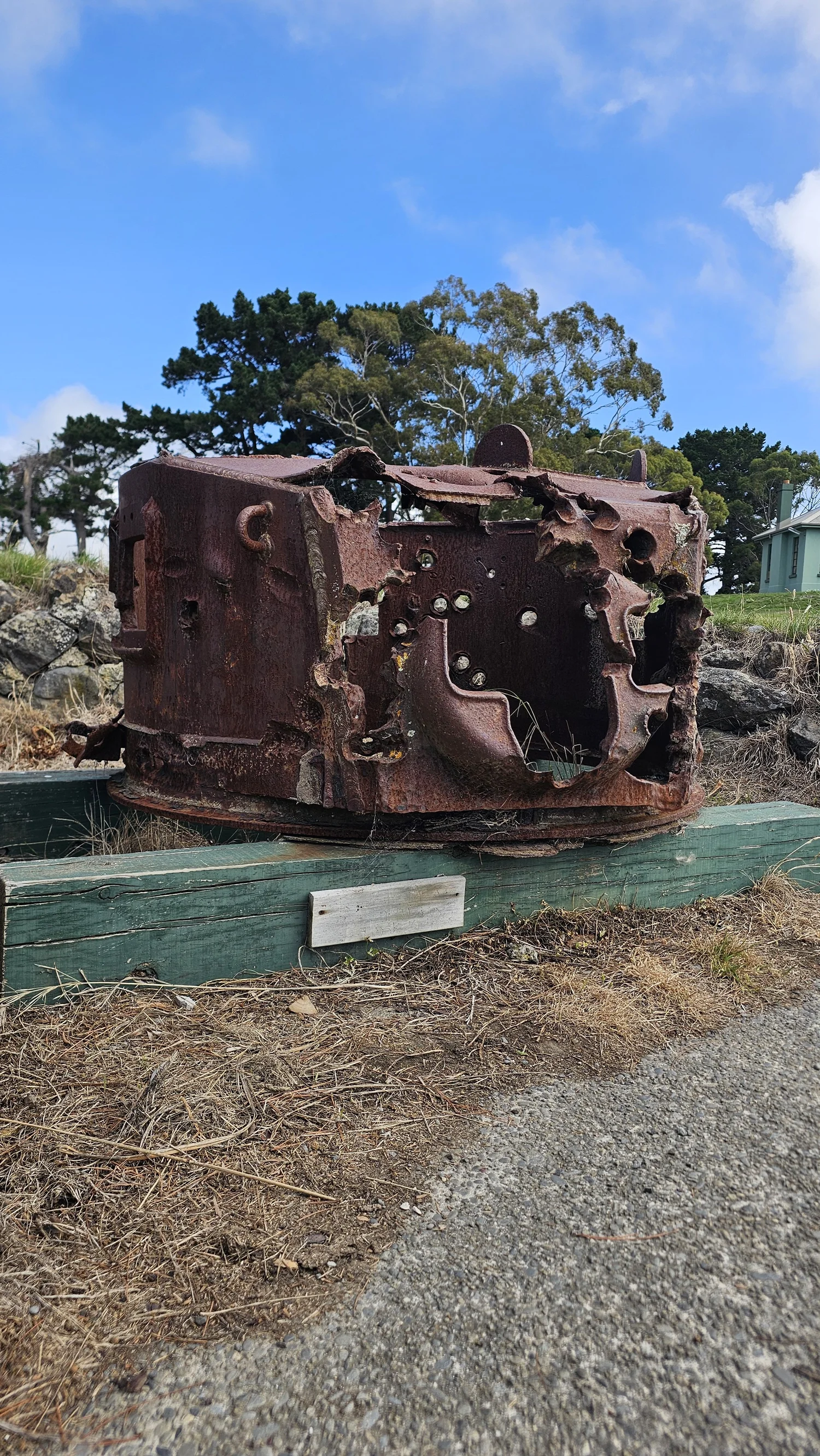
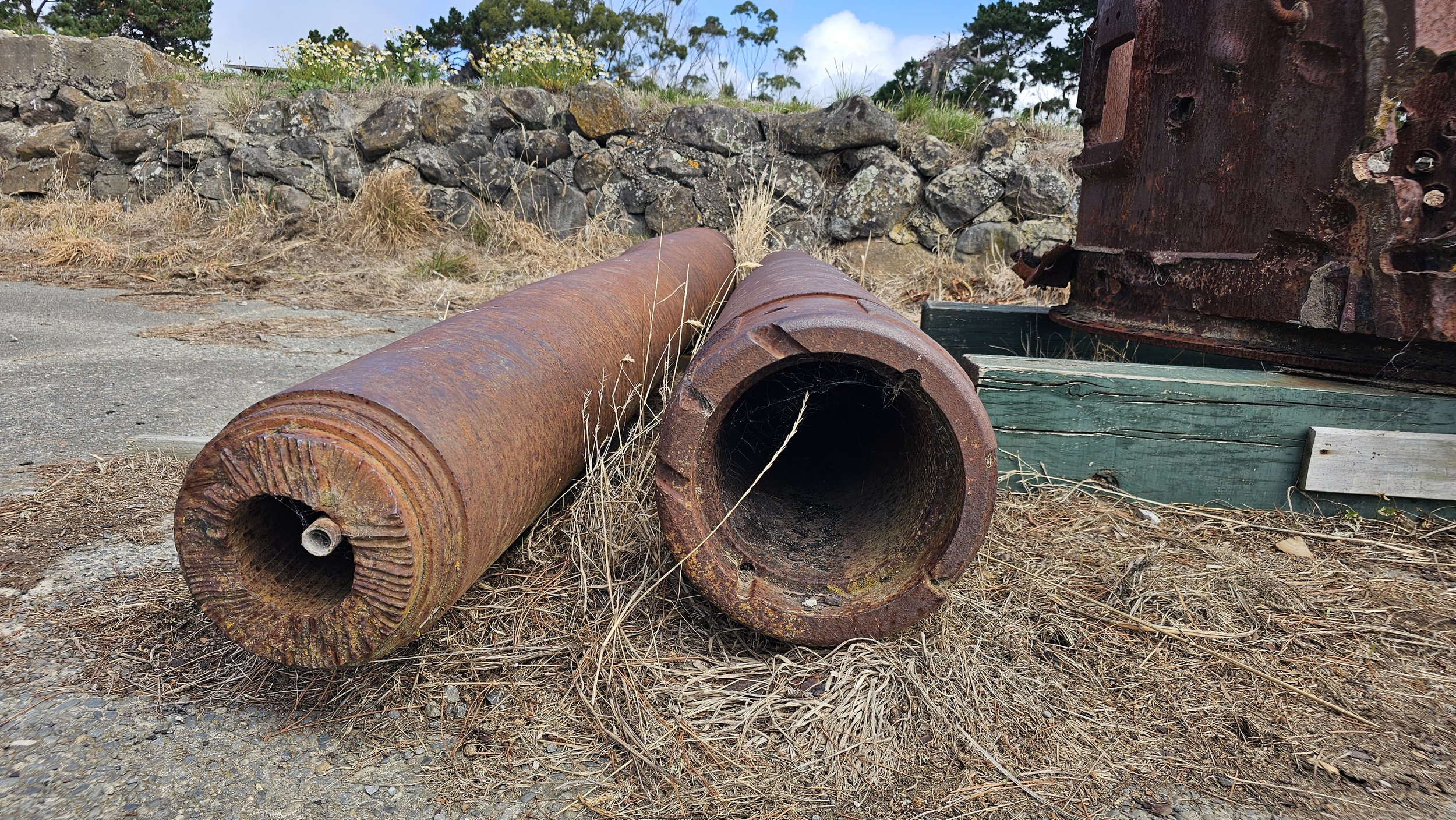
One gun position leads to another.
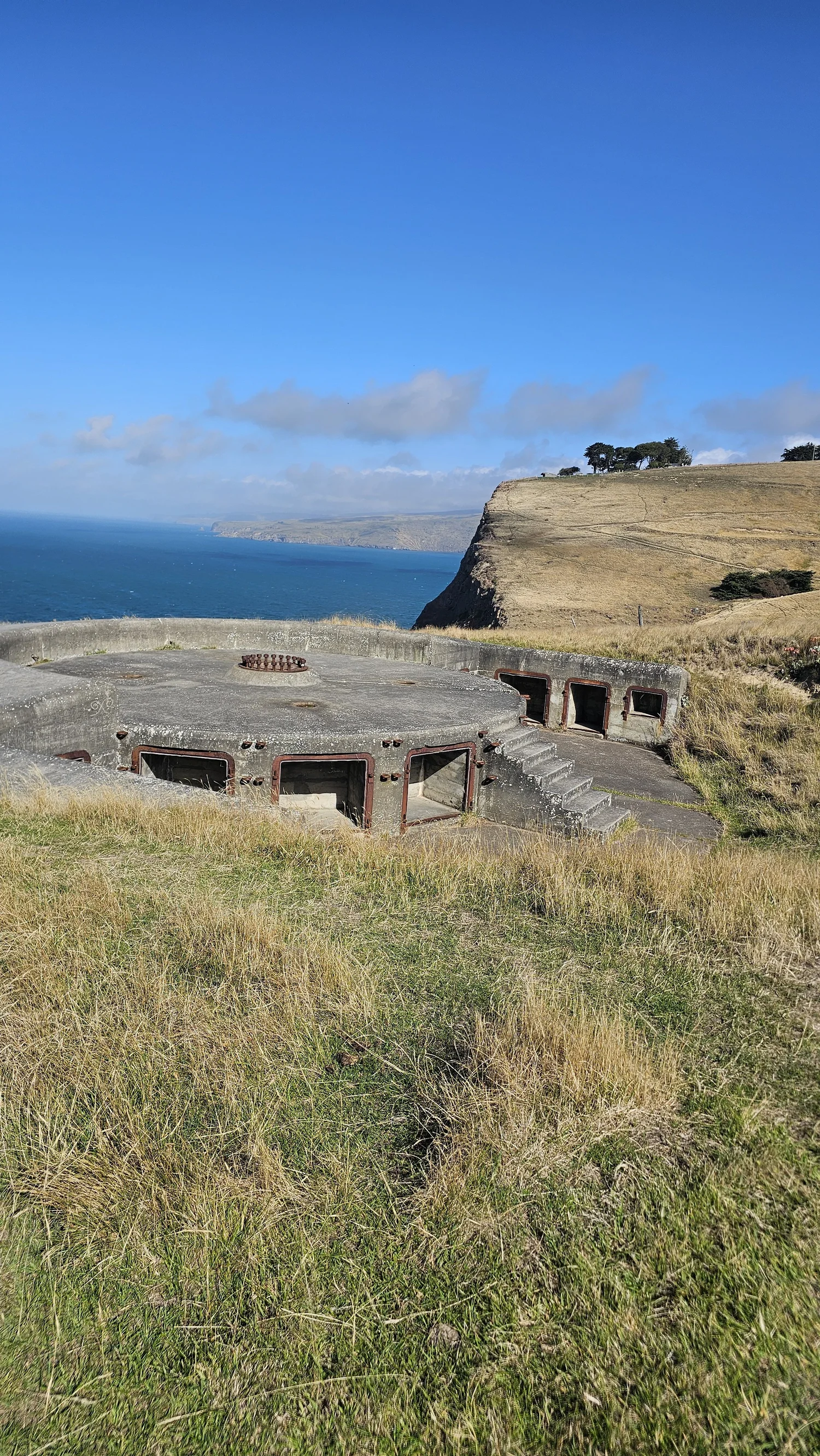
Not one Godley Head gun fired at an enemy.
That does not mean the battery had no effect.
DOC records that the German raider Adjutant secretly laid mines across the approaches to Lyttelton Harbour in June 1941. The mines never exploded, but DOC notes that the presence of the battery likely contributed to the hurried operation.
Godley Head existed as insurance. Its crews trained for years for a battle that, fortunately, never arrived.
We covered more ground than it felt like.
Especially once we added the climb back up.
Our device reading for the route we explored.
Recorded elevation gain from our walk.
These are our own recorded figures, not official specifications for the Godley Head Loop Track. Our route included exploring the military complex and walking beyond it before returning.
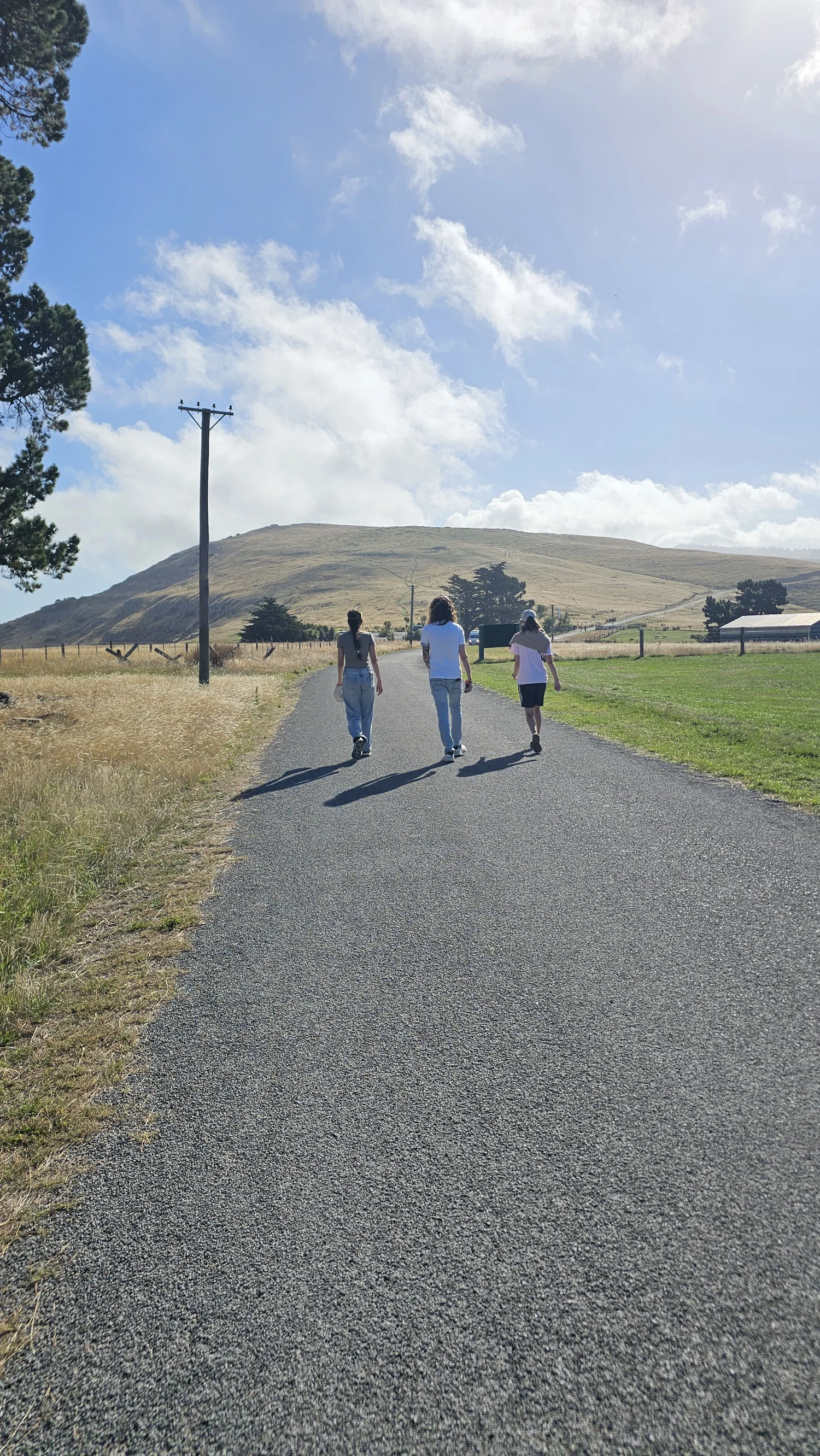
Godley Head is easy to visit, but it is still an exposed historic site.
Getting there
DOC says Godley Head is about a 50 minute drive from central Christchurch. Access is via Evans Pass and Summit Road.
Summit Road
The road is sealed but narrow, with sharp corners, steep drops and cyclists sharing the route.
Parking and toilets
DOC lists parking and toilet facilities at Godley Head and Taylors Mistake.
Underground magazine
One underground magazine is open for visitors to explore and has electric lighting installed.
Cliff edges
The headland has steep, unfenced cliffs. Keep children close and stay back from exposed edges.
Weather
Godley Head is extremely exposed. Wind can be strong and conditions can change quickly.
Dogs
Dogs are allowed on lead. Seasonal restrictions apply on Taylors Mistake beach.
From above
DOC does not allow drone use on conservation land here without a permit.
DOC completed soil contamination remediation around the WWII heritage buildings in 2024. Contaminated material has been capped on site, and visitors are required to follow current signage and avoid digging or disturbing capped areas.
What we would want to know before going.
What is Godley Head?
When was the Godley Head battery built?
What was Godley Head defending?
Can you go inside the Godley Head tunnels?
How many gun emplacements are at Godley Head?
Did the Godley Head guns ever fire at an enemy?
How high are the cliffs?
Is Godley Head suitable for families?
Can dogs go to Godley Head?
Official history and our experience are kept separate.
Battery dates, wartime purpose, staffing, surviving structures, access, facilities and current safety information come primarily from the Department of Conservation.
Our 6.1 km distance, 200 m elevation gain, reactions to the underground spaces and observations while exploring the site come from our own visit.
We came for the tunnels. The whole headland turned out to be the story.
Godley Head gave us underground magazines, gun emplacements, wartime buildings and one of the best coastal settings around Christchurch. It is hard to believe this quiet place once operated around the clock.